No. 01
Mindfulness with Breathing
A Manual for Serious Beginners
Buddhadāsa Bhikkhu · Translated by Santikaro
Buddhadāsa’s step-by-step manual of the sixteen stages of ānāpānasati, from calming the body to letting go.
Study editions of 465 books, from Theravāda Buddhism and the Sufism of Ibn ʿArabī to Hindu myth, existentialism, physics, artificial intelligence, Philip K. Dick’s early novels and books on leadership. Each one works through the book chapter by chapter and adds maps, summaries and diagrams, with page references kept for quotations. Filter by subject (a book can sit under several), search, and read in the browser or take it with you as PDF or EPUB.
257 books
A Manual for Serious Beginners
Buddhadāsa Bhikkhu · Translated by Santikaro
Buddhadāsa’s step-by-step manual of the sixteen stages of ānāpānasati, from calming the body to letting go.

A Guide to Meditation
Ṭhānissaro Bhikkhu
A practical guide to breath meditation: basic instructions, common problems, practice in daily life and advanced work.
An Anthology from the Pāli Canon
Ṭhānissaro Bhikkhu
The seven sets of qualities the Buddha said lead to awakening, gathered from the Canon with extended explanations.

The Buddha’s Teachings on Aging, Illness, Death & the Deathless
Ṭhānissaro Bhikkhu
How to train the mind now so that aging, illness and death become occasions for strength rather than fear.
And Why It Matters for Buddhist Practice
Ṭhānissaro Bhikkhu
Why the Buddha taught rebirth, how the teaching shapes practice, and what is lost when it is set aside.
How the Buddha Taught
Ṭhānissaro Bhikkhu
The four ways the Buddha handled questions, and what they reveal about the structure of his teaching.

Ṭhānissaro Bhikkhu
The Buddha’s first teaching treated as a set of tasks: comprehend, abandon, realize and develop.

Ṭhānissaro Bhikkhu
Plain answers to common questions about intention, action and result, and how karma points toward release.
An Image in the Early Buddhist Discourses
Ṭhānissaro Bhikkhu
What the image of a fire going out meant in the Buddha’s time, and what it says about clinging and nibbāna.

A Life of the Buddha
Ṭhānissaro Bhikkhu & Khematto Bhikkhu
The Buddha’s life told from the Pāli Canon, from the palace to the final unbinding.

An Anthology on the Noble Eightfold Path
Ṭhānissaro Bhikkhu
Each factor of the noble eightfold path, drawn from the discourses and set in its working context.
A Study Guide
Ṭhānissaro Bhikkhu
Generosity, virtue, renunciation and the other perfections as qualities to develop in daily life.

The Buddha’s Strategies for Happiness
Ṭhānissaro Bhikkhu
How the Buddha trained discernment through questions about what is skillful and what leads to lasting happiness.

A Study Guide
Ṭhānissaro Bhikkhu
The five aggregates as a burden we keep picking up, and the path for setting it down.

Humor in the Pāli Canon
Ṭhānissaro Bhikkhu
The comic stories and sharp wit in the discourses, and what the humor teaches.

A Study Guide Based on Early Buddhist Teachings
Ṭhānissaro Bhikkhu
Harmlessness in thought, word and deed, and how goodwill answers anger and the urge to retaliate.

Ṭhānissaro Bhikkhu
Sixteen questions on what not-self means, why it is a strategy rather than a doctrine, and how it leads to release.
Stephen Hawking and Leonard Mlodinow
Stephen Hawking and Leonard Mlodinow explain the development of modern cosmology, from space-time and relativity to black holes, quantum theory, and attempts to unify nature’s fundamental forces.

How Randomness Rules Our Lives
Leonard Mlodinow
Leonard Mlodinow traces the history of probability and explains how chance shapes everyday judgments, careers, markets, and other outcomes often attributed to skill.
The Power of Flexible Thinking in a Time of Change
Leonard Mlodinow
Leonard Mlodinow explains how unconscious, associative thinking supports creativity, adaptability, and insight when people face rapid change and problems that resist analytical reasoning.
How Feelings Shape Our Thinking
Leonard Mlodinow
Leonard Mlodinow examines how emotions arise from bodily states, experience, and culture, and how they shape attention, motivation, judgment, and everyday thought.
The Story of Geometry from Parallel Lines to Hyperspace
Leonard Mlodinow
Leonard Mlodinow traces the development of geometry from Euclid's axioms through non-Euclidean space, relativity, and modern theories of higher dimensions.
A Search for Beauty in Physics and in Life
Leonard Mlodinow
Leonard Mlodinow recounts his conversations with Richard Feynman at Caltech, reflecting on scientific creativity, the rivalry among physicists, and the search for personal standards.
New Answers to the Ultimate Questions of Life
Stephen Hawking and Leonard Mlodinow
Stephen Hawking and Leonard Mlodinow explain modern cosmology, quantum mechanics, model-dependent realism, and the multiverse while arguing that physical laws can account for the universe's origins.
Demis Hassabis, DeepMind, and the Quest for Superintelligence
Sebastian Mallaby
Sebastian Mallaby recounts Demis Hassabis's career and DeepMind's development, from its founding and landmark research to its acquisition by Google and competition in the race for advanced AI.
How Statistics Revolutionized Science in the Twentieth Century
David Salsburg
David Salsburg traces the development of modern statistics through the scientists, experiments, and statistical ideas that reshaped twentieth-century research.
A Journey into Earth's Deep History
Jan Zalasiewicz
Jan Zalasiewicz traces the geological history of a Welsh slate pebble, linking its minerals and fossils to Earth's formation, tectonic change, burial, erosion, and human encounters.
How Your Unconscious Mind Rules Your Behavior
Leonard Mlodinow
Leonard Mlodinow explains how unconscious processes shape perception, memory, emotion, social judgment, and behavior, often guiding decisions before conscious awareness can influence them.
The Origin and Fate of the Universe
Stephen Hawking
Stephen Hawking's lectures explain the expanding universe, black holes, the big bang, the arrow of time, and the search for a unified account of nature.
How Bayes' Rule Cracked the Enigma Code, Hunted Down Russian Submarines, and Emerged Triumphant from Two Centuries of Controversy
Sharon Bertsch McGrayne
Sharon Bertsch McGrayne recounts the history of Bayes' rule, tracing its controversial development and its applications in wartime codebreaking, submarine detection, medicine, and modern computing.
The Human Journey from Living in Trees to Understanding the Cosmos
Leonard Mlodinow
Leonard Mlodinow recounts the development of scientific thought, from early human cognition and ancient philosophy to modern physics, chemistry, biology, and the structure of the atom.
How AI Agents Are Transforming Business
Babak Hodjat and Antoine Blondeau
Hodjat and Blondeau explain how enterprises can deploy coordinated AI agents, integrate them with business systems, and govern their actions through human oversight.
Brain, Mind, and Body in the Healing of Trauma
Bessel van der Kolk
Bessel van der Kolk describes how trauma affects the brain, body, memory, and relationships, and examines therapeutic approaches to recovery.
Platform Engineering for Generative AI Applications
Ben O'Mahony and Fabian Nonnenmacher
Ben O'Mahony and Fabian Nonnenmacher describe how platform teams integrate generative AI capabilities into existing developer platforms, supporting agent development, evaluation, observability, security, and operations.
Designing and Implementing Multiagent Systems
Michael Albada
Michael Albada presents a practical lifecycle for designing, building, evaluating, securing, and maintaining AI agents, including tool use, orchestration, memory, multiagent systems, and human oversight.
Language Understanding and Generation
Jay Alammar and Maarten Grootendorst
Jay Alammar and Maarten Grootendorst explain how large language models work and how to use them for classification, search, retrieval-augmented generation, and fine-tuning.
Concepts, Tools, and Techniques to Build Intelligent Systems
Aurélien Géron
Aurélien Géron presents practical machine-learning methods, from data preparation and classical models to neural networks, transformers, generative systems, and reinforcement learning.
From Proof of Concept to Enterprise Retrieval-Augmented Generation
Ofer Mendelevitch and Forrest Bao
Ofer Mendelevitch and Forrest Bao present production engineering for retrieval-augmented generation, covering data ingestion, retrieval, evaluation, security, deployment, multimodal systems, and knowledge graphs.
The Pentagon's AI Project and the Future of War
Katrina Manson
Katrina Manson traces the Pentagon’s Project Maven from its origins in battlefield surveillance to AI-enabled targeting systems and debates over accountability in military operations.
The Art and Science of Building Large Language Model Applications
John Berryman and Albert Ziegler
John Berryman and Albert Ziegler explain how to design, test, and integrate prompts, model outputs, and application components into large language model applications.
When Computers Exceed Human Intelligence
Ray Kurzweil
Ray Kurzweil examines the accelerating development of technology, forecasting how computers may match human intelligence and reshape consciousness, embodiment, and the relationship between people and machines.

The Dangerous Religion of the Corporate Space Race
Mary-Jane Rubenstein
Mary-Jane Rubenstein examines how corporate spaceflight rhetoric draws on religious salvation, colonial expansion, frontier mythology, and competing visions of humanity's future beyond Earth.
Freedom, Being, and Apricot Cocktails
Sarah Bakewell
Sarah Bakewell's group biography traces phenomenology and existentialism through the lives, ideas, political choices, and relationships of Sartre, Beauvoir, Heidegger, Husserl, and their contemporaries.
From Being and Time (1927) to The Task of Thinking (1964)
Martin Heidegger · Edited by David Farrell Krell
Martin Heidegger’s essays trace the question of Being through human existence, truth, art, language, dwelling, science, and modern technology.
The Fundamental Question of Philosophy and the Question of Truth
Martin Heidegger · Translated by Gregory Fried and Richard Polt
Heidegger’s 1933–34 lecture courses examine metaphysics, Hegel, Plato’s cave, and truth as unconcealment, linking philosophical questioning to the political upheaval of Nazi Germany.
Nicholas Griffin (ed.)
A collection of essays examines Bertrand Russell’s life and work in logic, mathematics, analytic philosophy, philosophy of science, metaphysics, and ethics.
Steven Crowell (ed.)
Essays examine existentialism’s origins, major thinkers, central concepts, and influence across literature, religion, politics, race, psychiatry, and modern philosophical thought.
Second Edition
Charles B. Guignon (ed.)
Essays by Heidegger scholars examine his accounts of being, phenomenology, temporality, truth, art, technology, politics, and the development of his philosophy.
Mark A. Wrathall (ed.)
Essays examine Heidegger's Being and Time, addressing its arguments about being, worldhood, mood, death, temporality, historicality, and the book's major interpretive disputes.

Alastair Hannay and Gordon D. Marino (eds.)
Essays by sixteen scholars examine Kierkegaard’s life, writings, and central themes, including irony, faith, anxiety, despair, love, ethics, and the formation of the individual.
Christina Howells (ed.)
Essays examine Sartre’s accounts of consciousness, freedom, ethics, literature, history, and social structure, tracing his philosophy from early works to The Family Idiot.

Christopher Janaway (ed.) · Edited by Christopher Janaway
Essays examine Schopenhauer’s philosophy of representation and will, his accounts of knowledge, art, compassion, death and pessimism, and his influence on Nietzsche, Freud and Wittgenstein.

V. Susan Ferguson
V. Susan Ferguson interprets Vedic texts and Doris Lessing’s space fiction as accounts of cosmic colonization, spiritual amnesia, and Earth as a seed bank.
Zeynep Direk and Leonard Lawlor (eds.)
A collection of essays examines Derrida’s concepts, philosophical encounters, and work on religion, ethics, animals, politics, and law, presenting major debates in deconstruction.

Stephen M. Hart and Wen-chin Ouyang (eds.)
This collection examines magical realism across literary traditions, tracing how its combination of the fantastic and the real engages local histories, communities, and politics.
Hubert L. Dreyfus and Mark A. Wrathall (eds.)
Thirty-nine essays present phenomenology and existentialism, tracing their central figures and applying their accounts of lived experience to contemporary questions in mind, science, ethics, art, and mathematics.

How Microbes Shaped Our History
Dorothy H. Crawford
Dorothy H. Crawford traces how microbes have influenced human societies, from early settlement and epidemic disease to exploration, medical science, and contemporary global health challenges.
Theory and Practice
Christopher Norris
Christopher Norris introduces deconstruction through Derrida and its literary and philosophical reception, examining structuralism, textual interpretation, American criticism, and debates over truth and relativism.

Giorgio Agamben, Alain Badiou, Slavoj Žižek and others · Translated by William McCuaig
Eight contemporary thinkers examine democracy’s meanings, its entanglement with state power and capitalism, and the possibilities for reclaiming or moving beyond democratic politics.
Barry Stocker
Barry Stocker presents Derrida’s early philosophy, tracing deconstruction’s critique of presence through metaphysics, language, knowledge, ethics, and aesthetics.
How Albert Einstein's Vision Transformed Our Understanding of Space and Time
Michio Kaku
Michio Kaku recounts Albert Einstein's life and explains how relativity, quantum theory, cosmology, and the search for a unified field transformed modern physics.

Colin Wilson
Colin Wilson gathers essays, memoir, psychology, occult writing, criminology, and fiction to develop his account of consciousness, peak experiences, and the will to meaning.

How to Live Authentically in an Inauthentic Age
Gordon Marino
Gordon Marino draws on Kierkegaard and other existentialists to consider anxiety, despair, death, authenticity, faith, moral responsibility, and love as practical concerns of everyday life.

Jean-Luc Nancy · Translated by Bridget McDonald; foreword by Peter Fenves
Jean-Luc Nancy examines freedom as a condition of existence, tracing its relation to thinking, shared life, decision, temporality, and evil beyond the sovereign subject.

From Zoroaster to Nishitani
Diané Collinson, Kathryn Plant and Robert Wilkinson
Diané Collinson, Kathryn Plant and Robert Wilkinson survey fifty thinkers across Persian, Islamic, Indian, Tibetan, Chinese, Korean and Japanese traditions and their accounts of reality and liberation.
From Structuralism to Postmodernity
John Lechte
John Lechte profiles fifty twentieth-century thinkers and traces the movement from early structuralism through semiotics, post-structuralism, modernity, and postmodernity.
G. R. Evans
G. R. Evans surveys fifty medieval thinkers from Augustine to Gabriel Biel, tracing how they interpreted inherited authorities and shaped theology, philosophy, and intellectual institutions.
David Simon (ed.)
This collection profiles fifty development thinkers and summarizes their arguments about economic growth, dependency, basic needs, participation, gender, and human development.

Ian Adams and R.W. Dyson
Ian Adams and R.W. Dyson survey fifty political thinkers from Plato to Jean-François Lyotard, outlining their lives, arguments, influence, and debates over authority, freedom, and justice.
Terraforming Mars, Interstellar Travel, Immortality, and Our Destiny Beyond Earth
Michio Kaku
Michio Kaku surveys the technologies and physical challenges involved in settling Mars, traveling between stars, extending human life, and adapting humanity to a changing cosmos.
The Quest for a Theory of Everything
Michio Kaku
Michio Kaku traces the history of physics through successive unifications, explains the conflict between general relativity and quantum mechanics, and assesses string theory as a possible theory of everything.

Using Philosophy (and Jokes!) to Explore Life, Death, the Afterlife, and Everything in Between
Thomas Cathcart and Daniel Klein
Thomas Cathcart and Daniel Klein use jokes and philosophical arguments to examine death, religious beliefs about the afterlife, suicide, memory, and technological attempts at immortality.

Dan Zahavi
Dan Zahavi presents Husserl’s account of intentionality, phenomenological reduction, transcendental subjectivity, time, embodiment, intersubjectivity, and the lifeworld in modern philosophy.
A Scientific Odyssey Through Parallel Universes, Time Warps, and the Tenth Dimension
Michio Kaku
Michio Kaku traces the development of higher-dimensional physics, from Riemann and Einstein to string theory, while examining its implications for cosmology, wormholes, time travel, and parallel universes.
Nick Land, Reza Negarestani, Mark Fisher and others
The Hyperstition archive records debates on self-fulfilling cultural fictions, occult numerology, capitalism, technology, and politics among writers associated with the Cybernetic Culture Research Unit.
The Meditations of Marcus Aurelius
Pierre Hadot · Translated by Michael Chase
Pierre Hadot examines the Meditations of Marcus Aurelius as Stoic spiritual exercises, tracing their disciplines of assent, desire, and action and their role in ethical self-formation.
Nikk Effingham
Nikk Effingham introduces ontology through debates about holes, properties, numbers, possible worlds, space, time, composite objects, and the methods philosophers use to assess what exists.

Rollo May
Rollo May examines anxiety, loneliness, and conformity, and considers how self-awareness supports freedom, conscience, courage, love, and a meaningful relation to time.

Lawrence Hass
Lawrence Hass reconstructs Merleau-Ponty’s phenomenology of perception, embodiment, intersubjectivity, expression, language, and flesh, challenging Cartesian representation and tracing its implications for philosophy and knowledge.
Rosalyn Diprose and Jack Reynolds (eds.)
This collection introduces Merleau-Ponty’s phenomenology through its concepts of embodiment, perception, expression, and flesh, and examines their applications in politics, art, feminism, and cognitive science.
Helen Beebee, Nikk Effingham and Philip Goff
An alphabetical guide to metaphysical concepts and debates, including ontology, modality, time, causation, personal identity, free will, and the arguments associated with major philosophers.
The Representation of Reality in Western Literature
Erich Auerbach · Translated by Willard R. Trask; introduction by Edward W. Said
Erich Auerbach traces how Western literature represents everyday reality, from Homer and biblical narrative through Dante, Shakespeare, nineteenth-century realism, and Virginia Woolf.

Colin Wilson
Colin Wilson's novel follows archaeologist Gilbert Austin as he investigates invisible forces draining human consciousness and uses phenomenology to resist them.

A History
Colin Wilson
Colin Wilson surveys occult traditions and paranormal abilities, arguing that heightened consciousness can develop through disciplined attention.
The Sense of Philosophy
Darren Sheppard, Simon Sparks and Colin Thomas (eds.)
This collection examines Jean-Luc Nancy’s accounts of sense, finitude, community, freedom, sacrifice, and political life through essays engaging his philosophical interlocutors.
A Journey Through Creation, Higher Dimensions, and the Future of the Cosmos
Michio Kaku
Michio Kaku surveys modern cosmology, from the Big Bang and cosmic inflation to quantum theory, string theory, the multiverse, and possible futures of the universe.
Selections from Kierkegaard to Fanon
Jonathan Webber (ed.)
An anthology of foundational existentialist texts traces the movement from Kierkegaard, Nietzsche, Freud, and Heidegger to Sartre, Beauvoir, Fanon, and Camus.
A Scientific Exploration into the World of Phasers, Force Fields, Teleportation, and Time Travel
Michio Kaku
Michio Kaku examines the physics behind science-fiction technologies, including force fields, invisibility, teleportation, faster-than-light travel, and time machines.
Friedrich Nietzsche · Selected and translated, with an introduction, prefaces and notes, by Walter Kaufmann
Friedrich Nietzsche’s writings include Thus Spoke Zarathustra, critiques of Christianity and morality, reflections on culture and power, and selections from letters and earlier works.
Meditation and Beyond
Julian Daizan Skinner · With Shinzan Miyamae
Julian Daizan Skinner presents an eight-week Rinzai Zen training in posture, breath, koan practice, and embodied methods for integrating meditation into everyday life.
Graham Richards
Graham Richards's reference work defines key concepts across psychology, tracing their origins, theoretical uses, and controversies in experimental, social, developmental, clinical, and psychoanalytic traditions.
How the Quantum Computer Revolution Will Change Everything
Michio Kaku
Michio Kaku explains how quantum computers use superposition and entanglement, and considers their applications in chemistry, medicine, energy, climate science, and fundamental physics.
On Phenomenology of Perception
Thomas Baldwin (ed.) · Edited by Thomas Baldwin
This collection examines Merleau-Ponty’s Phenomenology of Perception through essays on embodied perception, intentionality, speech, social life, freedom, and the relation between phenomenology and philosophy.
A Comparative Study of Derrida and Ibn 'Arabi
Ian Almond
Ian Almond compares Jacques Derrida’s deconstruction with Ibn ʿArabi’s Sufi metaphysics, tracing their shared critiques of reason and textual meaning and their contrasting accounts of presence and absence.
Embracing the Future of Magic
Peter J. Carroll (ed.) and contributors · Foreword by Ronald Hutton
A collection of essays on Chaos Magic traces its history and examines contemporary practices involving belief, spirits, psychedelics, technology, group ritual, and symbolic systems.
The Elegant Experiment That Captures the Enigma of Our Quantum Reality
Anil Ananthaswamy
Anil Ananthaswamy traces the double-slit experiment from its origins to modern tests, using its paradoxes to explain competing interpretations of quantum mechanics.

The Essential Anthology Completed, 1956 to 2006
Colin Wilson · Edited by Colin Stanley
Colin Wilson's essays and excerpts examine outsider consciousness, peak experiences, existential philosophy, the hidden capacities of the mind, and methods for sustaining optimism and purposeful awareness.

A Very Short Introduction
Dorothy H. Crawford
Dorothy H. Crawford explains viral structure, infection, immunity and evolution, tracing emerging diseases and pandemics while examining vaccines, antivirals, eradication and public-health preparedness.
How Science Will Revolutionize the 21st Century
Michio Kaku
Michio Kaku examines how advances in quantum physics, computing, and molecular biology may transform technology, society, energy, medicine, and humanity’s future in space.

The Philosophy of Gurdjieff
Colin Wilson
Colin Wilson examines G. I. Gurdjieff’s life and Fourth Way teaching, assessing its account of human sleep, self-remembering, effort, and the possibility of psychological transformation.
A Journey into Consciousness
Michael Pollan
Michael Pollan surveys scientific and philosophical accounts of consciousness, from plant sentience and feeling to thought, the self, artificial intelligence, meditation, and psychedelic experience.
Jacques Derrida · Translated by Alan Bass
Jacques Derrida reads phenomenology, structuralism, psychoanalysis, literature, and ethics, showing how meaning and presence depend on difference, repetition, and trace.
Chapter 167 of the Meccan Illuminations
Ibn al-Arabi · Translated by Stephen Hirtenstein
Ibn al-Arabi interprets alchemy as the transformation of the soul and recounts two travellers’ ascent through the seven heavens, contrasting prophetic guidance with unaided reason.
Creative Imagination in the Sufism of Ibn 'Arabi
Henry Corbin · Translated by Ralph Manheim
Henry Corbin interprets Ibn 'Arabi's Sufism through divine self-disclosure, the imaginal world, creative imagination, love, prayer, and the soul's encounter with its angel.
From Pre-Islamic Times to Ibn 'Arabi
Paul Smith · Translated by Paul Smith
A translated anthology traces Arabic poetry from pre-Islamic odes through courtly love, wine verse, panegyric, and the Sufi poetry of Ibn 'Arabi.

On the Nature of the Divine
Feras Hamza, Sajjad Rizvi, and Farhana Mayer (eds.)
This anthology presents Muslim commentaries on six Qur’anic verses concerning divine nature, comparing interpretations across theological, philosophical, legal, and mystical traditions.
Ibn 'Arabi · Edited by Chiara Casseler; essay by Paolo Urizzi
Ibn 'Arabi interprets the pronoun Huwa, the Arabic “He,” as a sign of the unknowable divine Essence and relates pronouns, letters, and spiritual realization.

Reza Shah-Kazemi · With an essay by Shaykh Hamza Yusuf
Reza Shah-Kazemi compares Islamic and Buddhist teachings on ultimate reality, spiritual practice, detachment, compassion, and sanctity while distinguishing their irreducible doctrinal differences.
Ibn 'Arabi · Translated by Cecilia Twinch and Pablo Beneito
Ibn 'Arabi's fourteen visionary dialogues depict the servant's ascent through divine manifestations, addressing existence, spiritual realization, inspiration, and the signs of the Day of Judgement.
Including What the Seeker Needs and The One Alone
Ibn ʿArabī · Translated by Tosun Bayrak al-Jerrahi
Ibn ʿArabī presents the human soul as a divinely governed kingdom, then turns to practical guidance for seekers and a teaching on the sole reality of God.

Islamic Literature and the Path to God
William C. Chittick
William C. Chittick presents medieval Persian and Arabic Sufi writings on love, divine-human relations, and the spiritual path toward God.
The Mishkat al-Anwar of Ibn 'Arabi
Ibn 'Arabi · Translated by Stephen Hirtenstein and Martin Notcutt
Ibn 'Arabi's collection presents 101 divine sayings transmitted through the Prophet, arranged by source and chain of authority with explanatory introductions and notes.
Özgen Felek and Alexander D. Knysh (eds.)
A collection of studies traces Muslim dreams and visions from early prophetic biography through Sufi traditions, Ottoman and South Asian settings, and contemporary online communities.
Seyyed Hossein Nasr · Edited by William C. Chittick
Seyyed Hossein Nasr presents essays on Islamic philosophy, perennial religion, sacred knowledge, human nature, and modern crises in science, ecology, and spirituality.

Herméneutique et soufisme
Henry Corbin
Henry Corbin examines the imaginal world, spiritual hermeneutics, Iranian and Ismaili thought, and the Imam as the meeting point between divine and human.
The Adornment of the Spiritually Transformed (Hilyat al-abdal)
Ibn 'Arabi · Translated by Stephen Hirtenstein
Ibn 'Arabi describes how silence, seclusion, hunger, and vigilance cultivate spiritual knowledge and transform the seeker into one of the spiritually realized.
Ismail Hakki Bursevi's Translation and Commentary
Ibn 'Arabi · Commentary by Ismail Hakki Bursevi; English translation by Bulent Rauf, with R. Brass and H. Tollemache
Ibn 'Arabi's treatise presents the wisdom associated with twenty-seven prophets, while Ismail Hakki Bursevi's commentary interprets its teachings on divine unity, prophecy, sainthood, and creation.
The Quest for Self-Knowledge in the Teachings of Afdal al-Din Kashani
William C. Chittick
William C. Chittick presents Afdal al-Din Kashani’s Islamic philosophy through writings on self-knowledge, intellectual practice, and the unity of knower, known, and knowledge.
Henry Corbin · Translated by Liadain Sherrard and Philip Sherrard
Henry Corbin traces Islamic philosophy from Qur'anic hermeneutics and early Shiite thought through Averroes, Sufism, Illuminationism, and later Iranian philosophical traditions.
The Metaphysics of Ibn al-'Arabi in the Muqaddimat al-Qaysari
Dawud al-Qaysari · Translated and edited by Mukhtar H. Ali
Dawud al-Qaysari's prolegomenon to Ibn al-'Arabi's Fusus al-hikam presents a metaphysics of being, divine names, cosmological worlds, prophecy, and sainthood.
A Moroccan Sufi on the Heart, the Names of God and the Heart of the Qur'an
Ahmad ibn 'Ajiba · Translated by Aisha Bewley, Abdul Aziz Suraqah, and Abdullah bin Hamid Ali
Ahmad ibn 'Ajiba comments on Sufi aphorisms, the Divine Names, and Sura Ya Sin, relating spiritual discipline and inward realization to Islamic law.
The History of Taking Metaphysics Seriously
Peter Coates
Peter Coates examines how Ibn Arabi’s Unity of Being reframes modern philosophy, sociology, and psychology, treating theories of knowledge, society, and self as partial disclosures of one reality.
The Making of a Polemical Image in Medieval Islam
Alexander D. Knysh
Alexander Knysh examines how medieval Muslim scholars, rulers, and communities shaped and contested Ibn 'Arabi's reputation across the Islamic world.
William C. Chittick
William C. Chittick examines Ibn 'Arabi's teachings on prophetic inheritance, divine love, knowledge, imagination, ethics, death, and mercy within Islamic mysticism.

The Concept of the Limit and the Relationship between God and the World
Salman H. Bashier
Salman H. Bashier examines Ibn al-'Arabi's concept of the barzakh as a mediating limit connecting God and world, tracing its philosophical roots and implications for being and knowledge.
Mohamed Haj Yousef
Mohamed Haj Yousef examines Ibn 'Arabi's teachings on time, divine days, cosmic creation, and their relation to contemporary physics, including his proposed Single Monad model.

Binyamin Abrahamov
Binyamin Abrahamov examines how Ibn al-Arabi read eighteen earlier Sufi masters, tracing borrowed ideas and practices alongside his criticisms and claims of intellectual originality.

Vida y enseñanzas del gran místico andalusí
Fernando Mora
Fernando Mora presents Ibn Arabi's life and teachings, including his travels, doctrine of the unity of being, imaginal world, understanding of love, worship, and spiritual stations.

Claude Addas
Claude Addas traces Ibn Arabi’s life from Murcia to Damascus and explains how his teachings on sainthood, divine unity, mercy, and Islamic law emerge from it.
Levels of Inclusivity
Faris Abdel-Hadi
Faris Abdel-Hadi examines Ibn ʿArabī’s accounts of revealed and non-prophetic religions, mapping how exclusivist and inclusivist positions coexist across different levels.
Ibn al-'Arabi and the Problem of Religious Diversity
William C. Chittick
William C. Chittick examines Ibn al-'Arabi's metaphysics of imagination, divine self-disclosure, and religious diversity, explaining how beliefs reveal truth while remaining limited perspectives.
Explorations in Islamic Thought
William C. Chittick · Edited by Mohammed Rustom, Atif Khalil, and Kazuyo Murata
William C. Chittick examines Islamic thought through essays on Sufism, Ibn al-ʿArabī, philosophy, spiritual practice, and contemporary questions of war, ecology, and education.
A Conversation with Seyyed Hossein Nasr on His Life and Thought
Seyyed Hossein Nasr · With Ramin Jahanbegloo
Seyyed Hossein Nasr recounts his life and thought, from his education in Iran and America to his defense of Islamic tradition, sacred art, and Sufism.
Philosophy, Theology, and Exegesis in Later Islam
Arjun Nair
Arjun Nair traces disputes over Ibn Arabi’s teachings in the Fusus al-hikam and examines how critics and later commentators interpreted and defended them.
Philosophy in the Land of Prophecy
Seyyed Hossein Nasr
Seyyed Hossein Nasr surveys Islamic philosophy from its origins through contemporary schools, emphasizing prophetic foundations, major thinkers, metaphysics, and responses to modernity.
A Sufi Manual on Retreat (Risalat al-anwar)
Ibn 'Arabi · Translated by Rabia Terri Harris, with notes from the commentary of 'Abdul-Karim Jili
Ibn 'Arabi's retreat manual explains the seeker's disciplined practice, spiritual ascent through the worlds, refusal of visionary gifts, and return to guide creation.

An Explanation of the Oneness of Being
Ibn Arabi / Awhad al-Din Balyani · Translated by Cecilia Twinch
This Sufi treatise interprets the prophetic saying “Whoever knows their self, knows their Lord” through the doctrine that being belongs to God alone.
Initiation et chevalerie spirituelle
Henry Corbin · Foreword by Roger Munier
Henry Corbin examines Iranian Islamic initiation, Ismaili esotericism, the celestial double, and spiritual chivalry through Sohravardi, Hermetic traditions, and the Grail.
Robert J. Dobie
Robert J. Dobie compares Ibn Arabi and Meister Eckhart, examining how Qur’anic and Christian revelation shape their accounts of the Logos, intellect, and mystical union.
Papers from the Eranos Yearbooks
Joseph Campbell (ed.) · Translated by Ralph Manheim, except C. G. Jung’s paper, translated by R. F. C. Hull
The Eranos essays examine human experience of time through myth, religion, philosophy, psychology, art, physics, and biology, contrasting cyclical, sacred, and modern scientific conceptions.
Henry Corbin · Translated by Nancy Pearson
Henry Corbin examines Iranian Sufi teachings on the human being’s luminous nature, celestial guide, spiritual orientation, and development through the writings of five Persian masters.
The Autobiography of Shams-i Tabrizi
Shams-i Tabrizi · Translated by William C. Chittick
Shams-i Tabrizi recounts his teachings, travels, spiritual formation, and relationship with Jalal al-Din Rumi through sayings from the Maqalat.
Selected Texts from the Futuhat al-Makkiyya
Ibn al-Arabi · Edited by Michel Chodkiewicz; translated by William C. Chittick and James W. Morris
Ibn al-Arabi's selections present teachings on the divine Names, revelation, sainthood, resurrection, spiritual ascent, and the relation between mystical knowledge and Islamic law.
Ibn al-'Arabi · Edited by Michel Chodkiewicz; translated by Cyrille Chodkiewicz and Denis Gril
Ibn al-'Arabi's selected chapters address revealed law, the Arabic letters as cosmological principles, and the spiritual stations and culmination of the Sufi path.
or the Imaginary and the Imaginal
Henry Corbin
Henry Corbin's essay distinguishes the imaginal realm from fantasy, describing its spiritual faculty, intermediary ontology, and visionary geographies in Islamic philosophy.
Symbolism of the Spheres, the Zodiac and the Lunar Mansions
Titus Burckhardt · Translated by Bulent Rauf; foreword by Keith Critchlow
Titus Burckhardt interprets Ibn 'Arabi's account of the celestial spheres, zodiac, planets, lunar mansions, and Divine Names as metaphysical symbolism rather than predictive astrology.
Ibn Masarra, Ibn al-'Arabi and the Isma'ili Tradition
Michael Ebstein
Michael Ebstein compares Ibn Masarra and Ibn al-'Arabi with Isma'ili writings, tracing shared Neoplatonic themes in divine will, letters, sainthood, the perfect human, and parallel worlds.
Michel Chodkiewicz · Translated by David Streight
Michel Chodkiewicz examines Ibn al-ʿArabī’s Qur’anic hermeneutics, the structure of his writings, and the relationship between spiritual realization and Islamic law.
Ibn al-Arabi · Translated by Aisha Bewley; edited by Laleh Bakhtiar
Ibn al-Arabi interprets Islamic fasting through legal disagreements and Sufi metaphysics, examining abstention, divine attributes, lunar timing, the Night of Power, and retreat.

According to Shankara, Ibn Arabi and Meister Eckhart
Reza Shah-Kazemi
Reza Shah-Kazemi compares Shankara, Ibn Arabi, and Meister Eckhart on the Absolute, spiritual realization, and the unity and differences among religious traditions.
Ibn 'Arabi, Abdullah Bosnevi and the Blessing-Prayer of Effusion
Pablo Beneito and Stephen Hirtenstein
Pablo Beneito and Stephen Hirtenstein examine the authorship, language, numerical patterns, geometry, and cosmology of a Sufi blessing-prayer on the Muhammadan Reality.
An Introduction to the School of Ibn al-'Arabi
Mukhtar H. Ali
Mukhtar H. Ali examines Ibn al-Arabi’s school through its early commentators, tracing its teachings on divine Being, the Imaginal, spiritual knowledge, sainthood, and prophecy.
Rom Landau
Rom Landau presents Ibn Arabi’s metaphysics of divine unity, relating its account of creation, the soul, love, and spiritual knowledge to selected poems and commentaries.
al-Dawr al-a'la (Hizb al-wiqaya) of Ibn 'Arabi
Suha Taji-Farouki · Study and translation by Suha Taji-Farouki
Suha Taji-Farouki studies and translates Ibn 'Arabi's devotional prayer al-Dawr al-a'la, tracing its manuscript transmission, recitation, attributed virtues, and reception across Sufi communities.
The Life of Ibn 'Arabi
Claude Addas · Translated from the French by Peter Kingsley
Claude Addas reconstructs the life of Ibn ʿArabī from his writings, manuscript records, and contemporary chronicles, tracing his spiritual formation, travels, teachings, and final years in Damascus.
Ahmad Sam'ani · Translated by William C. Chittick
Ahmad Sam'ani interprets the divine names through Qur'anic verses, prophetic reports, poetry, and Sufi anecdotes, presenting divine love and human response as the work's central themes.
Gregory A. Lipton
Gregory A. Lipton traces how modern Western readers recast Ibn Arabi as a religious universalist, contrasting that interpretation with his writings on Muhammad, revelation, and religious law.
Ibn al-'Arabi · Translated, introduced, and annotated by Caner K. Dagli
Ibn al-'Arabi presents the wisdom associated with twenty-seven prophets through reflections on divine unity, the Names, human knowledge, and the nature of existence.
The Pertinence of Islamic Cosmology in the Modern World
William C. Chittick
William C. Chittick argues that Islamic intellectual tradition links knowledge of the cosmos with knowledge of the soul, contrasting spiritual realization with modern scientific thought.
Principles of Ibn al-'Arabi's Cosmology
William C. Chittick
William C. Chittick presents Ibn al-'Arabi's cosmology, explaining how divine self-disclosure structures the cosmos, human nature, imagination, spiritual knowledge, and the return to God.
Prayers for the Nights and Days of the Week
Ibn 'Arabi · Translated by Pablo Beneito and Stephen Hirtenstein
Ibn 'Arabi's fourteen prayers for the nights and days of the week present prayer as intimate dialogue and interpret the weekly cycle through Qur'anic allusion, sacred time, and letters.
A Novel
Mohammed Hasan Alwan · Translated by William M. Hutchins
Mohammed Hasan Alwan’s novel follows the Sufi mystic Ibn Arabi from his birth in al-Andalus through his travels and death in Damascus, alongside the history of his manuscript.

Beauty, Love, and the Human Form in the Writings of Ibn 'Arabi and 'Iraqi
Cyrus Ali Zargar
Cyrus Ali Zargar examines how Ibn 'Arabi and Fakhr al-Din Iraqi connect divine beauty with human form, love poetry, gender, and mystical perception.
William C. Chittick
William C. Chittick presents Rumi’s Sufi teachings on divine reality, creation, the human soul, love, spiritual discipline, and the return to God.
Ibn 'Arabi's Thought and Method in the Fusus al-Hikam
Ronald L. Nettler
Ronald L. Nettler examines Ibn ʿArabī’s metaphysics and interpretive method through Qur’anic prophet narratives in the Fusus al-Hikam.
Sa'diyya Shaikh
Sa'diyya Shaikh examines Ibn 'Arabi's teachings on gender, sexuality, divine love, and the complete human being, relating Sufi metaphysics to Islamic feminist debates.
Ibn al-'Arabi's Metaphysics of Imagination
William C. Chittick
William C. Chittick presents Ibn al-'Arabi's metaphysics of divine Being, imagination, cosmology, knowledge, Qur'anic interpretation, and the spiritual path to perfect servanthood.

The Ruh al-Quds and al-Durrat al-Fakhirah
Ibn al-Arabi · Translated by R. W. J. Austin
Ibn al-Arabi recounts the lives and teachings of Sufi men and women in twelfth-century Andalusia and North Africa.
William C. Chittick
William C. Chittick presents Sufism as Islam’s inner dimension, examining its spiritual path, traditions, selfhood, remembrance, love, dance, beatitude, and understanding of divine presence.
Henry Corbin · Translated by Philip Sherrard and Liadain Sherrard; editorial note translated by James W. Morris
Henry Corbin's essays examine the temple as a locus of spiritual vision, linking Sufi and Ismaili cosmologies, imaginal reality, sacred architecture, and contemplative practice.
Muhammad al-Ghazali · Translated by Ashur A. Shamis; revised by Zaynab Alawiye
Muhammad al-Ghazali reads each Qur'anic surah as a thematic unity, relating its teachings to faith, social reform, justice, and the renewal of Muslim life.
Avicenna, Suhrawardi, Ibn Arabi
Seyyed Hossein Nasr
Seyyed Hossein Nasr examines Avicenna, Suhrawardi, and Ibn Arabi, tracing their philosophical and mystical teachings and their influence on Islamic intellectual traditions.
Abdelwahab Meddeb · Translated by Charlotte Mandell
Abdelwahab Meddeb pairs a poetic sequence honoring the Sufi mystic Ibn Arabi with a prose meditation on whiteness, memory, impurity, and cultural inheritance.
Poems of Ibn 'Arabi
Ibn 'Arabi · Translated by Michael Sells
Ibn 'Arabi’s cycle of Arabic love poems follows a poet-lover through desert landscapes and pilgrimage imagery, joining erotic longing with spiritual ambiguity.
Treatise on Unification
Ibn Arabi · Translated by Angela Jaffray
Ibn Arabi’s treatise presents the cosmic Tree and four symbolic birds as figures for creation, the Perfect Human Being, and the union of divine reality with the world.

A Sufi Commentary on the Qur'an
Rashid al-Din Maybudi · Translated by William C. Chittick
Maybudi’s Persian Qur’an commentary combines verse translation, conventional exegesis, and mystical allusions attributed to the recognizers, tracing spiritual meanings across the surahs.
Ruminations on Principial Knowledge and Some of Its Applications
Seyyed Hossein Nasr
Seyyed Hossein Nasr presents metaphysics as sacred knowledge and considers its applications to religion, philosophy, science, ethics, art, cosmology, and the study of humanity.
Names and Descriptions of the Single Monad
Ibn al-Arabi · Translated by Mohamed Haj Yousef
Ibn al-Arabi describes the first created being, called the Intellect, Pen, Universal Spirit, Preserved Tablet, and Single Monad, and its relation to God and creation.
In the Light of Tasawwuf
Ibn al-Arabi · Translated and summarized by Khaja Khan
Khaja Khan presents Ibn al-Arabi’s twenty-seven prophetic bezels, explaining how divine reality appears through the prophets as both transcendent and present in creation.
The Cosmic Script and the Art of Ibn Arabi
Dunja Rasic
Dunja Rasic examines Ibn Arabi’s science of letters, showing how Arabic letters structure his account of creation, cosmology, scripture, and the human being.

Wendy Doniger O'Flaherty
Wendy Doniger O'Flaherty compares Hindu and other myths about dreams and illusion, showing how narrative treats them as problems of knowledge, perception, and reality.
An Alternative History
Wendy Doniger
Wendy Doniger traces Hindu traditions from the Indus Valley and Vedic texts through epics, devotional movements, colonial reform, and contemporary debates, emphasizing marginalized perspectives.

Politics and Theology in Myth
Wendy Doniger
Wendy Doniger examines comparative mythology through examples from Hindu and biblical traditions, arguing that cross-cultural interpretation reveals shared patterns without erasing historical and cultural differences.
Wendy Doniger
Wendy Doniger’s essays examine Hindu traditions through their myths, texts, rituals, gods, bodies, gender, animals, and modern political controversies.
An Anthology of One Hundred and Eight Hymns
Various Vedic poets · Translated by Wendy Doniger O'Flaherty
The anthology presents Rig Vedic hymns on creation, sacrifice, death, deities, cosmic forces, women, and ritual practices, preserving competing accounts and interpretations.

And Other Myths of Sex and Jewelry
Wendy Doniger
Wendy Doniger examines rings in Hindu and comparative myths, tracing their roles in marriage, memory, adultery, wealth, and stories about diamonds and money.

Horses in Indian Myth and History
Wendy Doniger
Wendy Doniger traces horses through Indian mythology, ritual, literature, and military history, from Vedic sacrifice and epic narratives to colonial remount programs and modern India.

Dissent in the Ancient Indian Sciences of Sex and Politics
Wendy Doniger
Wendy Doniger compares the Arthashastra and Kamasutra with dharma texts, tracing how ancient Indian writings on political power and sexual desire contest and reinterpret moral duty.
Tales of Sex and Masquerade
Wendy Doniger
Wendy Doniger compares stories of sexual deception, mistaken identity, and bodily substitution across Indian, European, and other mythic and literary traditions.
Mary Beard
Mary Beard examines how Greek and Roman literature, politics, and culture have been interpreted and adapted from antiquity to the modern world.
A New, Complete English Translation of the Sanskrit Text with Excerpts from the Sanskrit Jayamangala Commentary
Vatsyayana · Translated by Wendy Doniger and Sudhir Kakar
Vatsyayana presents a systematic account of erotic life, including courtship, marriage, sexual practices, social conduct, and the arts within classical Indian society.
A Modern Retelling
Carole Satyamurti
Carole Satyamurti retells the Mahabharata in modern verse, recounting the Pandavas and Kauravas, their family rivalries, exile, the dice game, and the war at Kurukshetra.
How to Read the Kamasutra Without Reducing It to Positions
Wendy Doniger
Wendy Doniger reinterprets the Kamasutra through its literary form, social ethics, gender politics, mythological contexts, and reception in India and the West.
Based on H. J. Rose’s Handbook of Greek Mythology
Robin Hard
Robin Hard surveys Greek mythology through its sources, divine genealogies, Olympian gods, heroic cycles, and regional traditions, tracing variant stories from creation myths to the Trojan War.

Philip K. Dick
In 1949 China, three Americans remain at an abandoned industrial plant during the Communist takeover, confronting their histories, beliefs, and an uncertain handover.

Philip K. Dick
In a small California town in 1953, stenographer Mary Reynolds seeks security and love among an ageing record dealer, a nightclub singer, and her domineering father.

Philip K. Dick
In a 2203 interplanetary federation, a dismissed biochemist becomes entangled in a lottery-based transfer of power, political assassination, and a mission to a distant planet.

Philip K. Dick
Philip K. Dick's realist novel follows a discontented television salesman in 1950s California as personal resentment draws him toward political extremism and violence.

Going One More to Get What You Want
Nick Bare
Nick Bare describes how military discipline, hard training, entrepreneurship, and deliberate daily planning shape his approach to pursuing ambitious goals.

Transform Your Life, Work, and Confidence with Everyday Courage
Mel Robbins
Mel Robbins presents a five-second countdown for interrupting hesitation and taking action, applying the method to health, work, anxiety, confidence, passion, and relationships.

Master Your Mind and Defy the Odds
David Goggins
David Goggins recounts his passage from childhood adversity to Navy SEAL and endurance athlete, presenting mental-discipline practices built around accountability, discomfort, and persistence.

Robert Bly
This collection gathers Robert Bly’s poetry from 1962 to 2011, moving through nature, political conflict, psychological shadow, fatherhood, love, and spiritual reflection.
Balancing the Challenges of Extreme Ownership to Lead and Win
Jocko Willink and Leif Babin
Drawing on combat and business cases, Willink and Babin present twelve leadership tensions involving people, mission, training, authority, and personal discipline.

Field Manual
Jocko Willink
Jocko Willink presents short reflections and practical protocols for building discipline through training, nutrition, sleep, recovery, and deliberate control of attention and action.
Overcome Resistance and Get Out of Your Own Way
Steven Pressfield
A practical guide to overcoming procrastination and resistance, structuring a creative project from first idea through setbacks, and completing and releasing the finished work.

How U.S. Navy SEALs Lead and Win
Jocko Willink and Leif Babin
Navy SEAL officers Jocko Willink and Leif Babin present combat-derived leadership principles, including ownership, teamwork, simplicity, prioritization, decentralized command, planning, and disciplined execution.

A Novel
Jocko Willink
A working-class stock clerk plans a robbery to save his brother’s laundromat, setting off a fatal chain of loyalty, pursuit, and sacrifice.
Robert W. Bly
Thirty-three speculative stories feature artificial intelligence, bureaucratic absurdity, climate and water, monstrous appetites, and characters caught in systems of ownership, spectacle, and control.

The Art of Living Your Best Life
Nick Bare
Nick Bare recounts lessons from military service, entrepreneurship, endurance sport, and fatherhood, presenting principles for purposeful goals, consistent effort, resilience, and meaningful leadership.

A Book About Men
Robert Bly
Using the Grimm tale of Iron John, Robert Bly presents male initiation through mythic images, psychological development, mentors, grief, and changing forms of masculine identity.
Field Manual
Jocko Willink
Jocko Willink presents practical leadership principles and tactics for taking ownership, building teams, communicating clearly, and handling workplace and military challenges.
A Life-Changing Tool That Millions of People Can’t Stop Talking About
Mel Robbins
A practical guide to relinquishing control over other people's choices and directing attention toward personal boundaries, relationships, decisions, and goals.

Robert Bly
Robert Bly uses Jungian images, poetry, and literary examples to describe how disowned parts of the self become projections and how shadow work can restore them.

A Proven Plan for Getting What You Want in Love, Sex, and Life
Robert A. Glover
A self-help guide to recognizing Nice Guy patterns, addressing shame and unmet needs, setting boundaries, and building healthier relationships, sexuality, confidence, and purpose.

Crush Adversity with the Leadership Techniques of America's Toughest Warriors
Jason Redman with John Bruning
A former Navy SEAL presents methods for responding to personal crises, rebuilding self-leadership, restoring trust, and sustaining disciplined leadership after adversity.

Steven Pressfield
A practical guide to overcoming Resistance through commitment, sustained creative work, deliberate workspace, bold action, public completion, and a shift from ego toward a larger sense of self.

Rollo Tomassi
Rollo Tomassi applies behavioral and evolutionary frameworks to gender dynamics, discussing hypergamy, male agency, dating strategies, relationships, and masculinity.

Rollo Tomassi
Rollo Tomassi outlines a life-stage model of relationships, discussing hypergamy, gender hierarchies, social conditioning, and men's agency in intimate and personal choices.

From Good to Great to Unstoppable
Tim S. Grover with Shari Lesser Wenk
Tim Grover outlines the habits and mental traits he associates with elite performers, focusing on pressure, discipline, setbacks, competition, and the pursuit of results.

30 Days. Transform Your Mind. Transform Your Body. Commit to Grit.
Joe De Sena
Joe De Sena presents a thirty-day training plan for obstacle-race readiness, combining functional conditioning, nutrition, mental discipline, Spartan history, and accounts of athletes and endurance challenges.

Tap Your Inner Power and Create Your Life’s Work
Steven Pressfield
Steven Pressfield contrasts amateur and professional ways of living, describing how people confront distraction, build a disciplined practice, and commit to meaningful creative work.

Forge Resiliency and Mental Toughness to Succeed at an Elite Level
Mark Divine
Former Navy SEAL Mark Divine presents a training system for mental toughness, self-mastery, service, leadership, and team performance through disciplined physical and contemplative practices.

How to Become the World's Most Successful, Respected, and Admired Person
Cameron Hanes
Cameron Hanes recounts how bowhunting, endurance training, disciplined work, and persistent effort shape his approach to achievement, resilience, and personal responsibility.
1-3-5: Focused, Consistent, Exceptional
Pete Wilkinson
Pete Wilkinson presents a 1-3-5 planning system that links a personal vision and objectives to goals, weekly action, leadership, relationships, and strengths.

A Cultural Challenge to Greatness
Steven Pressfield
Steven Pressfield examines warrior codes from tribal origins and Sparta to modern military leadership, emphasizing honor, selflessness, combat, and the inner discipline required after war.
Your Quantum Leap into the Understanding, Having and Enjoying of Immense Abundance and Happiness
David Cameron Gikandi
David Cameron Gikandi joins quantum-flavoured metaphysics with practical exercises on gratitude, intention and attention, arguing that wealth and happiness follow from a changed sense of who one already is.

A New Look at Life on Earth
James Lovelock
James Lovelock sets out the hypothesis that the atmosphere, oceans, rocks and living things form one self-regulating system that keeps the Earth fit for life.

With Mind and Matter and Autobiographical Sketches
Erwin Schrödinger
Erwin Schrödinger asks how physics and chemistry can account for heredity and order in living cells, and proposes the aperiodic crystal that anticipated the genetic code.

The Search for the Origin of HIV/AIDS
Dorothy H. Crawford
Dorothy Crawford follows the scientific detective work that traced HIV back through chimpanzee viruses, colonial Central Africa and the first documented cases.

Frank Close
Frank Close tells the story of antimatter from Dirac’s equation to particle accelerators, and separates the real physics from the science-fiction myths.
Anonymous (Homeric tradition)
A hymn-by-hymn study of the archaic Greek poems to Demeter, Apollo, Hermes, Aphrodite and the other gods, with their myths, cult settings and poetic craft.

Hesiod
Hesiod’s two poems: the birth of the gods and the succession of divine power, and a farmer’s guide to justice, work and the seasons.
Apollodorus
The ancient handbook that sets out Greek myth in order, from the origins of the gods through the great heroic families to the aftermath of Troy, with genealogies and maps.
Questing for the Essence of Mind and Pattern
Douglas R. Hofstadter
Douglas Hofstadter’s columns on self-reference, typefaces, Rubik’s Cube, game theory, Lisp and the nature of analogy, collected with his later reflections.
An Eternal Golden Braid
Douglas R. Hofstadter
Douglas Hofstadter weaves Gödel’s incompleteness theorem, Escher’s drawings and Bach’s canons into an argument about how self-reference and strange loops give rise to minds.
Fantasies and Reflections on Self and Soul
Douglas R. Hofstadter and Daniel C. Dennett
Stories and essays on selves, souls, machines and brains, each followed by Hofstadter and Dennett’s reflections on what the thought experiment shows.

Douglas R. Hofstadter
Douglas Hofstadter argues that the self is a self-referential pattern in the brain, a strange loop, and that such patterns can live on partly in other minds.
Computer Models of the Fundamental Mechanisms of Thought
Douglas R. Hofstadter and the Fluid Analogies Research Group
Hofstadter’s research group builds programs such as Copycat and Tabletop to model how perception, analogy and creativity emerge from fluid concepts.
Roger Penrose
Roger Penrose’s Tanner lectures on cosmology, quantum theory and consciousness, with replies from Abner Shimony, Nancy Cartwright and Stephen Hawking.

A Complete Guide to the Laws of the Universe
Roger Penrose
Roger Penrose builds the mathematics of modern physics from numbers and geometry through complex analysis, manifolds and Hilbert space to relativity, quantum theory and twistors.
Concerning Computers, Minds, and the Laws of Physics
Roger Penrose
Roger Penrose argues from Gödel and Turing that human understanding is not algorithmic and looks for its physical basis in an unfinished theory of quantum gravity.
The Scientific Quest to Understand, Enhance, and Empower the Mind
Michio Kaku
Michio Kaku surveys brain imaging, telepathy-like interfaces, memory recording, artificial minds and consciousness, and asks where neuroscience could lead.

An Extraordinary New View of the Universe
Roger Penrose
Roger Penrose explains entropy and the special Big Bang, then proposes conformal cyclic cosmology, in which the remote future of one aeon becomes the Big Bang of the next.

Empires of Time
Peter Galison
Peter Galison shows how railways, telegraph cables and the coordination of clocks shaped Einstein’s and Poincaré’s rethinking of simultaneity.

Understanding the Possibilities of Time Travel
Lisa Visintainer
A study of what relativity permits and forbids about travel in time: closed timelike curves, wormholes, paradoxes and chronology protection.
Michael Tooley
Michael Tooley defends a dynamic, tensed view of time in which the future is not yet real, and ties the direction of time to causation.

The Forgotten Legacy of Gödel and Einstein
Palle Yourgrau
Palle Yourgrau tells the story of the friendship between Gödel and Einstein at Princeton and of Gödel’s rotating-universe argument that time, as we think of it, does not exist.
Time Travel in the Gödel Universe
Palle Yourgrau
Palle Yourgrau examines Gödel’s cosmological solution with closed time loops and what it implies for the idealist view of time.

Craig Callender
Craig Callender argues that physics does not single out a flowing present, and explains why creatures like us experience time as passing anyway.

New Directions for the Physics of Time
Huw Price
Huw Price asks physics to look at time from nowhere, exposes double standards in arguments about time asymmetry, and takes advanced action seriously in quantum theory.
The Cosmic Quest for the Theory of the Universe
Michio Kaku and Jennifer Thompson
Michio Kaku and Jennifer Thompson introduce superstring theory as the candidate to unify gravity with the other forces of nature.

Parallel Universes and the Deep Laws of the Cosmos
Brian Greene
Brian Greene surveys nine kinds of multiverse, from quilted and inflationary to brane, quantum and simulated worlds, and asks which are testable.
Space, Time, and the Texture of Reality
Brian Greene
Brian Greene explores what space and time are, from Newton’s bucket and relativity to entanglement, the arrow of time, inflation and the frontiers of string theory.
Mind, Matter, and Our Search for Meaning in an Evolving Universe
Brian Greene
Brian Greene follows the universe from the Big Bang to its far future and asks how life, mind, language, religion and art find meaning within it.
Superstrings, Hidden Dimensions, and the Quest for the Ultimate Theory
Brian Greene
Brian Greene explains the conflict between relativity and quantum mechanics and how superstring theory, with its extra dimensions, could resolve it.
Publications 1929–1936
Kurt Gödel
Gödel’s early papers, from the completeness of first-order logic and the incompleteness theorems to his work on intuitionism and lengths of proofs, with the editors’ introductions.
Publications 1938–1974
Kurt Gödel
Gödel’s later papers: the consistency of the axiom of choice and the continuum hypothesis, Russell’s logic, rotating universes, the Dialectica interpretation and Cantor’s problem.

Mental Toughness for Families
Joe De Sena with Dr. Lara Pence
Spartan Race founder Joe De Sena and psychologist Lara Pence on raising tough, grounded children: ten rules, each taught first to the adult and then turned into family practice.

Translating the Odyssey and the Ancient World
Emily Wilson
Emily Wilson on what it means to translate Homer: the choices behind her Odyssey, the politics of rendering slaves, gods and women, and how each age remakes the ancient world in its own words.

The Years of Lyndon Johnson, Volume I
Robert A. Caro
Lyndon Johnson's rise from the Texas Hill Country to Congress: a poor boy who learned from his father's ruin that idealism was fatal, and who won power by serving patrons, mastering bureaucracies and controlling the flow of money.
The Years of Lyndon Johnson, Volume II
Robert A. Caro
Johnson's wartime years and the 1948 Senate race against Coke Stevenson, won by eighty-seven votes and the ballot box of Precinct 13, read as a study of how far ambition will go and what it costs.

The Years of Lyndon Johnson, Volume III
Robert A. Caro
How Johnson made the United States Senate work as no leader had before, and how he used that mastery to pass the Civil Rights Act of 1957, the first in eighty-two years.

The Years of Lyndon Johnson, Volume IV
Robert A. Caro
Johnson's lost 1960 campaign, the humiliations of the vice-presidency, and the forty-seven days after Dallas in which he took hold of a shaken government and drove Kennedy's stalled programme into law.

5000 Years of Advaita
Dennis Waite
Dennis Waite's survey of Advaita Vedanta, from the Upanishads and Shankara to modern teachers and the neo-Advaita debate, read as a guide to what the teaching says, how it is taught, and where the traditions disagree.

Philip K. Dick
Philip K. Dick's satire of a moral-reform state, where a propaganda man defaces the founder's statue in his sleep, read as a study of surveillance, conformity and the thin line between prank and rebellion.

How Google, Bono, and the Gates Foundation Rock the World with OKRs
John Doerr
John Doerr's case for Objectives and Key Results, the goal system Andy Grove built at Intel, read as a manual for focus, alignment, tracking and stretch, with the stories of Google, Intel and the Gates Foundation.

Leading Your Organization into the Future
Michael D. Watkins
Michael Watkins defines strategic thinking as a cycle of recognising, prioritising and mobilising, and breaks it into six learnable disciplines, from pattern recognition and systems analysis to mental agility and political savvy.

The Quest for a Mathematical Theory of the Mind
Tom Griffiths
Tom Griffiths traces three centuries of attempts to write the mind in mathematics: rules and symbols from Boole to Chomsky, networks from perceptrons to deep learning, and probability from Bayes to modern cognitive science.

The Science-Backed Way to Stop Limiting Yourself and Achieve Breakthrough Results
Nir Eyal with Julie Li
Nir Eyal argues that plans fail when belief fails, and treats beliefs as tools to be held firmly and revised on evidence, with practical methods for spotting limiting beliefs and replacing them with useful ones.

Seven Science-Based Principles for Transforming Your Organization
Julia Dhar, Kristy R. Ellmer & Philip Jameson
Three BCG leaders explain why most transformations miss their goals, naming the gap between the leaders who design change and the employees who live it, and set out seven principles for closing it.

Updated and Expanded
Harvard Business Review
Harvard Business Review's collection on putting AI to work, from cheap prediction and the cost of errors to agents, workforce change and governance, read as a leader's guide to turning shared tools into an edge.

Six Steps to Building a Financial Life with Purpose
John Coleman
John Coleman, an investor who grew up in a Florida trailer, argues that money is a tool, not a totem, and lays out six steps for building a financial life around relationships, meaning, character and service.

How Great Leaders Drive Innovation
Linda A. Hill, Emily Tedards & Jason Wild
Hill, Tedards and Wild show how leaders scale innovation beyond a single team, treating it as cocreation, with cases of organisations that built the culture and capabilities to innovate again and again.

Hedge Funds and the Making of a New Elite
Sebastian Mallaby
Sebastian Mallaby's history of hedge funds from Alfred Winslow Jones to the 2008 crash, through Steinhardt, Soros, Robertson and Renaissance, read as evidence that markets are far from efficient.

What Could Possibly Go Right with Our AI Future
Reid Hoffman & Greg Beato
Reid Hoffman and Greg Beato argue that fears about AI are really fears about human agency, and that, like the printing press and the car, AI can widen what ordinary people are able to do.
The 1956 Silliman Lectures, with Forewords by Ray Kurzweil and Paul and Patricia Churchland
John von Neumann
John von Neumann's last, unfinished work turns the vocabulary of the stored-program computer on the brain, comparing neurons with vacuum tubes and asking what kind of language the nervous system computes in.
Jensen Huang, Nvidia, and the World's Most Coveted Microchip
Stephen Witt
Stephen Witt traces how Jensen Huang built Nvidia from a near-bankrupt gaming-chip start-up into the company that powers modern AI, through a decade-long bet on parallel computing.

How AI Learned to Talk and What It Means
Christopher Summerfield
Christopher Summerfield explains how large language models learned to talk by predicting the next word, what in-context learning lets them do, and what they still lack, from bodies to consciousness.

Dreams and Nightmares in Sam Altman's OpenAI
Karen Hao
Karen Hao's account of how OpenAI, founded as a nonprofit to keep AI out of corporate hands, became the engine of an empire of AI, and of the labour, data and environmental costs of its scaling race.

Why We Get Resilience Wrong and the Surprising Science of Real Toughness
Steve Magness
Steve Magness argues that we have mistaken toughness for callousness, and draws on sport science and psychology to rebuild it around accepting reality, listening to the body, and responding rather than reacting.

Proven Strategies for Getting Up to Speed Faster and Smarter
Michael D. Watkins
Michael Watkins treats a leadership transition as the moment of greatest risk and opportunity, and gives a disciplined plan for learning, securing early wins and reaching the break-even point faster.

The Leadership Playbook of Silicon Valley's Bill Campbell
Eric Schmidt, Jonathan Rosenberg & Alan Eagle
Three of his coachees set out how Bill Campbell, a former football coach, quietly coached Steve Jobs, Larry Page and a generation of Silicon Valley leaders, and why his real product was teams that act as communities.

When We Merge with AI
Ray Kurzweil
Ray Kurzweil restates his forecast that compounding price-performance will carry AI, medicine, energy and the brain onto one curve, with a Turing-test AI by 2029 and a merger of human and machine minds by 2045.

Collected Writings 1987–2007
Nick Land
Nick Land's collected writings, from readings of Kant, Bataille and Deleuze-Guattari to the cybernetic fictions of the CCRU, read as a map of accelerationism and its claim that capital is an inhuman intelligence.

The Still Unravished Bride
Marion Woodman
Marion Woodman, a Jungian analyst, reads compulsive eating, starving and drinking as failed rituals, and shows how a woman driven by perfection can recover her body and the rejected feminine.
Daniel C. Dennett
Daniel Dennett replaces the inner theatre of the mind with his Multiple Drafts model, arguing that consciousness is many parallel brain processes and that the self is a story the brain tells.
Why Brains Learn Better Than Any Machine . . . for Now
Stanislas Dehaene
Stanislas Dehaene shows how the infant brain arrives with strong expectations and learns through four pillars: attention, active engagement, error feedback and consolidation.
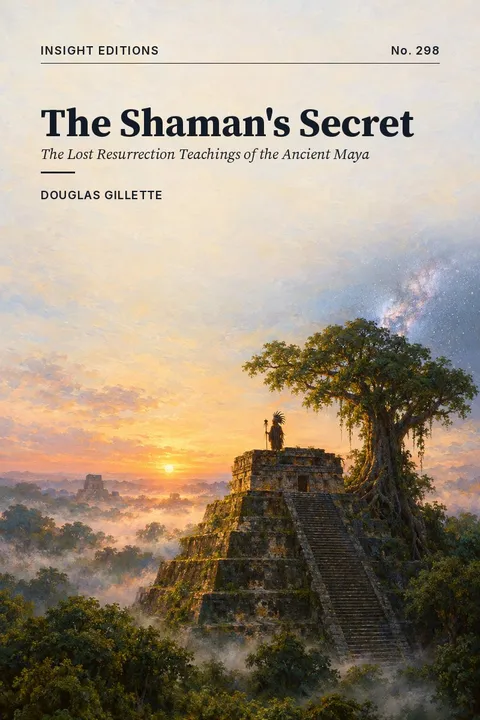
The Lost Resurrection Teachings of the Ancient Maya
Douglas Gillette
Douglas Gillette reconstructs the Maya resurrection teaching from temple art, the Popol Vuh and astronomy, following the Hero Twins' descent into the underworld and their rebirth as sun and moon.

Rediscovering the Archetypes of the Mature Masculine
Robert Moore & Douglas Gillette
Robert Moore and Douglas Gillette map four archetypes of mature masculinity, each with its active and passive shadow, and show how boy psychology can grow into a man who blesses, protects, knows and loves.

Accessing the King in the Male Psyche
Robert Moore & Douglas Gillette
Robert Moore and Douglas Gillette trace the King archetype through sacred kingship and myth, separating the generative centre that orders and blesses from the tyrant and the weakling.
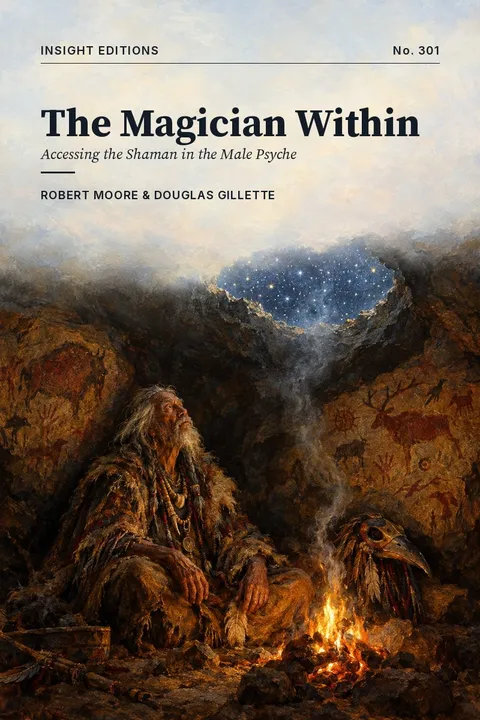
Accessing the Shaman in the Male Psyche
Robert Moore & Douglas Gillette
Robert Moore and Douglas Gillette follow the Magician from the shaman and ritual elder to the modern man, showing how sacred knowledge contains power and how the Trickster and the Innocent One corrupt it.

Accessing the Lover in the Male Psyche
Robert Moore & Douglas Gillette
Robert Moore and Douglas Gillette describe the Lover as the energy of feeling, beauty and connection, and show how it needs the structure of the other archetypes to avoid addiction or impotence.

A New Edition, Translation, and Commentary
Edwin F. Bryant
Edwin Bryant's translation and commentary reads Patañjali's 195 sūtras as a discipline of the mind, separating unchanging awareness from the changing mind as the path to liberation.
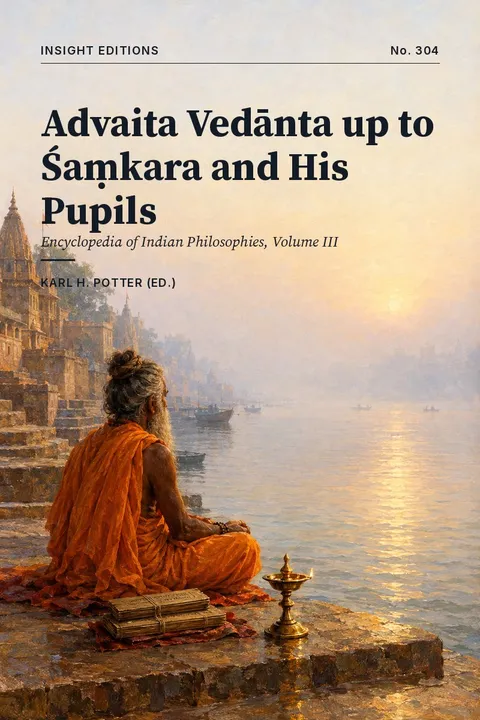
Encyclopedia of Indian Philosophies, Volume III
Karl H. Potter (ed.)
Karl Potter's volume surveys early non-dual Vedānta, from Gauḍapāda and Śaṃkara to their pupils, explaining how the Self and Brahman are held to be one and the world an appearance.

Awakening to Your Life's Purpose
Eckhart Tolle
Eckhart Tolle traces conflict and dissatisfaction to identification with the ego and the pain-body, and describes a shift in consciousness expressed through acceptance, enjoyment and enthusiasm.

A Guide to Spiritual Enlightenment
Eckhart Tolle
Eckhart Tolle argues that awareness is larger than thought, and that freedom from psychological suffering begins with presence in the present moment rather than in the stories of past and future.
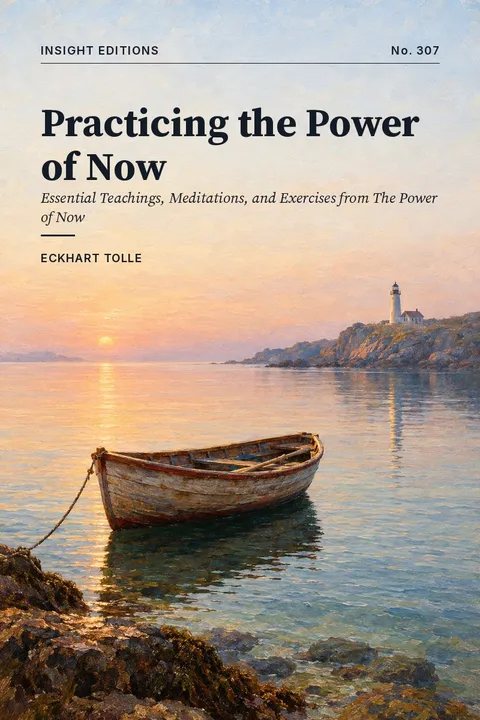
Essential Teachings, Meditations, and Exercises from The Power of Now
Eckhart Tolle
Eckhart Tolle's companion volume distils The Power of Now into practices for watching the mind, entering the inner body, accepting the moment and bringing presence into relationships.

Eckhart Tolle
In short reflections across ten themes, Eckhart Tolle points to the stillness beneath thought, inviting the reader to notice awareness before identifying with the thinking mind.

Inspirational Selections from A New Earth
Eckhart Tolle
Selected passages from A New Earth, arranged by Eckhart Tolle as contemplative pointers on ego, presence, the inner body and the purpose that comes from awareness itself.

Stillness Amidst the World
Eckhart Tolle
Drawn from a retreat at the Findhorn community in Scotland, Eckhart Tolle asks what experience must provide for a person to feel complete, and points to the stillness that is already present.

Practices for Raising Conscious, Confident, Caring Kids
Susan Stiffelman
Family therapist Susan Stiffelman shows how a parent's own inner work makes steady leadership possible, using cases, exercises and practical tools for responding to the actual child.

The Psychology of Spiritual Awakening
Steve Taylor
Steve Taylor studies people who have undergone spiritual awakening, describing its natural, gradual and sudden routes and the changes in perception, feeling, outlook and behaviour it brings.

Reflections and Meditations for Spiritual Awakening
Steve Taylor
A companion to Steve Taylor's fifty-five poems on attention, identity, the body and impermanence, introduced by Eckhart Tolle as pointers to the life that is already here.

Eckhart Tolle and David Icke
Stephen Parato
Stephen Parato compares the teachings of Eckhart Tolle and David Icke across five themes, looking for where their accounts of awareness, identity and participation really converge.

On Freedom, Responsibility and the Meaning of Life
Viktor E. Frankl
Four texts by Viktor Frankl, from 1946 to 1984, argue that a human life keeps its meaning even when every familiar support has gone, and that freedom always includes responsibility.

Creating Miracles in Everyday Life
Wayne W. Dyer
Wayne Dyer argues that purposeful attention changes conduct, and that a changed relationship to belief can enlarge what is possible in relationships, prosperity, health and identity.

The Liberating Practice of Insight Meditation
Larry Rosenberg
Larry Rosenberg shows how the Buddha's sixteen contemplations of the breath form a complete path, moving from calm in the body through feeling and mind to insight in daily life.

Sayadaw U Sīlānanda
Sayadaw U Sīlānanda's commentary on the Mahāsatipaṭṭhāna Sutta explains the four foundations of mindfulness, body, feeling, mind and mental objects, as a precise method of insight practice.

Bhante Henepola Gunaratana
Bhante Gunaratana's plain-spoken manual teaches vipassanā meditation step by step: what to do with the body and mind, how to handle distractions, and how to bring mindfulness into daily life.
A Selection of Suttas from the Pali Nikāyas
Rupert Gethin (trans.)
Rupert Gethin's selection from the Pali Nikāyas gathers early Buddhist discourses on conduct, meditation and liberating insight, studied here section by section in their original order.

Suffering, Restraint, Attention and the Way to Release
Ajahn Ñāṇamoli Thero
A thematic study of the talks and writings of Ajahn Ñāṇamoli of Hillside Hermitage, moving from conduct and restraint through attention and composure to right view and release.
Ahmed Hulusi
Ahmed Hulusi's essay traces the movement from the shell of the separate, constructed self to the Sufi recognition that only the One truly exists.

The Universe as Quantum Information
Vlatko Vedral
Vlatko Vedral argues that information, not matter or energy, is the basic stuff of the universe, and follows the idea from biology and economics through to quantum physics.

From the French Enlightenment to Kant
Frederick Copleston
Frederick Copleston's sixth volume covers the eighteenth-century search for a science of man, from the French philosophes and Rousseau through the German Enlightenment to Kant's three Critiques.
What Ancient Philosophers Teach Us about How to Live
John Sellars
John Sellars draws seven lessons from Seneca, Epictetus and Marcus Aurelius, arguing that character and judgement, rather than good fortune, decide how well a person lives.
Stoics, Epicureans, Sceptics
A. A. Long
A. A. Long's classic study reconstructs the three great schools after Aristotle, setting out the Epicurean, Sceptic and Stoic accounts of knowledge, nature and the good life.
John Sellars (ed.)
Twenty-seven essays edited by John Sellars follow Stoicism after antiquity, through the Church Fathers, the Renaissance and early modern thought to its revival in modern psychology.

Europe 1789–1848
Eric Hobsbawm
Eric Hobsbawm argues that a dual revolution, the French political revolution and the British industrial one, transformed Europe and the world between 1789 and 1848.
1848–1875
Eric Hobsbawm
Eric Hobsbawm follows the triumph of industrial capitalism and the liberal bourgeoisie from the failed revolutions of 1848 to the crisis of the 1870s, as railways and markets spread across the world.
1875–1914
Eric Hobsbawm
Eric Hobsbawm describes the confident bourgeois world of 1875 to 1914, its empires, nations, new women and transformed arts, and how it built the conditions of its own collapse in war.

The Short Twentieth Century, 1914–1991
Eric Hobsbawm
Eric Hobsbawm's history of the short twentieth century runs from the catastrophe of 1914 through the golden age after 1945 to the landslide that ended the Soviet world in 1991.

From 1750 to the Present Day
Eric Hobsbawm
Eric Hobsbawm explains why Britain became the first industrial nation, how industry and empire shaped its society, and why its early lead turned into long relative decline.

The Secret Life of the Brain
Lisa Feldman Barrett
Lisa Feldman Barrett argues that emotions are not hard-wired reactions but predictions the brain constructs from body signals, past experience and concepts learned in a culture.
The World the Mind Makes and the Way Out
Rajesh Ranjan Mahapatra
Mahapatra's archive argues that suffering is built inside each sensory event, where distorted perception presents sweetness as if it lived in the object. All 164 chapters in six volumes, read with a critical lens that keeps sutta, interpretation and evidence apart.

The Surprising Connection Between Metabolism and Limitless Health
Casey Means with Calley Means
Casey Means argues that much chronic disease traces back to how our cells make energy, and sets out how food, sleep, movement, light, stress and toxins shape metabolic health.

Negotiating As If Your Life Depended On It
Chris Voss with Tahl Raz
Former FBI hostage negotiator Chris Voss explains tactical empathy, mirroring, labelling, calibrated questions and the other tools he used to negotiate under pressure.

The Science and Art of Longevity
Peter Attia with Bill Gifford
Physician Peter Attia sets out a proactive medicine for a longer, healthier life, covering heart disease, cancer, dementia and metabolic illness, and the role of exercise, nutrition, sleep and emotional health.

How a Single Chemical in Your Brain Drives Love, Sex, and Creativity — and Will Determine the Fate of the Human Race
Daniel Z. Lieberman and Michael E. Long
Daniel Lieberman and Michael Long explain how dopamine drives desire, anticipation and the pursuit of more, and how it is balanced by the here-and-now chemicals of satisfaction.
Perform Optimally, Maintain Focus, and Ignite Motivation in Yourself and Others
Neil Fiore
Neil Fiore applies his Now Habit method to the workplace, showing how to overcome procrastination, manage stress and lead teams through focus and self-motivation rather than pressure.

How to Stop Putting Things Off and Start Getting Stuff Done
Piers Steel
Psychologist Piers Steel distils research on procrastination into a single equation of expectancy, value, impulsiveness and delay, and shows how to change each term.

Why More Is Less
Barry Schwartz
Barry Schwartz argues that an abundance of choice can leave us anxious and less satisfied, and contrasts maximizers with satisficers to show how to choose well.

An Easy & Proven Way to Build Good Habits & Break Bad Ones
James Clear
James Clear explains how small habits compound, and gives four laws of behaviour change — make it obvious, attractive, easy and satisfying — for building systems and identity.
Why Good People Are Divided by Politics and Religion
Jonathan Haidt
Jonathan Haidt argues that moral judgement starts with intuition, sets out the moral foundations that divide liberals and conservatives, and explains how morality binds and blinds groups.
Companion Readers, a Synthesis and a Field Guide
Companion readers on U.G. Krishnamurti
Eleven readers on U.G. Krishnamurti, including companions to No Way Out, Mahesh Bhatt's A Taste of Life and Louis Brawley's Goner, examining thought, search, the natural state and the people around him, plus an original synthesis and field guide.

with Goraksha-Vacana-Sangraha
Akshaya Kumar Banerjea
Banerjea's classic exposition of Nath philosophy: the Absolute as Siva one with His Sakti, the cosmic and individual bodies, Kundalini, Nada and Samarasya, with a verse-by-verse reading of the Goraksha-Vacana-Sangraha and a graded practice path.

The Secret of Self-Recognition
Kshemaraja, translated by Jaideva Singh
Kshemaraja's twenty-sutra digest of the Recognition school of Kashmir Saivism: consciousness as free power, the 36 tattvas, the five divine acts in every perception, vikalpa-ksaya and krama-mudra, with critical notes on polemic and modern sanitisation.
The Divine Creative Pulsation
Vasugupta and Kshemaraja, translated by Jaideva Singh
Vasugupta's verses on spanda, the creative pulsation of consciousness, with Kshemaraja's Spandanirnaya: the opening and shutting of Siva's eyes, the gaps between states, unmesa and bondage through words, with critical notes on polemic and supernormal powers.

The Secret Supreme
Swami Lakshmanjoo, edited by John Hughes
Swami Lakshmanjoo's compact map of the whole system: the 36 tattvas, the alphabet, the upayas, the seven perceivers, grace, the seven states of turya, kundalini and the four schools of Trika, with critical notes on rival schools, dating and Guru-only practices.

The Key to the Sakta Tantras
Sir John Woodroffe (Arthur Avalon)
Woodroffe's classic map of the Sakta Tantra, first written as the Introduction to his 1913 Mahanirvana Tantra: Siva and Sakti, the gunas, worlds and ages, the five sheaths, nadis and cakras, the three temperaments, guru and initiation, mantra, yantra, nyasa, the pancatattva, yoga and Kundalini, karma and the four aims. Every section and list in full, with critical notes.
The Virupaksapancasika with the Commentary of Vidyacakravartin
David Peter Lawrence
Lawrence's translation of the Fifty Verses of Virupaksa with Vidyacakravartin's commentary: Indra's pride, the universe as one's body, the ocean of awareness, the fire of recognition and the Book on Powers, with his comparison to Western ideas of narcissism and critical notes on obscure passages and sectarian limits.
An Analysis of the Doctrines and Practices of Kashmir Shaivism
Mark S. G. Dyczkowski
Dyczkowski's classic study of the Spanda school: consciousness as Light and Awareness, vibration as movement without motion, Siva and Sakti, the Wheel of Energies, the divine body of the senses and the four means to liberation, with critical notes on where later commentators shaped the doctrine.
The Yoga of Supreme Identity
Vasugupta and Kshemaraja, translated by Jaideva Singh
The foundational aphorisms of Kashmir Saivism with Kshemaraja's Vimarsini: consciousness as the Self, knowledge as bondage, the power of the letters and the three ways of Siva, Sakti and the individual, with critical notes on siddhis, letter mysticism and the guru frame.
Historical and General Sources, Volume I
Navjivan Rastogi
Rastogi's history of Krama, the Kashmiri system of succession and the goddess Kalasamkarsini: Sivananda and his women disciples, the Krama hymn and the twelve-or-thirteen Kalis debate, Abhinava's lost Kramakeli, the southern school of Mahesvarananda, the long decline, and the six meanings mapped onto the four means.
The Essence of the Tantras
Abhinavagupta, translated by H.N. Chakravarty
Abhinavagupta's own prose digest of the Tantraloka: the free light of consciousness, the four ways, time in the breath, the 36 tattvas, the nine degrees of grace, bathing, worship, initiation of the living and the dead, and the Kula rite, with critical notes.
The Essence of Ultimate Reality, with the Commentary of Yogaraja
Abhinavagupta, translated by Lyne Bansat-Boudon and Kamaleshadatta Tripathi
Abhinavagupta's 105-verse compendium of Trika non-dualism with Yogaraja's commentary: the Lord who hides himself in play, the mirror and the crystal, the two errors, the mantra SAUH, the inner ritual, and how the liberated person lives and dies, with critical notes.
Verses on the Recognition of the Lord, with the Author's Vrtti
Utpaladeva, translated by Raffaele Torella
Utpaladeva's founding text of the Recognition school with his own vrtti: the argument with the Buddhist logicians on memory, perception, relation and causality, light and reflective awareness, the tattvas, the three impurities and the breaths, with critical notes.
Divine Consciousness: A Treasury of 112 Types of Yoga
Jaideva Singh
Jaideva Singh's translation of the Vijnanabhairava, the practical manual of Kashmir Saivism: the Devi's question about Bhairava's nature, then 112 dharanas, from the pauses of the breath, sound and void to delight, the gap between thoughts and the inward meaning of japa, worship and the breath-mantra, read with an honest critical lens.

The Complete Prosperity Teaching in Twelve Parts
Bob Proctor
A companion to the omnibus of Bob Proctor's teaching: the stick-person model of the mind, paradigms and the terror barrier, the universal laws, Wattles and Hill, goals, money, attitude and a daily practice.

Eight Books of Pointers, Arranged by Theme
Wei Wu Wei (Terence Gray)
A companion to Wei Wu Wei's eight books (1958–1974) in thirty-six themes: the tenth man, the eye that cannot see itself, noumenon and phenomena, volition as the only bondage, Ch'an, Advaita, Tao and the open secret.
Russellian Panpsychism and the Combination Problem
S. Siddharth
A guide to S. Siddharth's University of Mysore doctoral thesis, which argues that Russellian panpsychism can answer the combination problem through mereological nihilism or existence cosmopsychism, with a reading of Advaita Vedanta.
The Yoga Vāsiṣṭha in Six Books
Swami Venkatesananda (translator)
A guide to Swami Venkatesananda's rendering of the Yoga Vāsiṣṭha: Rāma's dispassion, self-effort, the stories of Līlā, Karkaṭī, Śukra, Prahlāda, Bhuśuṇḍa and Cūḍālā, and liberation while living.

A Study in Structure
Navjivan Rastogi
A reader's map of the Tantraloka: its four genres and five aims, Abhinava's teachers and method, Jayaratha's family, library and quarrel with Ksemaraja, the numbering chaos of the KSTS text, the topic chart of all 37 chapters, and the sixty-four Bhairava Tantras.
The Supreme Awakening
Swami Lakshmanjoo, edited by John Hughes
Vasugupta's 77 aphorisms with Kshemaraja's commentary as taught by Swami Lakshmanjoo, sutra by sutra: the self as consciousness, the three Awakenings, turya at the junctions, the yogin as actor and the one who lives just like Shiva, with critical notes on variants, the upaya scheme and Guru-only practices.
A Comparative Study
Jaideva Singh
Jaideva Singh's 1984 lectures at the Ramakrishna Mission: the dynamic Brahman of the Upanisads, the Para-Advaita of Kashmir Saivism from prakasa-vimarsa to the four upayas, and an eight-point case against Sankara's illusionism, read with the Advaitin replies the lectures leave out.

The Sivasutra with Bhaskara's Commentary, the Varttika
Mark S. G. Dyczkowski
Dyczkowski's translation of the Sivasutra with Bhaskara's Varttika, the older and less-known commentary, read beside Ksemaraja. Every aphorism of the three Lights in its own section, with the Stanzas on Vibration, comparison tables, critical notes, a glossary and a practice path.
Creation, entry and the great sentence: consciousness is Brahman
Swami Paramarthananda
The Rig Veda's Upanishad in three moves: one conscious cause creates, enters every body as the experiencer, and is recognised as Prajnanam Brahma.
The great forest text: aham brahmasmi, neti neti and the fearless self
Swami Paramarthananda
The largest Upanishad walked through its Vedantic sections: aham brahmasmi, Maitreyi, Janaka's court, the inner controller, the imperishable and the self as its own light.

Five Verses of Conviction, Talks on Adi Sankara's Text
Swami Paramarthananda
Swami Paramarthananda's five talks on Sankara's Manisha Panchakam: the chandala's challenge at Kasi, the five verses that answer it, and how each one condenses a Mahavakya of the Vedas. Verse by verse, with diagrams of the teaching, the sadhana ladder and the karma map.

An Interview with Tulku Urgyen Rinpoche
Tulku Urgyen Rinpoche
The Great Perfection in one interview: what Dzogchen means, why it carries great benefit and great danger, the seed of recognition, the light switch of mindfulness and the art of resting freely.
Conductivity, Satsang and the Realization of Turiya
Adi Da Samraj
Why Adi Da refused to treat "Be Conscious as the Feeling of Being" as a technique of the waking mind.
A Communication Freely Offered to All
Adi Da Samraj
Adi Da's one-sentence gift: no matter what arises, you are only Consciousness Itself.

Cover all this with the Lord: one goal, two paths, eighteen mantras
Swami Paramarthananda
Eighteen mantras, one goal and two paths: Ishvara-vision, the eleven features of the self, karma with meditation, and the golden-lid prayers.
Atma Nadi, Ramana Maharshi and the "Bright"
Adi Da Samraj
Adi Da's chapter on Amrita Nadi: what he took from Ramana Maharshi, and where he says the Maharshi stopped short.
The Direct Way to En-Light-enment
L. Ron Gardner
Gardner's heterodox Dzogchen: trekcho and togal as one practice of spiritual voltage and current, and a sharp critique of canonical visionary togal.
Shankara's commentary: two commitments, and why knowledge alone frees
Swami Paramarthananda
Shankara's Isha commentary walked through its three debates: the independence of the Upanishad, the two commitments, and why vidya in mantra 11 means meditation.
Tulku Urgyen Rinpoche on the Kunzang Tuktig Peaceful and Wrathful Sadhana
Tulku Urgyen Rinpoche
The hundred peaceful and wrathful deities as a short daily practice: Tulku Urgyen Rinpoche explains the Kunzang Tuktig Leyjang line by line, from refuge and the three samadhis to dissolution, the Zurgyen and practising without a shrine.

Nature Spirits, Thought Forms, Ghosts and Specters, The Dweller on the Threshold
Manly P. Hall
Hall's 1924 guide to the invisible world: the four Nature Spirits, the thought forms we create, ghosts as discarded shells, and the Dweller on the Threshold, the sin body each person must master before any spiritual work.
Talks on the Rāma Gītā of the Adhyātma Rāmāyaṇa
Swami Paramarthananda
Swami Paramarthananda's verse-by-verse talks on the 62-verse Rāma Gītā, Rāma's complete teaching of Vedānta to Lakṣmaṇa, from karma yoga to the mahāvākya and Oṁkāra meditation.

A Children's Book of the Mystery
Adi Da Samraj
Adi Da's picture book for children: three things to remember every day to stay happy and unafraid.
By whom does the mind think? The ear of the ear and the Yaksha
Swami Paramarthananda
By whom does the mind think? The ear of the ear, the self beyond known and unknown, the Yaksha story, and four meditations.

A Confessional Recitation on the Guru Gita
Adi Da Samraj
Adi Da's adaptation of the Guru Gita, framed by a sharp essay against guru-cultism.

A Calendar of Inspiring Thoughts
Manly P. Hall
Hall's calendar of 366 daily sayings, read month by month and sorted into themes: universal Law, responsibility, habit, love that releases, religion judged by conduct, and the quiet work of maturity.
Tulku Urgyen Rinpoche on the Kunzang Tuktig Ngondro, Nagi Gompa 1982
Tulku Urgyen Rinpoche
The whole ngondro in one talk: Tulku Urgyen Rinpoche explains the Kunzang Tuktig preliminaries line by line, from the precious human body and the single breath to the refuge tree, Vajrasattva's nectar, the four mandalas and guru yoga of simplicity.
Shankara on the witness in every cognition, and why knowledge needs no karma
Swami Paramarthananda
Shankara's Kena commentary in sixty lectures: the witness in every cognition, Indra and Virochana, three rival theories, and knowledge without karma.
A Revolutionary Guide to Jesus' Teachings and Spiritual Enlightenment
L. Ron Gardner
L. Ron Gardner recasts Holy Communion as an electrical circuit: plugged-in presence, self-emptying and the descending Holy Spirit, read through Ohm's Law, Dzogchen and Kashmir Shaivism.

The Philosophy, History, and Practice of a Timeless Tradition
Christopher D. Wallis
Wallis's introduction to classical nondual Saiva Tantra: the View of one Consciousness, the history of the schools from the Kashmiri masters to hatha-yoga, and the practices of grace, initiation and the three means.
Art Without a Mediator
Adi Da Samraj
Adi Da's five Venice Biennale essays on art as egoless participation.
Gaudapada on the four quarters, the dream proof and a world that was never born
Swami Paramarthananda
Gaudapada's karikas in seventy-two lectures: Turiya, the dream proof, ajati vada, five rival theories refuted, and the firebrand.
Reading Past and Future Lives in the Horoscope
Manly P. Hall
Hall's short PRS book on karmic astrology: the twelve nidanas as signs, the 12th house as the past life, Emperor Julian as Alexander reborn, and karma working through each sign in turn.

The Human Pool Table and the Mummery-Cult of Pairs Set Free
Adi Da Samraj
A story, a memoir and a poem on leaving childhood and the bond of the couple.

Tulku Urgyen Rinpoche's A to Z of pith instructions for the Dzogchen yogi
Tulku Urgyen Rinpoche
Tulku Urgyen Rinpoche's A to Z of pith instructions, from Accomplishment to Yogi, distilled into one argument: recognize mind essence in short moments, many times.

The Perfect Practice of Consciousness, Distilled
Adi Da Samraj
Adi Da's compact 1982 scripture on Consciousness, freedom and the three-stage Perfect Practice.
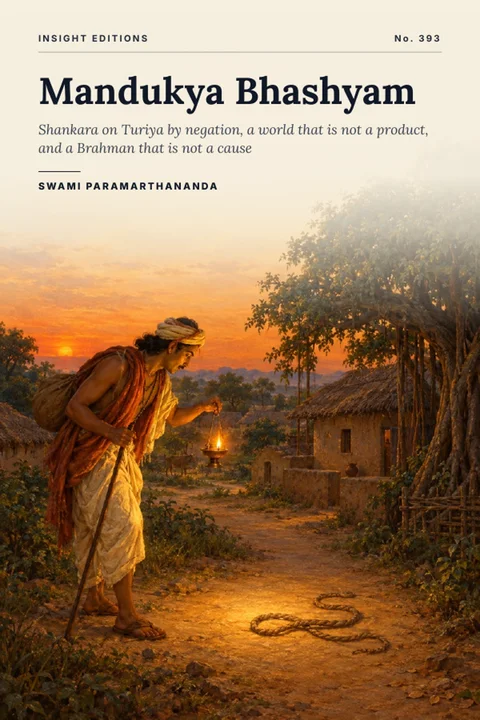
Shankara on Turiya by negation, a world that is not a product, and a Brahman that is not a cause
Swami Paramarthananda
Shankara's commentary on the Mandukya and Karika: Turiya by negation, two inferences for mithya, advaita as akaranam, and every theory of origin refuted.
Teachings of the Great Buddha
Manly P. Hall
Hall's early PRS booklet on the Buddha: his life read as an allegory of every seeker, the Four Noble Truths, ten precepts, rebirth and karma, compassion and renunciation, the eightfold path and Nirvana.
New Perspectives on Buddhadharma, Consciousness, and Awakening
L. Ron Gardner
L. Ron Gardner argues that Mind, not emptiness, is Ultimate Reality, critiques Nagarjuna, Wilber and Harris, and proposes an Electrical, Eclectic Zen built on the Sambhogakaya and Dzogchen's trekcho and togal.
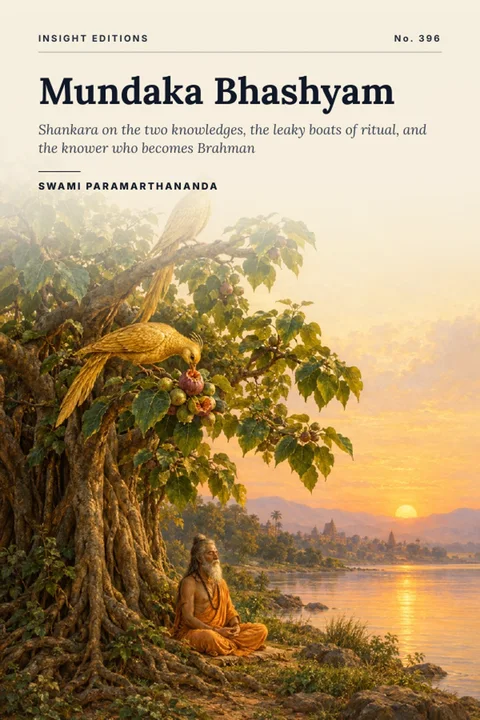
Shankara on the two knowledges, the leaky boats of ritual, and the knower who becomes Brahman
Swami Paramarthananda
Shankara on the Mundaka: two knowledges, the leaky boats of ritual, the bow and arrow, the two birds, and the knower who becomes Brahman.

The Perfect Practice of Perfect Knowledge
Adi Da Samraj
Adi Da's 540-verse manual of witness meditation and the root-feeling of relatedness.
Talks on the Nava Yogī Saṁvāda of the Bhāgavata Purāṇa
Swami Paramarthananda
Swami Paramarthananda's verse-by-verse classes on the Nava Yogī Saṁvāda, where nine sages teach King Nimi a full course from karma yoga and devotion to the knowledge of Brahman.

Tulku Urgyen Rinpoche's ten talks on the whole path, from Gampopa's Four Dharmas to the bardo
Tulku Urgyen Rinpoche
Tulku Urgyen Rinpoche walks through the whole Vajrayana path in plain speech: the jewel in the mud, the room dark for ten thousand years, the snake in the bamboo tube and the wild horse of the bardo.
The Science of the Divine Names
Manly P. Hall
Hall's 119-paragraph primer on Qabbalah: rules for the student, the flaming alphabet of consonants and vowels, the numbers One to Nine as stages of the soul, and invocation as the life one lives.
Why Vedanta works, why ritual comes first, and why you need not attain what you already are
Swami Paramarthananda
Swami Paramarthananda's Mundaka course: Vedanta as a darshana, ritual as appetizer, the guru, jagat mithya, and claiming I am Brahman.

A Complete Translation and Explanation of the Pratyabhijna-hrdaya by Ksemaraja
Christopher D. Wallis
Wallis's translation and explanation of Kshemaraja's Pratyabhijna-hrdaya: twenty sutras on Awareness, its contraction into the mind, the Five Acts, digesting samskaras, eleven practices and embodied liberation.
Six seekers, six questions, and the purusha found within this body as the seer
Swami Paramarthananda
Pippalada's six answers: creation, the walkout of prana, dream and the witness, Om meditation, and the purusha within as the seer.
The Deluxe Edition, with a Preface by Greg Salyer and an Introduction by Mitch Horowitz
Manly P. Hall
Hall's 1922 debut, in the 2021 deluxe edition: seven short essays reading altar fire, Shamballa, alchemy, the Pharaoh, the Ark, the Grail and the Pyramid as maps of the spiritual flame in the body.
A Guide to, and Beyond, Eckhart Tolle's Teachings
L. Ron Gardner
L. Ron Gardner's chapter-by-chapter reply to Eckhart Tolle's The Power of Now: presence and surrender are only half the path without the descent of the Holy Spirit through Holy Communion.
Prepare the mind, know Brahman as the witness within, and enjoy all joys at once
Swami Paramarthananda
Three vallis: disciplines and values, satyam jnanam anantam and the five sheaths, the measure of joy, and Bhrgu's enquiry.

A Translation by Christopher Wallis (complete but lacking commentary)
Christopher D. Wallis
Wallis's working translation of the Vijnana-bhairava-tantra (c. 850 CE): Bhairava's teaching that the Goddess is the state of fullness, and the 112 methods of breath, emptiness, bliss, daily life and contemplation that lead into it.

Tulku Urgyen Rinpoche's graduated day of practice, from waking up to the collapse of confusion
Tulku Urgyen Rinpoche
Tulku Urgyen Rinpoche lays out a whole day of Dzogchen practice: a child told 'Don't wander!', the golden chain of 'I am undistracted', the donkey fleeing rustling grass and the film of a world war that stops when the projector does.

A Treatise in Three Parts
Manly P. Hall
Hall's treatise on fire as the supreme secret of the Mysteries: solar symbols in Christian ritual, man as the grand symbol, the Order of Melchizedek, and the spinal fire that awakens the pineal gland.
Śaṅkara's Introduction and Chapters 2–3 of the Bhagavad Gītā
Swami Paramarthananda
Swami Paramarthananda's word-by-word classes on Śaṅkara's introduction and Gītā Chapters 2–3, where the case against combining knowledge and ritual is made and karma yoga becomes a practical discipline.
The Role of Religious Experience in the Traditions of Tantric Shaivism
Christopher D. Wallis
Christopher Wallis's 2014 Berkeley dissertation on samavesa and shaktipat: how religious experience, from possession to divine fusion, became the core of Tantric Shaiva initiation, and how it survives in modern shaktipat.
The Shocking Return of the Chosen One
L. Ron Gardner
Gardner's only novel: a nineteen-year-old Objectivist fighter learns he is Jesus reborn, wakes up through Shaktipat, and wages war on the Federal Reserve until the State straps him to a cross.
Chapters 4, 5 and 6 of the Bhagavad Gītā with Śaṅkara's Commentary
Swami Paramarthananda
Swami Paramarthananda's word-by-word classes on Gītā Chapters 4–6 with Śaṅkara's bhāṣya, from action in inaction to the two sannyāsas and the practice of Vedāntic meditation.
Chapters 10, 11 and 12 of the Bhagavad Gītā with Śaṅkara's Commentary
Swami Paramarthananda
Swami Paramarthananda's word-by-word classes on Gītā Chapters 10–12 with Śaṅkara's bhāṣya, from vibhūti-yoga and the vision of the cosmic form to the qualities of the devotee dear to the Lord.
Chapters 13, 14 and 15 of the Bhagavad Gītā with Śaṅkara's Commentary
Swami Paramarthananda
Swami Paramarthananda's word-by-word classes on Gītā Chapters 13–15 with Śaṅkara's bhāṣya, from the nineteen-class defence of the mahāvākya to the guṇas, the aśvattha tree and Puruṣottama.
123 Reviews of Buddhist and Mystical Books
L. Ron Gardner
L. Ron Gardner grades 123 Buddhist and mystical books against one model of awakening, from jhana and Nagarjuna to Zen, Dzogchen, Ramana and the perennialists.
Chapters 16, 17 and 18 of the Bhagavad Gītā with Śaṅkara's Commentary
Swami Paramarthananda
Swami Paramarthananda's word-by-word classes on Gītā Chapters 16–18 with Śaṅkara's bhāṣya, from divine and demonic natures to naiṣkarmya, 18.66 and the Upasaṁhāra.

Chapters 7, 8 and 9 of the Bhagavad Gītā with Śaṅkara's Commentary
Swami Paramarthananda
Swami Paramarthananda's word-by-word classes on Gītā Chapters 7–9 with Śaṅkara's bhāṣya, from the two prakṛtis and four devotees to the last thought, two paths and the royal secret.
The Adept Tradition and the Pythagorean Disciplines
Manly P. Hall
Two late Hall lectures: the adept tradition and why only integrity reaches it, then the Pythagorean disciplines of possession, silence, diet, dawn and dusk practice and renouncing hatred, adapted to modern life.

Awakening to the Truth Beyond Fear, Sorrow, and Anger
Adi Da Samraj
Adi Da's 1983 talk on un-Happiness as an action, with its devotional frame examined.

Studies in the Mantra-Sastra
Sir John Woodroffe (Arthur Avalon)
Woodroffe's 1922 theory of sound and mantra: Vak and the Logos, word, meaning and thought, causal sound, natural names, the thirty-six tattvas, Sakti, Nada and Bindu, Kamakala, the fifty letters as Kali's garland, Om, bija-mantras, the six paths, mantra-sadhana and the Gayatri. All thirty-one chapters, every list in full, with critical notes.
The Secret of Hiram Abiff and the Three Degrees as a Path of the Soul
Manly P. Hall
Hall's 1923 classic read as a path of the soul: Hiram Abiff as life buried in matter, the ruffians as misused thought, desire and action, and the three degrees as stages of self-mastery that recover the lost Word.

Tara practice for our times: Threefold Excellence with commentaries by Tulku Urgyen Rinpoche and Trulshik Adeu Rinpoche
Tulku Urgyen Rinpoche
A nine-verse terma that holds the whole path as one Tara practice: the blind turtle, a facsimile of devotion, a waterfall that becomes an ocean, and an empty mind that appears as the deity.
Knowledge of the Real Self, Talks on the Classic Primer of Advaita Vedanta
Swami Paramarthananda
Swami Paramarthananda's twenty-two talks on Tattva Bodha, the classic primer of Advaita Vedanta: the fourfold qualifications, the three bodies, three states and five sheaths, atma as sat chit ananda, creation, the oneness of jiva and Isvara, and the law of karma. Chapter by chapter, with diagrams, tables and critical notes.
The Adepts in the Western Esoteric Tradition, Part Four
Manly P. Hall
Hall's 1950 history of the adept stream inside Freemasonry: operative guilds, Ashmole and Bacon, the Hiramic legend, Strict Observance, the Illuminati, Cagliostro, Sethos and Eliphas Levi.
Talks and Essays on the Spiritual and Evolutionary Necessity of Emotional Surrender to the Life-Principle
Adi Da Samraj
Adi Da's emotional gospel: surrender or contract, with its demands on devotees examined.
The Core Esoteric Process of Real Spirituality and Its Perfect Fulfillment in the Way of Adidam
Adi Da Samraj
Adi Da's late manifesto of guru devotion: turn to Me on sight, examined.

Hippolyto Joseph da Costa's Sketch, with Manly P. Hall's Essay on the Myth of Dionysus
Hippolyto Joseph da Costa and Manly P. Hall
Hall's 1936 reading of the Dionysus myth as the soul's fall and rebirth, with da Costa's rare 1820 Sketch tracing Masonry to the solar Mysteries and the Ionian builders of Solomon's Temple.
A collection of miscellaneous aspects of development and completion
Tulku Urgyen Rinpoche
Nineteen talks on joining recognition with practice: the sun that does not chase its rays, milk that holds butter, Milarepa in a yak horn, a nun's rainbow body, and a view higher than the sky with deeds finer than barley flour.
Swami Paramarthananda's Foundation Course on Tattvabodha
Swami Paramarthananda
Swami Paramarthananda's foundation course in Vedanta, built around Tattvabodha: the four human goals, the scriptures, varna and asrama, karma, upasana, jnana and bhakti yoga, then the three bodies, atma, creation, the oneness of jiva and Isvara, and the law of karma. Chapter by chapter, with diagrams, tables and critical notes.
Selections from The Aletheon, the Final Masterwork of Adi Da Samraj
Adi Da Samraj
Adi Da's late critique of religion, ego and cults, and his offer of the Gift, examined.

The Adepts in the Eastern Esoteric Tradition, Part Three
Manly P. Hall
Hall's 1957 study of China's adept tradition: Lao-tse, Confucius, Mencius, Kuan Yin and the Lohans, the Taoist Immortals, the Eight Immortals, the Hung Society and inner alchemy.

Prophetic Wisdom about the Myths and Idols of Mass Culture and Popular Religious Cultism, the New Priesthood of Scientific and Political Materialism, and the Secrets of Enlightenment Hidden in the Body of Man
Adi Da Samraj
Da Free John's 1980 manifesto against childish religion, scientism and the Parental State, examined.
The Intrinsically egoless Transcendental Spiritual Reality-Way of Adidam Ruchiradam
Adi Da Samraj
Adi Da's most technical late essay on Descent, the heart on the right and the Way that begins with no ego, examined.

The Ancient Plan for a Philosophic Democracy in the New World
Manly P. Hall
Hall's 1944 classic on the esoteric founding of America: Atlantis and Plato, Bacon's New Atlantis, Franklin, the flag, the unknown speaker, the Great Seal and a world democracy to come.

Talks from the last two years: buddha nature, the development stage and the view
Tulku Urgyen Rinpoche
Fourteen talks from Nagi Gompa on finding buddha nowhere else: gold seen as gold, a tangka in a mirror, a thousand bulbs on one current, Chili Chilaya, infant rigpa on a trickster's back, and a scientist without gadgets in the bardo.
The Secrets of Tantric and Shaktic Yoga
Sir John Woodroffe (Arthur Avalon)
Woodroffe's 1919 classic on Kundalini yoga: the full seven-chapter Introduction on consciousness, power, mantra, the cakras and Laya-yoga, then the Sat-cakra-nirupana verse by verse with Kalicarana's commentary, and the Paduka-pancaka. Every list in full, with critical notes.

Ecstatic Talks on Conventional Foolishness versus the Crazy Wisdom of God-Realization
Adi Da Samraj
Adi Da's crazy-wisdom talks on meaning, Consciousness and the wild God, examined.

The Adept Tradition in the Western Hemisphere
Manly P. Hall
Hall's 1951 sequel on the adept tradition in the Americas: Quetzalcoatl, Xibalba, Native secret societies, Columbus, Bacon's colonies, Masonic founders, Bolívar, Hidalgo and Juárez.
Swami Paramarthananda's Foundations Course and Tattva Bodha Commentary in Two Volumes
Swami Paramarthananda
Two volumes of Swami Paramarthananda's teaching in one guide: a foundations course on the goals of life, the scriptures, varna and asrama, and the four yogas, followed by a sentence-by-sentence commentary on Tattva Bodha, from the five benefits of self-knowledge and the fourfold qualification to the analysis of the individual and the cosmos, tat tvam asi, and liberation.

Five Steps to an Ecstatic Life of Communion with Real God
Adi Da Samraj
The five-step map of Adi Da's Way, from devotion to Divine Translation, examined.
Sacred Symbol of Male Creative Power
Alain Daniélou
Daniélou reads the lingam as the sign of the formless becoming form and traces phallic worship from the Indus and Neolithic Europe to Hermes, Priapus and Christian phallic saints.
The Principle of Love Applied to Exercise and the Method of Common Physical Action
Adi Da Samraj
Adi Da's early manual of posture, breath and exercise as love, examined.

Fundamentals of Esoteric Transformation
Manly P. Hall
Hall's lectures on alchemy as the science of inner transformation: the seven metals as faculties, salt, sulphur and mercury, the aura as retort, Elias Artista, the Mutus Liber and the yoga of the West.
From the Tantras to the Science of Dreams
Alain Daniélou; edited by Jean-Louis Gabin; translated by Kenneth F. Hurry
Fifteen short essays give Daniélou's whole Shaiva worldview: a dogma-free Samkhya cosmology, the linga, sacred androgyny, initiation, music as the language of the gods, the subtle body and the ages of the world.

Teachings on Drubchen, the Ritual of Great Accomplishment
Tulku Urgyen Rinpoche
Nine days of continuous practice explained line by line: one biscuit as a full feast, singing as Rudra, a golden vessel that can be straightened, a crystal for trekchö and tögal, and a fish leaping from the water at the end.

The Way Beyond Ego-Based Sexuality
Adi Da Samraj
Adi Da's teaching on love, sex and the Oedipal script, examined.

Phrenology, Palmistry, Physiognomy, Graphology and Oriental Character Analysis
Manly P. Hall
Hall's practical survey of five arts that read character from the body: phrenology, palmistry, physiognomy, graphology and Chinese face reading, with their rules, history and an ethic of kindness.

Swami Paramarthananda's Talks on Sankara's Sixty-Eight Verses on Self-Knowledge
Swami Paramarthananda
A verse-by-verse guide to Sankara's Atma Bodha as taught by Swami Paramarthananda: why knowledge alone frees, how maya projects and veils, how the self takes on the colours of its upadhis, how the witness is sorted from the seen and known as Brahman, how nididhyasana dissolves habits, and what the freed person sees.
The Manual for Self Realization
Swami Lakshmanjoo
Lakshmanjoo's living-lineage commentary on the 112 ways into the center, sorted by means and weighed.
The Initiation and Foundation Practices of Free Spiritual Life
Adi Da Samraj
Adi Da's 1977 beginner's path of breath, recollection and sacrifice, examined.
The Traditions of Shiva and Dionysus
Alain Daniélou
Daniélou's fullest comparative case: Shiva and Dionysus as one god of nature, eros and ecstasy, from the Indus to Crete, persecuted by city religions and bound to return.
Stotras of the Devi and the Karpuradi Stotra
Sir John Woodroffe (Arthur Avalon)
Arthur and Ellen Avalon's translations of about thirty Sanskrit hymns to the Devi from the Tantras, Puranas, Mahabharata and Sankara, followed by the Karpuradi Stotra to Kali with Vimalananda's essay and inner-sense commentary. Every list in full, with critical notes.
Selections from Talks and Essays on the Spiritual Process and God-Realization
Adi Da Samraj
Adi Da's seven stages of life and the open-eyed seventh stage, examined.
Gnosticism, the Key to Esoteric Christianity
Manly P. Hall
Hall's essays on Gnosticism as the esoteric key to Christianity: emanations, Sophia and the Demiurge, Marcion, East-West parallels, Alexandria, meditation symbols and the Abraxas gems.

The Ancient Tradition of Universal Tolerance
Alain Daniélou, edited by Jean-Louis Gabin
Daniélou's essays in defence of caste as a system for letting different peoples live side by side, read with a critical eye on his claims about race, women and democracy.
Talks and Essays on the Art and Science of Equanimity and the Self-Transcending Process of Radical Understanding
Adi Da Samraj
Adi Da's 1981 manual of conductivity, equanimity and Divine Ignorance, examined.

Teachings on the Path of Trekchö
Tulku Urgyen Rinpoche
Gold covered in dirt, a forkful of steak, the golden chain of 'I am undistracted', a donkey frightened by grass, and a movie that collapses: Tulku Urgyen's plain-spoken guide to cutting through.
The Influence of Tuning and Interval on Consciousness
Alain Daniélou
Daniélou's comparative treatise on scales: why exact intervals carry exact feelings, how China, India, Greece and the West built their systems, and why equal temperament blunts music's power.

A Twelve-Part Course in Meditation, Concentration and Inner Realization
Manly P. Hall
Hall's 1942 course in meditation and realization: effortless discipline, self-analysis, placidity, concentration on a symbol, the evening review, the transcendent self and illumination as a natural dawn.
Swami Paramarthananda's Sixteen Talks on Sankara's Verses on Self-Knowledge
Swami Paramarthananda
The full Srisailam talks of Swami Paramarthananda on Sankara's Atma Bodha: why the self needs only a thought, how maya projects and veils, how the witness is sorted from three bodies and five sheaths, why the self is knowledge and not a knower, how nididhyasana meets family life, and what the free person sees.

Memories of East and West
Alain Daniélou
Daniélou's own story, from a sickly Catholic child who built altars to forest gods to a Shaivite initiate in Benares and a scholar in his Labyrinth near Rome, told with candor, humor and strong opinions.
The Song of the Self Supreme
Ashtavakra (tr. Radhakamal Mukerjee)
The most uncompromising scripture of non-duality, as Mukerjee read it and Adi Da praised it, examined.
The Four Aims of Life in the Tradition of Ancient India
Alain Daniélou
Daniélou's map of the classical Hindu good life: duty, wealth, pleasure and liberation, each in its season, set inside a forceful and controversial defense of the caste order.

The First Unabridged Modern Translation of the Classic Indian Text by Vatsyayana
Vatsyayana, translated by Alain Daniélou
Vatsyayana's manual of love as one of the three aims of life, read part by part in Daniélou's unabridged translation with its two commentaries, with critical notes on consent, age and history.

The Five Books Of The Heart Of The Adidam Revelation, Book One
Adi Da Samraj
Adi Da's plainest declaration of who he says he is, examined.

Hall Answers the Lecture Hall on God, Karma, Death, the Mysteries, Health, Society and the Ancient Wisdom
Manly P. Hall
Hall's question-and-answer handbook to the Ancient Wisdom: seven laws, karma and rebirth, death, the Mysteries, regeneration, health and healing ethics, politics and marriage, astrology and virtue.

Teachings on the Completion Stage
Tulku Urgyen Rinpoche
Shakya Shri lost in samadhi at dusk, a dog's tooth that grew relics, a bird watching for hawks, and a farewell to the 'daytime stars': Tulku Urgyen's completion-stage teachings, plain and warm.
From the Proto-Australoids to Independence and After
Alain Daniélou
Daniélou's one-volume history of India as a living museum of layered civilizations, told from an openly traditionalist and Shaivite viewpoint, with critical notes on its contested claims.

Swami Paramarthananda's Classes on Sankara's 144 Verses of Direct Knowledge
Swami Paramarthananda
Swami Paramarthananda's 41 classes on Aparokshanubhuti: why knowledge of Brahman is direct, who is fit for it, how the self is separated from the body, why the world is name and form on Brahman, whether the knower has prarabdha, and how Sankara redefines yoga as fifteen limbs of Vedantic meditation.

Shaiva Philosophy, the Cycles of History and the End of the Kali Yuga
Alain Daniélou
Daniélou's sweeping Shaiva vision of history as cycles of rise and catastrophe, set out part by part with critical notes on its fringe claims, numerology and social views.
Tantra of the Great Liberation
Sir John Woodroffe (Arthur Avalon)
Arthur Avalon's translation of the Mahanirvana Tantra with his long Introduction: Brahman and Adya Kali, the Brahma-mantra, the five elements and circle worship, castes and stages of life, sacraments, ancestor rites, crime, inheritance, temples and images, and the four Avadhutas. Every list in full, with critical notes.

Attention, Interest and the Redirection of Inner Power
Manly P. Hall
Hall's essay on psychic energy: attention and interest, extravert and introvert, starving negative complexes, an inner leader, purpose, love and faith, and turning noble words into habit.
The Image-Art of egoless Coincidence With Reality Itself
Adi Da Samraj
Adi Da's complete theory of an art beyond point of view, examined.
The Classic Work on Hindu Polytheism
Alain Daniélou
Daniélou's systematic guide to the Hindu pantheon, set out part by part with critical notes on his polemic against monotheism, his language claims and his view of sacrifice.
No books match. Try another subject or clear the search.
These are study guides, not replacements for the books. Each summarises and maps one book for personal study, quotes it only briefly and keeps page references so you can go back to the source. They are free to read and download, are not for sale, and are not endorsed by the authors, translators or publishers. If one helps you, please read and buy the original.
Sixteen of the Buddhist editions are of books by Ṭhānissaro Bhikkhu (one with Khematto Bhikkhu), who makes his work free under Creative Commons Attribution-NonCommercial licenses; the originals are at dhammatalks.org. Mindfulness with Breathing is by Buddhadāsa Bhikkhu, translated by Santikaro, published by Wisdom Publications.