Insight Editions · No. 98
Viruses
A Very Short Introduction
Dorothy H. Crawford
Dorothy H. Crawford explains viral structure, infection, immunity and evolution, tracing emerging diseases and pandemics while examining vaccines, antivirals, eradication and public-health preparedness.
A study guide to Viruses by Dorothy H. Crawford. Shared free for personal reading; not for sale and not endorsed by the authors or publishers. Please read and buy the original.
The Book in Brief
Crawford's argument in one line: viruses are obligate parasites shaped by how they travel, and the epidemics that matter most are zoonoses unleashed by human behaviour, from the first farms to wet markets and jet travel. Vaccines, antivirals and global cooperation can turn the tables, but only if we prepare before the next surprise rather than after it.
- What viruses are. Genes in a protein coat, 20-300 nm across, with no metabolism. They open cell "locks" with molecular keys, turn cells into factories, and spread by six routes: contact, food and water, air, insects, medical procedures and mother to child (Chapters 1-2).
- The arms race. The body defends in layers ending in B cells, killer T cells and immunological memory. Viruses evolve far faster than we do; virulence is a trade-off set by the transmission route, not a ratchet towards mildness (Chapter 2).
- Emergence is predictable in outline. New human viruses (two to three a year) are almost always animal viruses meeting people more often, through deforestation, farming, wildlife trade, war, climate change and travel. R₀ sorts them into dead ends (rabies, hantavirus), sporadic outbreaks (Ebola, Lassa, SARS, MERS) and continuous circulators (yellow fever, dengue, Zika) (Chapter 3).
- Three pandemics, one pattern. HIV-1, H1N1/09 and SARS-CoV-2 all spread silently before detection. What made COVID-19 global, when SARS was contained, was transmission biology: upper-airway shedding, asymptomatic and pre-symptomatic spread, super-spreading. Disease severity and R₀ barely differed (Chapter 4).
- History repeats. Smallpox, measles and polio were the emerging viruses of the first farmers; they ravaged virgin populations, settled into childhood crowd diseases, and yielded to vaccines. Smallpox's 1980 eradication shows what is possible; the possible 1889 coronavirus pandemic hints that COVID-19 may one day become a cold (Chapter 5).
- The settlers. Persistent viruses (herpes, HPV, CMV, hepatitis B and C, HIV) survive by hiding in long-lived cells and dodging T cells. They cause disease mainly when immunity fails, and can trigger autoimmunity (EBV and MS) (Chapter 6) and cancer: about 15% of cancers worldwide, through rare multi-step accidents in one infected cell (Chapter 7).
- Turning the tables. From variolation and Jenner (1796) to mRNA vaccines in under a year, and from AZT to triple therapy and HCV cures, medicine has learned to beat viruses, but vaccine hesitancy, inequity and viral evolution keep reopening the contest (Chapter 8).
- The future. Population growth and air travel drive spillover and spread. Whether we hunt "Virus X" proactively or build health-system capacity, the last line holds: no one is safe until everyone is safe (Epilogue).
| Ch | Title | In one line |
|---|---|---|
| 1 | The Virosphere | What viruses are, how they were discovered, three origin theories, six transmission routes |
| 2 | The Fightback | Receptors, layered immunity and memory; coevolution; virulence as trade-off; bioweapons |
| 3 | Emerging Infections | R₀ and herd immunity; rabies, hantavirus, Lassa, Ebola, SARS, MERS, yellow fever, dengue, Zika |
| 4 | Twenty-First-Century Pandemics | HIV-1's journey, flu drift and shift, 1918, H5N1, and why COVID-19 beat containment |
| 5 | Past Emerging Viruses | Farming's crowd diseases; smallpox, measles, polio; eradication; COVID-19's likely future |
| 6 | Lifelong Residents | Latency in herpesviruses, HPV, CMV; immune evasion; HIV natural history; hepatitis; EBV and MS |
| 7 | Viruses and Cancer | Seven human tumour viruses, the EBV discovery, multi-step oncogenesis, cancer vaccines |
| 8 | Turning the Tables | Variolation to mRNA; vaccine safety and hesitancy; flu, HIV; trials; antivirals for HIV, HBV, HCV |
| 9 | What the Future Holds | Population and travel as drivers; Nipah, mpox; Virus X; GAVI, CEPI, COVAX |
Crawford wrote in January 2021, a year into COVID-19, before Omicron, before H5N1 reached US dairy cattle, before the mpox emergencies of 2022 and 2024, the 2025 measles surge, lenacapavir and the WHO Pandemic Agreement.
The Virosphere
Viruses are not cells but parcels of genes in a protein coat, unable to do anything until they hijack a living cell. Crawford sets out what they are, how they were discovered through the filter experiments on tobacco mosaic disease, the three rival theories of where they came from, and the six routes by which they pass from host to host. Every later chapter, from rabies to COVID-19, rests on this toolkit.
Why this book, and why now
The book opens with two framing voices. Sir Anthony Epstein, co-discoverer of the first human cancer virus, wrote the original 2000 foreword: science has outrun the educated public, an anti-science backlash has followed, and even the serious press still confuses viruses with bacteria. He calls Crawford's account obligatory reading for journalists, and in September 2020 adds that it should be obligatory for anyone mystified by the COVID pandemic.
Dorothy Crawford's own preface ties the two editions to two pandemics. She wrote the first in 1999-2000 at the height of HIV/AIDS, when tabloids ran headlines like "the gay plague" and "Place AIDS victims in quarantine", and when policy assumed every serious infection could be vaccinated against or cured with antibiotics, so pandemic preparedness sat near the bottom of government priorities. By January 2021, three severe outbreaks had followed: SARS (2003), swine flu (2009) and COVID-19 (from 2019), alongside the largest Ebola epidemic on record (West Africa, 2014-16) and Zika in South America (2016-17). The public now chats about the R number on the bus; the rewritten book aims to explain how, where and why new viruses emerge, and how to stop the next one.
- ~100 million distinct virus types on Earth, more than all other lifeforms combined.
- 10 billion virus particles in every litre of sea water.
- 20-300 nm: the size range of virus particles (1 nm = a thousand-millionth of a metre).
- 3 to 400 genes per virus, against 20,400 in the human genome.
- ~15% of human cancers worldwide are linked to viruses.
What a virus is
Viruses are obligate parasites: little more than a piece of genetic material protected by a protein coat, with no machinery of their own, so they must enter a living cell and take it over. Crawford quotes the classic jibe that a virus is "a piece of bad news wrapped up in protein". Their apparent "strategies" for attack and survival are not plans at all but the residue of millions of years of natural selection.
| Feature | Viruses | Bacteria |
|---|---|---|
| Size | 20-300 nm | 0.5-5.0 µm |
| Cell wall | No | Yes |
| Protein-making machinery | No | Yes |
| Genetic material | DNA or RNA | DNA (and RNA) |
| Reproduction | Only inside a living cell | Independent |
| Lifestyle | Obligate parasites | Mostly free-living |

Each particle, or virion, is an outer protein shell, the capsid, wrapped round its cargo of genes. The genome is either DNA or RNA, never both. Particles stayed invisible until the electron microscope (magnifying about 100,000 times) arrived in the 1930s, and revealed strikingly regular, symmetrical structures.
DNA, RNA AND THE RETROVIRUS TRICK
- DNA. Two complementary chains coiled into a double helix, with four bases, A, G, C, T, spelling the genetic code; chromosomes are made of it.
- RNA. Single-stranded, with uracil (U) replacing thymidine. A gene's DNA is copied into messenger RNA (mRNA), which carries the message to ribosomes, where amino acids are strung into proteins, one amino acid per triplet of bases.
- DNA viruses (poxviruses, herpesviruses, hepatitis B) tend to be larger; RNA viruses (measles, coronaviruses, retroviruses) mutate more often.
- Retroviruses such as HIV carry three enzymes: reverse transcriptase, integrase and protease. Reverse transcriptase runs the normal DNA → RNA flow backwards, making a DNA copy of the viral RNA; integrase splices it into the host chromosome, where the cell treats it as its own and it can never be removed.
Once inside, the virus genome commandeers the cell, which within a day or two releases thousands of new viruses. If enough cells die, whole organs fail: rabies destroys brain cells; Ebola kills the cells lining blood vessels, causing catastrophic bleeding. Crawford notes the aptness of computer viruses: snippets of code that only come alive with access to hardware (the cell's machinery), and that "mutate" so fast that treatment packages lag behind.
Two broad behaviours follow infection:
- Acute viruses. SARS coronaviruses and new flu strains spread fast and cause dramatic epidemics or pandemics of short, sometimes deadly illness.
- Persistent viruses. Hepatitis and herpes viruses slip in silently and stay for life. They are less visible but can be as deadly: chronic hepatitis causes liver failure, and several persistent viruses cause cancers of the liver, stomach and cervix, and Hodgkin's lymphoma.
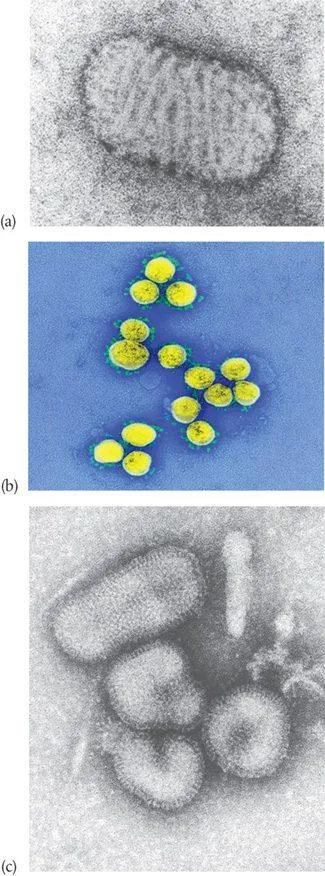
Tulipomania: a virus as luxury good
Tulips came to Europe from Turkey in the mid-sixteenth century; Holland became the centre of the trade. Breeders produced prized variegated flowers with white flames called "colour breaks". The "broken" tulips were rare, could change colour seemingly at will, and grew less vigorously, which only raised their price.
Between 1634 and 1637, one prize 'Admiral van Enkhuijsen' bulb sold for 5,400 guilders, about £400,000 today: the price of a smart Amsterdam town house or 15 years of a labourer's wages. A painting of a broken tulip by Jan van Huysum (up to 5,000 guilders) cost less than the bulb. The cause of the colour breaks was a virus carried by aphids from local fruit trees.
From miasma to germ theory
From Hippocrates (460-375 BC) to the early 1800s, disease was blamed on two poisons: "virus", meaning visible poisons such as snake venom or a rabid dog's saliva, and "miasma", an invisible gas from swamps, stagnant water and corpses. Louis Pasteur (Paris) and Robert Koch (Berlin) showed in the mid-1800s that microbes cause infectious disease, a leap of faith for a public untrained in science. By 1900 several hundred bacteria had been identified, yet measles, smallpox, rabies, yellow fever, foot and mouth disease and tobacco mosaic disease still had no visible culprit.
- 1876 Adolf Mayer, at Wageningen, transmits tobacco mosaic disease with mashed leaves, but thinks the agent is an enzyme or toxin.
- 1890s Martinus Beijerinck passes diluted leaf extract through porcelain filters that hold back all bacteria; it stays infectious and regains full strength after passage to a new plant, so it reproduces: a microorganism.
- 1938 The electron microscope shows virus particles directly, ending the debate.
- 1953 Watson and Crick crack the double helix, explaining that viruses carry genetic material and why they differ from bacteria.
Tobacco mosaic mattered commercially: it could ruin the lucrative Dutch crop. In the interim, the agents were defined by three measurable traits, giving the term "filterable virus":
- Filterable. Small enough to pass filters that retain bacteria.
- Invisible. Not seen under the light microscope.
- Non-culturable. They would not grow on bacterial culture plates.
Many still regarded them as merely very small bacteria until the electron microscope settled the matter.
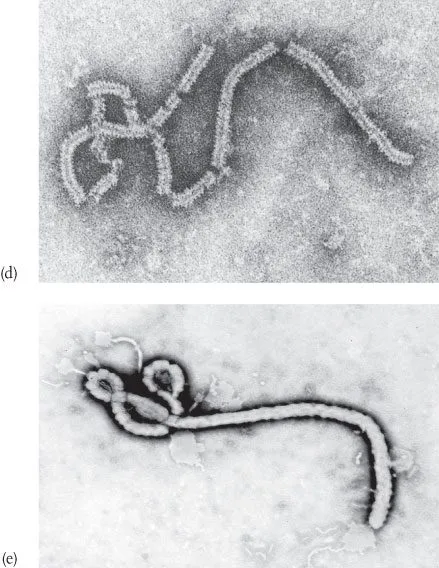
Where did viruses come from?
Viruses leave no fossils, but all agree they are ancient: practically every organism carries its own viruses, which co-evolved with it from the earliest ancestors.
- Progressive (escape). Viruses began as rogue DNA segments, transposons or "jumping genes", common in the human genome and structurally like retroviruses. Plasmids, free DNA fragments in bacteria carrying extras like antibiotic resistance or toxin genes, may be a step further; they spread only during bacterial conjugation.
- Regressive (reduction). Viruses are bacteria that regressed from free living to parasitism. Supporting this, giant viruses like mimivirus and poxviruses carry enzymes that cut their dependence on the host, and bacteria such as Rickettsia and Chlamydia already live as obligate intracellular parasites.
- Virus-first. If life began in an RNA world, RNA viruses could predate cells.
None of the three alone explains both RNA and DNA viruses, which may have arisen separately. Crawford's verdict is an "and/or": viruses may be degenerate bacteria, escaped pieces of cellular genes, and remnants of the first life on Earth.
Crawford calls mimivirus "recently discovered" (it was found in 2003). Since then the giant-virus catalogue has grown fast (pandoraviruses, pithoviruses and many more from metagenomics), and these viruses carry translation-related genes that blur the virus-cell boundary. The ICTV now groups viruses into a handful of deep top-level ranks (since 2018-20), with evidence that these lineages arose independently, which fits her "and/or" conclusion. Since 2023 species carry Latin binomials (SARS-CoV-2 belongs to Betacoronavirus pandemicum).
Alive or dead?
The Oxford English Dictionary's definition of life (the ability to breathe, grow, reproduce) is unhelpful: viruses are active only inside a living cell. They reproduce, with heavy help, but have no energy-generating metabolism and no protein-making machinery. Most molecular scientists treat them as just another piece of genetic material to manipulate in a test tube. Crawford sidesteps the label: whatever you call them, viruses are unique and utterly unlike cells.
How viruses spread
Every infection is a race. A new flu strain has a few days to infect respiratory cells, multiply and get its offspring out before immunity arrives. Outside a cell viruses are completely inert, surviving a day or two to a few weeks; like plant seeds, they rely on sheer numbers. They cannot cross intact skin, but skin is continuous with the inner epithelia of the gut, airways and genitourinary tract, so they enter through body orifices, multiply at the surface and either invade inner organs or ride secretions back out.
DIRECT SPREAD
- Papillomaviruses enter skin stem cells through a cut, push infected cells to divide into a wart that sheds more virus; a handshake completes the cycle.
- Herpes simplex causes cold sores near the lips; each blister is packed with virus, passed on by a kiss. Type 2 causes genital herpes, the commonest genital ulcer.
- Blood-borne viruses (hepatitis B, HIV) also exploit sex: white cells in genital secretions carry virus, and minute bleeding from ulcers sharply raises transmission.
FOOD POISONING (FAECAL-ORAL)
Gut viruses survive stomach acid, paralyse the cells of the small intestine, and cause diarrhoea and vomiting that flush billions of new viruses into the environment.
- Norovirus, the "vomiting bug", is the commonest cause of gastroenteritis: incubation 1-2 days, survives three weeks in water, and one particle can seed infection. Cruise ships are notorious hotspots.
- Rotavirus infects most children by age five, with >500,000 deaths a year in the book's figure, mostly from dehydration; faeces carry 10⁹ particles per gram. A vaccine has cut childhood deaths.
120 eminent doctors dined at the Apothecaries Hall, London. Two to three weeks later 50 guests, the cook and a waiter had jaundice: hepatitis A, traced to a raspberry parfait. The fruit had been picked in Dundee two years earlier and frozen; about 20 punnets were contaminated by a picker or factory worker. The inquiry found pickers urinating into jam-fruit barrels to raise the weight and their pay (harmless after boiling), and led to better hand-washing and toilets at picking sites.
COUGHS AND SNEEZES
A cough releases mucous droplets; a sneeze, a fine aerosol. This is the commonest and most efficient route in temperate climates. Crawford draws a sharp contrast between the two SARS viruses:
SARS (2003) Virus made mainly deep in the lungs, expelled in heavy droplets that fall quickly; spread confined to close contacts, chiefly health workers and family.
COVID-19 Virus carried in a fine spray of lighter droplets that stay airborne longer and travel farther; this alone makes it far harder to control.
The common cold is the world's most frequent infection: about two colds a year each, and a leading cause of work absence.
Sir Christopher Andrewes turned a 1941 American wartime hospital near Salisbury into an isolation unit in late 1946. Over decades 11,000 volunteers (holidaymakers, honeymooners, one person fifteen times) spent ten days there for pocket money and a 40% chance of a cold, under a 30-foot (10 m) rule; couples caught fraternizing were sent home without pay. Ferrets, flying squirrels, hedgehogs and baboons all resisted infection. In 1957 David Tyrrell lowered culture temperature from 37°C to 33°C, the warmth of the nose, and a virus finally grew: rhinovirus (named 1963, from Greek rhis, nose).
There are 100-150 rhinovirus types, plus many other cold viruses, so several hundred in all. In 1965 Tyrrell found the first human coronavirus and, with electron microscopist June Almeida, described and named it. Four common-cold coronaviruses aroused little interest until their aggressive SARS cousins appeared 40-50 years later.
HITCHING A RIDE: INSECT VECTORS
Many viruses, starting with yellow fever, the first identified, travel in blood-sucking insects. Animals form the natural reservoir in an endless animal-insect-animal cycle, and people who intrude are bitten. Yellow fever, dengue and Zika all naturally infect monkeys and are carried by female mosquitoes needing blood for their eggs, so wherever she thrives, they do; climate change is extending her range.
- West Nile virus appeared in New York in 1999. Native to Africa, Asia, parts of Europe and Australia, it circulates in birds; humans are dead-end hosts (no person-to-person spread). Most infections are silent or flu-like, but about 1 in 150 causes encephalitis. Exploiting naive US birds and local mosquitoes, it crossed to the West Coast, Mexico and the Caribbean in four years; 557 US cases were reported in 2020.
MAN-MADE TRANSMISSION
Medicine opened new routes: transfusions, blood products, transplants, needles, scalpels and dental drills. The culprits are persistent blood-borne viruses, hepatitis B and C and HIV. Hepatitis B is the most infectious, with several million particles per millilitre of carrier blood. Screening has pushed contamination below 1 in a million units in Western blood supplies.
- Haemophiliacs. Clotting factor VIII from pooled donations spread HIV among haemophiliacs in the US and Europe in the 1980s.
- Mass campaigns. Reused needles probably helped spread HIV in Africa, notably during 1970s smallpox vaccination; in Egypt, the world's highest hepatitis C rates trace to unsterile needles in a 1960s bilharzia treatment programme.
- Valencia. A morphine-addicted, HCV-infected anaesthetist at La Fe and Casa de Salud injected himself before giving patients the rest from the same needle: 217 infected.
- Rabies by transplant (Germany). Six recipients of organs from a donor who had unknowingly died of rabies: three died; two corneal recipients and a previously vaccinated liver recipient survived.
MOTHER TO CHILD
In 1941 Sydney ophthalmologist Sir Norman Gregg linked a cluster of babies with cataracts and heart defects to rubella in their mothers during the previous year's epidemic. Viruses can cross the placenta; infection in the first month of pregnancy damages almost all babies, after the fourth month none. Childhood rubella vaccination removes the risk. Other viruses infect during birth (hepatitis B in blood, herpes simplex in the birth canal) or via breast milk (cytomegalovirus, HIV).
- Airborne COVID. Crawford's fine-aerosol account was contested in 2020; WHO and CDC formally accepted airborne transmission in 2021, and ventilation became a core control measure.
- Rotavirus. The >500,000 deaths figure dates from the early 2000s. With vaccine rollout in over 100 countries, recent estimates put deaths at well under 200,000 a year.
- West Nile. The 557 cases of 2020 were a low year; US totals topped 2,000 in 2023, and the virus now circulates regularly in southern and central Europe.
Think of a virus as pure information plus a delivery mechanism: its entire repertoire is decided by which "locks" it can open and which route out it exploits. Every control measure in later chapters, from hand-washing to vaccines, attacks one link in that chain.
The Fightback
Viruses get in by carrying molecular keys to cell-surface locks; the body answers with layered defences ending in B and T lymphocytes and immunological memory. Over evolutionary time the contest becomes a coevolutionary arms race, illustrated by Australia's rabbits, in which virulence does not always decline. Crawford closes by weighing the real threats, from HIV to smallpox as a bioweapon.
Locks and keys
Cells sit in a sea of hormones and growth factors, and receptor molecules on the surface act as locks that only the matching chemical key can open; that is why only nerve cells answer nerve growth factor. Viruses exploit this: by carrying a key, they pose as normal body constituents and enter any cell bearing the lock. Which lock a virus can open decides which cells it infects, and so which disease it causes. With several hundred receptor molecules available, viruses produce a huge variety of illness. HIV carries the key to CD4, so it infects and destroys the CD4-positive cells at the hub of the immune system; when they die faster than they are replaced, defences crash into AIDS.
The castle under siege
From birth the body is a castle under constant siege, with each enemy trying a different gate.
- The wall. Intact skin: brick-like layers of linked cells topped with flattened dead cells, which viruses cannot infect because they are metabolically inert. Entry needs injection, injury or an orifice.
- The moat. Inner linings are often one cell thick, but are guarded by tears, mucus and urine (antiseptic), acid in stomach and vagina, and cilia that beat in unison like an escalator carrying particles out of the airways.
- The sentries. Macrophages ("large appetite") roam tissues, engulf invaders and release cytokines that raise blood flow and summon lymphocytes.
- The garrisons. Lymph glands at danger points (tonsils and adenoids, gut walls, groin and armpits) where macrophages brief resident B and T cells.
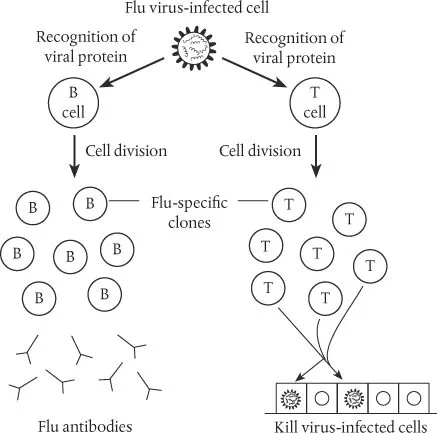
- The specialist army. B cells make antibodies; killer T cells destroy infected cells.
WHAT NATURE'S ACCIDENTS REVEAL
Rare genetic defects show who does what. Babies without B cells cannot make antibodies; they handle viruses fairly well but suffer bacterial infections unless given regular antibody infusions. Babies without T cells cope with bacteria but suffer devastating virus infections and die without a bone marrow transplant. So T cells are essential against viruses. Neutralizing antibodies, aimed at the virus's receptor-binding key, limit spread through the body, but killer T cells clear infection by destroying infected cells before they release their cargo.
Aspirin overdose The upset lasts until the liver neutralizes the drug; a second or tenth overdose has the same effect. The body never learns.
Measles infection After one bout you are immune for life. The body learns: this is immunological memory. Recurring colds and flu are either different viruses with similar symptoms or a virus that has mutated to escape memory.
CLONAL SELECTION AND MEMORY
The body makes about 5 × 10¹⁰ (50 billion) B and T cells a day. Each carries a receptor recognizing one small peptide of one foreign protein; most die without meeting it. A cell that does meet its peptide divides into a clone of identical daughters: B-cell clones make antibodies, T-cell clones kill infected cells. The first time takes 5-10 days, long enough for the virus to cause symptoms. The clones are then kept, ready to stop the same virus next time.
The arms race
Microbes and hosts have shaped each other: each new attack method has been met by a refinement in defence, driving both to great sophistication.
- Mutation and selection. Most mutations are neutral or harmful; the rare advantageous one spreads. Over millennia this coevolution tunes viruses so precisely that their tactics look planned.
- The speed gap. Viruses yield thousands of offspring every 1-2 days, each round throwing up mutants; a person in a developed country leaves about 1.5 descendants in 20-30 years. Humans would need an estimated 120-150 years (4-5 generations) to adapt to a new killer virus.
European rabbits arrived in the 1850s for hunting and food, multiplied without predators to about 300 million, and caused ~£300 million of crop damage a year. Myxoma virus, a smallpox relative that barely troubles Brazilian rabbits, was released: in year one it killed 99.8% of infected rabbits, with numbers bottoming out three years later. Seven years on, only 25% died. Next came rabbit haemorrhagic disease virus (RHDV), trialled in 1995 on Wardang Island, 5 km off South Australia. It escaped, probably on mosquitoes fleeing a forest fire, killed 750,000 rabbits in the Flinders Ranges without harming people or other wildlife, and was then released at hundreds of sites, cutting populations by 95% for years.
Stored samples from before and after release show both sides changed. Rabbits evolved mutations in many immune genes, one boosting the antiviral protein interferon; the virus became less deadly, and strains of moderate virulence came to dominate.
The comfortable idea that coevolution always leads to mildness is wrong. RHDV grew more virulent in places because young rabbits resist it (so the population survives regardless, removing pressure to be gentle) and because flies feeding on carcasses spread it, so more virus at death means more transmission. Virulence is a trade-off set by the route of spread.
STRATEGY FOLLOWS ROUTE
| Virus | Route | Best strategy |
|---|---|---|
| Common cold | Aerosol droplets | Mild, fast, short illness; victims stay up and mix |
| Yellow fever | Mosquito (range up to 2 km) | Make victim too ill to swat insects |
| Herpes simplex 2 | Sex (few partners) | Silent lifelong infection, periodic shedding |
| HIV | Sex, blood | Years of well, infectious latency |
For a sexually spread virus, monogamy is a dead end: one infected partner passes it on and the trail stops. Hence the premium on long silent infection. For HIV, Crawford adds a warning: virulence depends on the average number of partners in a community; if it rose, a faster-replicating, more lethal strain could win out.
What threats do viruses pose?
Early press reports said HIV might exterminate humanity: it killed almost 100% of those infected after a ~10-year latent period. Yet antiviral drugs now give people living with HIV a normal life expectancy on treatment, though there is still no vaccine. About 1% of Caucasians resist infection, thanks to a mutation in CCR5, a co-receptor HIV needs alongside CD4. The variant may have been selected by an older plague, perhaps bubonic plague (1346-1666), reaching about 10% frequency; only homozygotes (about 1%) are protected. Human genetic diversity means someone survives even the deadliest virus.
The plague-selection story for CCR5-Δ32 is attractive but unproven: modelling suggested smallpox fits better, and ancient-DNA studies give mixed evidence for strong recent selection. Since 2021, CCR5 has become central to HIV cure cases: the Berlin (2008), London (2019), Düsseldorf, New York and City of Hope patients were cured by stem-cell transplants from CCR5-Δ32 donors (a Geneva case in 2024 used a donor with normal CCR5). And in 2018 He Jiankui edited CCR5 in human embryos, a widely condemned experiment that earned him a prison term.
BIOLOGICAL WARFARE
- Antiquity Greeks and Romans foul enemy water with dead animals, later dead soldiers.
- Medieval Bodies of plague victims are catapulted into besieged towns.
- 1763 Sir Jeffery Amherst authorizes smallpox-contaminated blankets for Native Americans near Fort Pitt, Pennsylvania: the earliest recorded deliberate virus release.
- 1990 US and British troops in Operation Desert Storm are vaccinated against smallpox.
- 2001 Anthrax letters attack in the US.
The likely users today are terrorists or dictators. Biological weapons beat chemicals on several counts: cheap and easy to make; seed cultures obtainable from national collections; weapons plants can pose as vaccine factories; they slip past security, kill in tiny volumes, are invisible, odourless, tasteless and delayed, and would cause panic. The risk to the attacker is that microbes multiply and spread back home. Agents tested include the bacteria of TB, typhoid, plague, cholera, botulism, anthrax and gas gangrene, plus rotavirus (incapacitating) and Ebola (up to 90% lethal). The top two are anthrax and smallpox.
Smallpox was eliminated in 1980, vaccination stopped, and the world is once more susceptible. It spreads fast in crowded cities and stays infectious for long periods, so it could survive a missile warhead. Vaccine stocks are kept, but no population could be vaccinated in time. Still, smallpox would not kill everyone, partly through inbuilt resistance from centuries of exposure.
The two official variola stocks remain at CDC (Atlanta) and VECTOR (Russia). The bigger shift is synthetic biology: in 2017 a Canadian team rebuilt horsepox (a smallpox relative) from mail-order DNA for about $100,000, showing that destroying stocks no longer guarantees safety. Newer smallpox countermeasures exist (the antiviral tecovirimat, the non-replicating vaccine MVA-BN, later used against mpox), and concern now extends to AI tools lowering the skill barrier for pathogen design.
Read every virus through two numbers that pull against each other: how much it multiplies (virulence) and how it reaches the next host (route). The arms race is fast on the virus side, slow on ours, which is why medicine, not evolution, has to close the gap.
Emerging Infections
An "emerging" virus is usually an old animal virus that has changed its habits, crossing into humans because we have moved closer to its host. Crawford sorts emerging viruses by how far they can travel between people, using the reproduction number R: dead-end infections (rabies, hantavirus), sporadic outbreak viruses (Lassa, Ebola, SARS, MERS) and mosquito-borne viruses now circulating continuously (yellow fever, dengue, Zika). The lesson of each is the same: the warnings came before COVID-19.
Why viruses emerge
Emergence is never a chance event: there are rational answers to why, how, when and where. Epidemiologists chase reports of strange illnesses; scientists sequence the culprit, build an evolutionary tree, and date its split from relatives to find its source. Most emerging viruses are zoonotic: viruses that jump from their primary host animals, in which long coevolution has made them fairly harmless. Occasionally a mutation lets a virus cross the species barrier, but far more often the decisive event is simply our close contact with its primary host.
- Population growth pushing people deeper into natural habitats.
- Colonization of new territory and deforestation for farmland.
- Intensive factory farming and large irrigation schemes.
- War and the collapse of health services.
- Climate change extending the range of insect vectors.
- Trade in wild animals for food or pets: African bushmeat as an international luxury, and East Asian live animal ("wet") markets holding many species, including the critically endangered pangolin, in cramped, unhygienic cages in the middle of cities.
- Air travel and urban access, which move a virus from a remote village to another continent in one leap.
New human viruses now appear at two to three a year.
Measuring spread: R and R₀
An epidemic is any unusual rise in cases in a community; a pandemic is an epidemic spreading on several continents at once. Whether an outbreak escalates depends on three things: the virus's ability to spread between people, the supply of non-immune hosts, and the effectiveness of precautions. All three are summed up in R, the average number of new cases each case generates.
The herd immunity threshold (HIT), the share who must be immune to stop spread, rises with R₀ (HIT = 1 − 1/R₀).
| Disease | Route | R₀ | HIT % |
|---|---|---|---|
| Measles | Airborne | 12-18 | 92-95 |
| Rubella | Airborne | 6-7 | 83-86 |
| Smallpox | Airborne | 5-7 | 80-86 |
| Polio | Faecal-oral | 5-7 | 80-86 |
| Mumps | Airborne | 4-7 | 75-86 |
| Yellow fever | Vector | 4.8 | 60-80 |
| COVID-19 | Airborne | 2.5-4 | 60-75 |
| SARS | Airborne | 2-5 | 50-80 |
| Ebola | Body fluids | 1.5-2.5 | 33-60 |
| Flu | Airborne | 1.5-1.8 | 33-44 |
Crawford's three groups, which viruses can climb or fall between as circumstances change:
- No person-to-person spread: rabies, hantaviruses.
- Sporadic epidemics seeded from an animal index case, vanishing from humans in between: Ebola, Lassa, SARS-CoV, MERS-CoV.
- Continuous circulation among humans: yellow fever, Zika, dengue.
The twenty-first-century pandemic viruses (HIV, flu, SARS-CoV-2) get Chapter 4.
Group 1: dead-end infections
RABIES
Rabies is ancient (a 1613 treatise by Sir Thomas Spackman illustrates its long notoriety) and 100% lethal once symptoms begin. It survives despite depending on one animal biting another, because it drives hosts into a frenzy of several days while their saliva teems with virus.
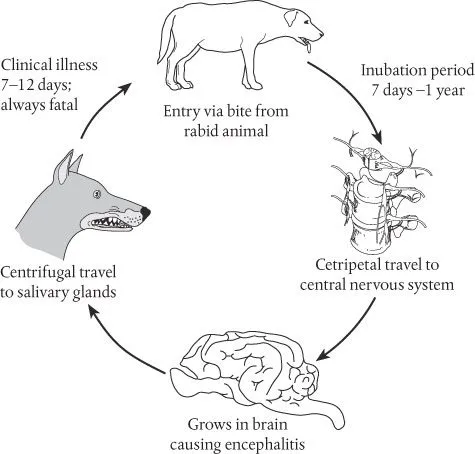
- The silent climb. From the bite the virus enters skin nerves and travels up the nerve fibre without symptoms; the wound heals. Incubation runs from seven days to years, set by the distance from bite to brain.
- Encephalitis. In the brain it causes inflammation and bizarre behaviour: shy, solitary wolves seek company or approach houses.
- In humans. Hyperactivity, delirium, violence and hydrophobia (spasms triggered by drinking), with lucid spells, then coma and death after about a week. Meanwhile virus travels back down nerves into saliva.
Humans are a dead end; each case comes from an animal, usually a rabid dog. In the wild it cycles among foxes, wild and feral dogs and bats, and has devastated wild dog populations in African game reserves. A vaccine exists and island states like the UK and Australia are free, yet about 70,000 people die each year, mostly in India.
HANTAVIRUS: THE PIÑON NUT OUTBREAK
A healthy young New Mexico couple died rapidly of a severe flu-like illness; similar cases surfaced in Arizona and Colorado. The state and the CDC found a new virus, Sin Nombre ("without name"), causing hantavirus pulmonary syndrome: 119 cases and 58 deaths by end-1995. About 20% of deer mice in the region carry it silently, shedding it in saliva, urine and faeces. Victims inhaled dust contaminated with mouse droppings, mostly in infested cabins, barns and outhouses.
Stored samples showed Sin Nombre in about 15% of earlier unexplained south-western deaths, back to 1959: the virus had jumped before whenever mice boomed. Hantaviruses have since turned up in rodents worldwide; Crawford says none spreads between people, so each case needs its own animal source, which prevents large epidemics.
Crawford's statement that no hantavirus passes person to person is wrong for Andes virus in Argentina and Chile. Human-to-human chains were documented at El Bolsón in 1996, and a 2018-19 outbreak in Epuyén, Argentina, spread through a birthday party and a wake to 34 cases and 11 deaths, with "super-spreaders" early in illness. US Sin Nombre still behaves as she describes; it killed Betsy Arakawa, wife of the actor Gene Hackman, in 2025.
Group 2: sporadic outbreaks
LASSA FEVER
An American nurse at a mission in Lassa, north-east Nigeria, fell ill and died at the Evangel Hospital, Jos. Her nurse died 11 days later; the head nurse was flown to the US (first class, no precautions) and recovered. Yale Arbovirus Unit isolated the virus; a Yale scientist survived only through plasma from the recovered nurse, and five months later a Yale technician who never handled the virus died.
Lassa is endemic in West Africa, carried by African brown rats infected at birth and shedding virus for life. In the rainy season they move indoors; people catch it from contaminated objects or food. Person-to-person spread needs body fluids, mostly in hospitals. There are 300,000-500,000 cases and about 5,000 deaths a year. In 1989 a Chicago man back from his mother's funeral in Nigeria was treated as flu for eight days before Lassa was diagnosed; he died, but all 102 contacts stayed well.
EBOLA
- 1976 Yambuku, north Zaire (now DRC): a schoolteacher back from the bush is given antimalarials by Belgian nuns at the mission hospital; the epidemic infects 318 and kills 280 in three months.
- Oct 1976 An International Commission traces chains house to house: incubation 6-9 days, death rate ~88%, risks are unsterile hospital injections and funeral washing of the body.
- 1976-2013 About 20 outbreaks, all in DRC, Uganda, Gabon or Sudan; each stamped out by isolation, barrier nursing, tracing and 21-day quarantine.
- Mar 2014 Outbreak starts in remote Guinea, near Sierra Leone and Liberia.
- Aug 2014 WHO declares a Public Health Emergency of International Concern (PHEIC).
- Mid 2015 Ring vaccination trial shows protection, after the peak.
- Jan 2016 Epidemic declared over: 28,637 cases, ~40% deaths.
Ebola starts with flu-like symptoms, then a haemorrhagic phase of vomiting, diarrhoea, rash and, in severe cases, bleeding from ears, eyes and gums. The commonest cause of death is probably dehydration. Samples sent to the Prince Leopold Institute of Tropical Medicine in Belgium yielded the virus.
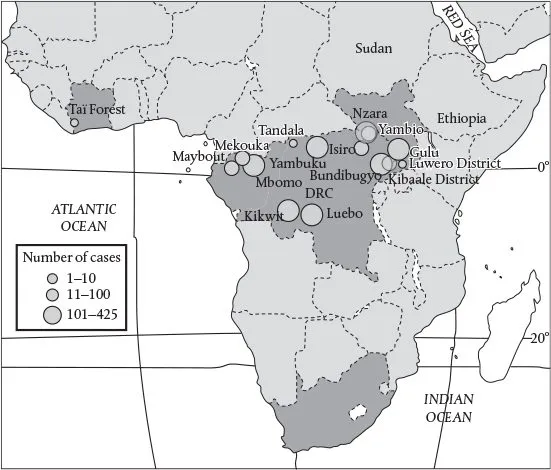
Ebola's R₀ of about 1.5 is low because victims quickly become too ill to travel; with a death rate of 40-90%, experts assumed it could never cause wide epidemics. West Africa broke that assumption.
- Why it got away. Ebola was unknown in Guinea, so it crossed borders before the alarm. The three countries were among the world's poorest, just out of long civil unrest; PPE was scarce and many health workers died; deep mistrust of government and Western medicine led families to hide cases, use traditional healers and keep washing corpses.
- The response. International volunteers, rapid treatment centres and labs, ample PPE and public engagement; with no drugs or vaccine, track, trace and isolate did the work. Vaccines had been shelved for lack of funds.
In this beach slum about 10,000 people shared four toilets. Fishing boats meeting at sea brought 20+ cases. One quarantined fisherman fled 200 km home hidden in a truck through at least 12 checkpoints and died in his family's care. Mourners washed the body, poured the water over themselves and children played in the puddles: 24 new cases.
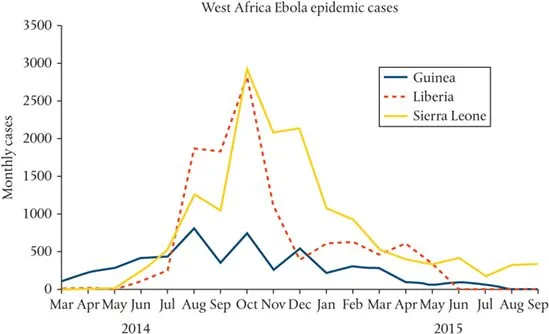
Ebola had become an urban virus, reached Nigeria, Mali and Senegal, and for the first time took to the air, with person-to-person spread in the US and Spain. Late reports found virus persisting months later in one survivor's eye, another's brain, and in semen, with sexual transmission to a partner. If confirmed, Crawford warns, Ebola could keep a human reservoir. Its animal host remains unknown; apes and domestic animals catch it but fall ill, so the prime suspect is fruit bats, though no virus has been isolated from them.
- The human reservoir is real. Genomic analysis showed the 2021 Guinea outbreak was sparked by virus that had persisted in a 2014-16 survivor for about five years, confirming Crawford's "if substantiated".
- Tools now exist. The rVSV-ZEBOV (Ervebo) vaccine was licensed in 2019; two antibody treatments (Inmazeb, Ebanga) were approved in 2020 after the PALM trial in the 2018-20 Kivu epidemic (about 3,470 cases, the second largest).
- Other ebolaviruses keep coming: Sudan virus in Uganda (2022, 2025), for which no licensed vaccine exists, and a new DRC (Kasai) Zaire-Ebola outbreak in 2025. Marburg struck Rwanda (2024), Tanzania and Ethiopia (2025).
CORONAVIRUSES: SARS AND MERS
The first coronavirus came from chickens in the 1930s; the family was named in the 1960s after the first human coronavirus, a common-cold virus. (Crawford dates that discovery to 1960 here and to Tyrrell in 1965 in Chapter 1: the strain was collected in 1960 and identified as a coronavirus in 1965.) Over 40 years later came the first of three aggressive newcomers, all causing severe respiratory disease.
SARS-CoV emerged in Foshan (7 million people), Guangdong, in November 2002 and reached Guangzhou in January 2003. In February a doctor who had treated cases spent one night in a Hong Kong hotel, infecting at least 17 guests who flew on to seed epidemics in Canada, Vietnam and Singapore. His admission to the Prince of Wales Hospital infected about 100 people; one carried it to the Amoy Gardens estate (300+ cases, 42 deaths), where virus in diarrhoea, a blocked sewage system and over-powerful bathroom fans sent aerosols up air shafts. All residents were evacuated.
SARS has an incubation of 2-7 days: fever, malaise, aches, cough, sometimes diarrhoea, then viral pneumonia in ~20%; overall mortality about 10%, highest in the elderly. With R₀ of 2-4 it could have gone pandemic, especially in a low-income country. Swift WHO action stopped it using isolation, tracing, PPE and the estate evacuation, helped by three features of the disease:
- Almost everyone infected falls ill: no silent carriers.
- No infectiousness before symptoms: isolating the sick stops spread.
- Virus made deep in the lungs, expelled in heavy droplets that do not travel, so risk concentrates in carers and family.
By July 2003 SARS was gone after reaching 26 countries, with 8,000+ cases and about 800 deaths. Early cases worked in a Foshan live animal market, where Himalayan palm civets and raccoon dogs tested positive; the true reservoir is the Chinese horseshoe bat, with market animals as intermediate hosts. Antibodies were found in 40% of wild-animal traders, 25% of slaughterers and 5% of vegetable sellers. SARS has since returned three times, all from labs (Taiwan, Singapore, China); the Beijing National Institute of Virology escape caused nine cases and one death, spreading via a student's journey home to Anhui.
MERS (Middle East respiratory syndrome) appeared in Jeddah, Saudi Arabia, in 2012: fever, cough, breathlessness, often pneumonia, death rate about 35%. About 2,500 cases so far, 80% in Saudi Arabia, and every case outside the Arabian Peninsula was infected there. MERS-CoV began in bats but now circulates silently in the noses of dromedary camels, hence "camel flu". Its R₀ is below 1 (0.4-0.9), yet hospital outbreaks hit Jeddah and Riyadh (2014: 180 cases, ~70 days) and South Korea (2015: 186 cases, 55 days), where officials delayed countermeasures assuming sub-1 R₀ meant no spread. There is no vaccine; it sits on the WHO priority list.
| Feature | SARS-CoV | MERS-CoV | SARS-CoV-2 |
|---|---|---|---|
| First seen | Foshan 2002 | Jeddah 2012 | Wuhan 2019 |
| Reservoir → bridge | Horseshoe bat → civet, raccoon dog | Bat → dromedary camel | Bat → debated |
| R₀ | 2-4 | 0.4-0.9 | 2.5-4 |
| Deaths | ~10% | ~35% | ~1% |
| Outcome | Gone by July 2003 | Sporadic hospital clusters | Pandemic (Chapter 4) |
Group 3: arboviruses on the move
Arboviruses are insect-borne; these three came from primates long ago and are re-emerging as their range grows. Two shifts drive it: the human population explosion with fast travel, and climate change easing the limits on Aedes mosquitoes, which need heat to incubate eggs and rain for larvae. Tropical R₀ values average 4.2 for yellow fever, 4.7 for dengue, 3.0 for Zika, lower in temperate zones.
YELLOW FEVER
Yellow fever was the first human disease shown to be caused by a virus. First reported in Havana in 1648, it probably came from Africa on slave ships to Barbados, with mosquitoes breeding in water barrels. It hit river towns (Memphis, New Orleans) and ports; Philadelphia in 1793 lost 4,000+ people, a tenth of its population, in four months. Symptoms: fever, aches, bleeding, bloody ("black") vomit, then jaundice and death from liver, heart or kidney failure. It did not seem to pass person to person, and ship quarantine failed to stop it moving inland.
- Walter Reed: US Army bacteriologist; led the 1900 Havana commission after 231 US soldiers died in Cuba in the 1898 Spanish-American war.
- James Carroll: Reed's assistant; caught yellow fever as a volunteer and recovered.
- Jesse Lazear: Johns Hopkins lab head; caught it and died.
- William Gorgas: from 1901 drained or oiled standing water and freed Havana of the disease.
The mosquito idea was ridiculed in 1900 until controlled volunteer experiments convinced people. The virus was isolated in 1927 and a vaccine made in 1937, still the mainstay.
The virus multiplies in the mosquito's gut, then its salivary glands, without harming her. WHO counts 47 endemic countries, 200,000 severe cases and 30,000 deaths a year, rising as vaccine coverage wanes and cities swell. After two large 2016 epidemics, which Crawford places in the DRC with spread to Angola, Kenya and China, WHO launched the EYE (Eliminate Yellow Fever Epidemics) Strategy in 2017: vaccination plus vector control. With monkey reservoirs, eradication is impossible.
The 2016 epidemic began in Luanda, Angola (December 2015) and was exported to the DRC, Kenya and China, the reverse of Crawford's order. It forced WHO to stretch scarce vaccine with fractional (one-fifth) doses in Kinshasa. Since then Brazil (2016-18) suffered its worst sylvatic outbreak in decades, and Colombia and Brazil saw a sharp rise again in 2025.
DENGUE
Once Asian, dengue now spans Africa, the Americas, the Pacific and northern Australia: endemic in 100+ countries, 3.9 billion people at risk, 70% in Asia. Local European transmission began in 2010. It ranges from silent infection to "break-bone fever" to lethal severe dengue; with good care mortality is about 1%. Aedes breeds in urban clutter: puddles, drains, water tanks, air conditioners and especially old rubber tyres. Crawford notes no vaccine fit for wide use, so control relies on insecticide.
ZIKA
Zika was isolated in 1947 from rhesus monkeys in Uganda's Zika forest and long caused only mild illness. From 2007 it island-hopped across the Pacific in travellers, reaching Brazil in 2015, where infection in pregnancy caused microcephaly and adults suffered Guillain-Barré syndrome. WHO declared a PHEIC in February 2016. The Rio Olympics went ahead with advice to pregnant women and mass insecticide spraying, and passed safely. With the virus now using non-tropical mosquitoes, Crawford expects spread to the US, Europe and Australasia.
- Dengue hit a record in 2024: over 14 million reported cases and 10,000+ deaths, with local outbreaks now yearly in France and Italy. Vaccines have arrived: Qdenga (TAK-003), WHO-recommended in 2023, and Brazil's single-dose Butantan-DV. Wolbachia-infected mosquitoes cut dengue by 77% in a 2021 Yogyakarta trial.
- Zika faded after 2017; the feared spread to the US was limited to small local clusters in Florida and Texas (2016-17), and there is still no licensed vaccine.
- Chikungunya and Oropouche viruses joined the list: a large chikungunya outbreak hit Foshan, China, in 2025.
Lessons not learned
SARS (2003) and Ebola (2014-16) both spread far from their origins and could have gone global; arboviruses look unstoppable. Crawford's two-part prescription:
- Prevention. Stronger global health security: better health infrastructure, surveillance for new viruses, control of flashpoints such as wet markets, and vaccines prepared in advance against known threats.
- Outbreak control. Fast, decisive action by experienced international teams working with local people, plus stockpiled PPE.
Her verdict: a story of missed opportunities leading to SARS-CoV-2. She closes with Benjamin Franklin: "By failing to prepare, you are preparing to fail."
R₀ is a property of a virus in a setting, not of the virus alone. MERS shows a sub-1 R₀ still kills when a hospital supplies the crowding; Ebola shows a "self-limiting" virus goes urban once roads, poverty and mistrust line up. Treat assumptions about containability as hypotheses to test, not reasons to wait.
Twenty-First-Century Pandemics
Three pandemics in under a quarter-century, HIV-1, H1N1/09 swine flu and COVID-19, were all caused by zoonotic RNA viruses that spread silently before anyone raised the alarm. Crawford traces HIV-1 from a chimpanzee in south-east Cameroon via Kinshasa and Haiti to the world; explains flu's antigenic drift and shift and the lessons of 1918 and H5N1; and dissects why COVID-19 went global when SARS did not.
HIV: the silent pandemic
Only once before had a mainly sexually transmitted microbe caused a pandemic: syphilis (Treponema pallidum), which hit Europe like a thunderbolt in the late fifteenth century and was obvious at once because it caused acute, deadly disease. HIV, by contrast, had been spreading in humans for more than 40 years before anyone noticed.
- June 1981 CDC reports five young gay men in Los Angeles with Pneumocystis carinii (now P. jirovecii) pneumonia.
- July 1981 26 cases of Kaposi's sarcoma, previously very rare in the US, again in healthy gay men.
- 1981-82 A national survey defines acquired immune deficiency syndrome (AIDS): opportunistic infections from microbes harmless to healthy people; 100% fatal.
- 1983 HIV, a retrovirus, is isolated from the lymph gland of a French gay man.
- 1984 Experts visiting Kinshasa and Kigali find wards full of "slim disease": AIDS by another name, in men and women equally.
- 1986 An estimated 1-2 million Africans are HIV-positive.
Early on, AIDS centred on California and New York, then appeared in Haiti, Europe and Australia. Discrimination was rife and some blamed amyl and butyl nitrite "poppers"; the viral theory firmed up only when cases appeared in drug injectors, transfusion recipients and haemophiliacs. Proving HIV caused AIDS took several more years.
HOW HIV SPREADS
- Sex. Both male and female genital secretions carry virus; injury or ulcers from other STDs raise risk, while circumcision (perhaps through thicker skin on the penis tip) and condoms protect.
- Blood. HIV infects CD4 T cells circulating in blood, with millions of viruses per millilitre, so transfusions, needles and childbirth all transmit it.
- Haemophiliacs. In the 1980s more than 1,000 UK haemophiliacs caught HIV from contaminated factor VIII, and their death rate rose tenfold; donor restriction and testing of blood products fixed it.
- Health workers. In September 1992 Vanderbilt neuropathologist Mahlon Johnson, fully gowned and double-gloved, cut his thumb while removing an AIDS patient's brain and became HIV-positive; his book Working on a Miracle ends in 1996 with him well on antiretrovirals.
- Injecting drug use. Shared, unsterile equipment in the early 1980s passed HIV and other blood-borne viruses freely; illegality made it hard to control.
WHERE HIV CAME FROM
Scare stories blamed a US government virus, a contaminated polio vaccine or an unknown jungle animal. Stored blood showed HIV-1 in Central Africa from the 1950s and HIV-2 in West Africa from the 1960s; HIV-2 stayed local while HIV-1 went global. Both descend from simian immunodeficiency viruses (SIVs).
| Feature | HIV-1 | HIV-2 |
|---|---|---|
| Primate source | Central chimpanzee, Pan troglodytes troglodytes | Sooty mangabey monkey |
| Where it jumped | South-east Cameroon | West Africa |
| How | Hunting and butchering bushmeat (1930s in Crawford's dating) | Hunting, pets, bites and cuts |
| Earliest evidence | 1959 Kinshasa sample | 1960s |
| Spread | Global pandemic | Mostly West Africa |
- Rivers as highways. In the 1950s rural Africa had few roads; the virus probably travelled inside one or a few people down the Sanga river, a Congo tributary, to Kinshasa, the epicentre of dissemination.
- The city effect. Rural-urban migration, commercial sex and many partners amplified it into an epidemic by the late 1970s.
- The leap to Haiti. Many French-speaking Haitian UN workers served in the DRC; one probably carried HIV-1 home around 1966, sparking a silent epidemic.
- To the US. An American, probably a gay holidaymaker in Haiti, took it to the US around 1969, where it spread unseen for over a decade and then launched worldwide.
By the book's figures HIV-1 has infected 75.7 million people and killed 32.7 million in 40 years. The Texas Department of Health's famous poster made the network point bluntly: "You can get AIDS from your partners' ex-partners' ex-partners'..."
- Older than Crawford says. Molecular-clock studies (Worobey 2008; Faria 2014) date the chimp-to-human jump of pandemic HIV-1 group M to about 1908-1920, with Kinshasa the hub by the 1920s; colonial railways and mass injection campaigns are thought to have helped spread.
- No "Patient Zero". A 2016 genomic study confirmed entry to the US around 1970-71 via New York and cleared Gaëtan Dugas, the flight attendant long blamed.
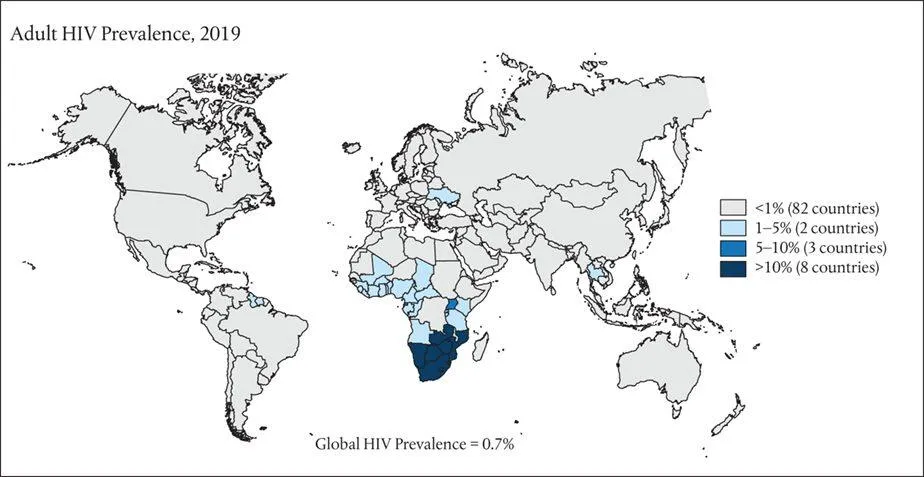
- Scale today. By 2024 about 91 million people had been infected and 44 million had died; 40.8 million live with HIV, with 1.3 million new infections and 630,000 deaths that year (UNAIDS).
- Prevention leap. Twice-yearly injectable lenacapavir gave near-total protection in the PURPOSE trials and was approved for PrEP by the FDA in June 2025, recommended by WHO in July 2025. Cuts to PEPFAR and global HIV funding in 2025 threaten these gains.
Influenza
The H1N1/09 "swine flu" pandemic (several genes from a Eurasian pig virus) began in January 2009 and circled the globe for 19 months, infecting 11-21% of the world and killing about 300,000, often through pneumonia. Pregnant women were vulnerable, and deaths peaked at 50-64 years rather than in the elderly, probably because older people retained memory of H1N1 from after 1918.
2009 proved mild, so stockpiled PPE and anti-flu drugs looked wasted. Some Western governments concluded that scientists exaggerate pandemic risk, and that impression fed their lack of preparedness for COVID-19.
A HISTORY OF THE "NEWE ACQAYNTANCE"
Flu is a zoonosis acquired from birds, old in humans but still "emerging" because new strains jump. Fifteenth-century Italians named it influenza for a malign supernatural influence. In 1562 Thomas Randolph, England's ambassador to Mary Queen of Scots, wrote to Sir William Cecil that the queen had caught "the newe acqayntance", which swept her court: headache, stomach soreness and a great cough, killing only "some olde folkes". The human virus was found in 1933. In 1955 Werner Schäfer at the Max Planck Institute in Tübingen showed fowl plague was bird flu, and proposed that viruses of different species could swap genes (genetic reassortment) to make new human strains. He was right.
- Every winter: outbreaks. Every 8-10 years: an epidemic infecting up to 10%, killing about 400,000 worldwide.
- Pandemics since 1918: 1957, 1968, 1977, 2009.
- 2-3 amino-acid changes per year from drift.
- 8 separate RNA gene segments.
- 16 H and 9 N variants (Crawford's count).
- Antigenic shift every 10-40 years.
DRIFT AND SHIFT
The virus is studded with two surface spikes: haemagglutinin (H), which binds cells, and neuraminidase (N). Neutralizing antibodies against H and N confer immunity, and strains are named by their H and N types.
Antigenic drift Slow, cumulative point mutations in H and N. Eventually the virus dodges existing immunity enough to cause an epidemic; residual immunity prevents a pandemic.
Antigenic shift A wholesale swap of H or N genes by reassortment produces a strain almost nobody is immune to: the recipe for a pandemic. Unique to flu.
Because the genome comes in eight segments, two strains infecting one cell can produce offspring with mixed genes. Birds carry every H and N combination as harmless lifelong infections, but only a few H types infect human cells, so pigs, susceptible to both bird and human strains, often act as the mixing vessel.
| Year | Pandemic | Strain | Origin of new genes |
|---|---|---|---|
| 1918 | Spanish flu | H1N1 | Avian virus, source unknown |
| 1957 | Asian flu | H2N2 | Three bird genes in human virus |
| 1968 | Hong Kong flu | H3N2 | Two bird genes |
| 1977 | Russian flu | H1N1 | 1950s H1N1 reappears |
| 2009 | Swine flu | H1N1/09 | North American and Eurasian pig genes |
Most new strains arise in East Asia, especially rural southern China, with the world's densest crowding of ducks and pigs.
Crawford's 16 H and 9 N counts cover birds; bat flu viruses discovered in 2012-13 added H17N10 and H18N11, giving 18 H and 11 N. The 1977 "Russian flu" was almost certainly not natural: its near-identity to a 1950 strain points to a lab release or vaccine trial accident, an early warning relevant to today's origin debates.
1918: WHY SO DEADLY?
Spanish flu infected about a third of humanity, killed one in twenty of them and over 50 million in total, mostly young children and young adults; other pandemics kill about 1 per 1,000, mainly the very young and very old. It was first reported officially in Spain; a milder North American outbreak earlier in 1918 may have crossed with US troops, though many scientists suspect an East Asian origin.
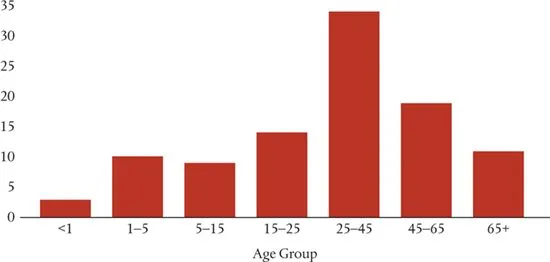
War alone cannot explain the death toll, since regions untouched by war also suffered. In 2005 scientists sequenced the full 1918 genome from an Inuit woman buried in permafrost at Brevig Mission, Alaska, and from an archived lung of a US serviceman. It was an avian virus new to humans, with mutations including one that blocks interferon production. The virus races through the lungs, the body over-responds with a cytokine storm, fluid floods the air spaces, and victims drown in their own fluids.
H5N1: BIRD FLU
A three-year-old boy died in May 1997; WHO labs identified H5N1, matching a virus that had killed 4,500 chickens on three farms: 18 cases, six deaths, no human-to-human spread. In December poultry handlers fell ill again (17 cases, four deaths). With headlines of a "killer bug", the government slaughtered 1.2 million chickens from 200 farms and 1,000 trading posts in 24 hours and banned Chinese imports before New Year banquets.
H5N1 then caused a panzootic in 50+ countries, endemic in poultry in China, Thailand, Bangladesh, Egypt, Indonesia and Vietnam. It shares the 1918 cytokine-storm mutation and kills about 95% of infected chickens. WHO had recorded 862 human cases since 2003, with ~60% mortality, but no adaptation to human-to-human spread. Policy: cull and watch.
A new lineage, clade 2.3.4.4b, spread from 2020-21 to every continent except Australia, killing wild birds, sea lions and elephant seals in huge numbers. In March 2024 it was found in US dairy cattle, spreading between herds via milking equipment and raw milk; by 2025 roughly a thousand herds in 17 states were affected. About 70 US human cases followed, mostly mild conjunctivitis in farm workers, with one death (Louisiana, January 2025). There is still no sustained human-to-human spread, but mammal adaptation has raised the risk well above Crawford's "cull and watch" era. Global WHO totals approach 1,000 human cases since 2003.
SARS-CoV-2 and COVID-19
- Dec 2019 A severe respiratory disease appears in Wuhan, Hubei (11 million people).
- Jan 2020 Hubei sealed off, but Chinese New Year travel has already scattered the virus; the world is alerted at just 59 cases. China shares the genome sequence mid-January.
- 15-28 Jan Cases reach Washington State, Bavaria and Lombardy, all from China.
- 30 Jan WHO declares a PHEIC.
- 12 Feb Virus jumps from Italy to New York, seeding the city's largest cluster; skiers spread it across Europe.
- 11 Mar WHO declares a pandemic.
- 16 Mar UK full lockdown (the date Crawford gives).
- Nov 2020 Mink-to-human spillback in Denmark; 17 million mink culled.
- Early 2021 Alpha, Beta, Gamma variants spread; 100 million cases, 2.5 million deaths.
How it infects. Droplets from coughs, sneezes, talking and singing enter via mouth, nose and sometimes eyes. The spike protein docks with ACE-2, found in blood vessel linings and the respiratory tract, kidney and gut; that spread of receptors explains the many organs affected. Infected people become infectious 5-7 days after infection, even if symptomless (~20%). Typical symptoms are fever, cough, breathlessness and loss of taste and smell; severe cases suffer a cytokine storm like 1918 and a clotting disorder that damages brain, lungs and kidneys.

Death rates climb from under 0.1% below about 50 to ~25% over 85, and are higher in men, hospital staff and ethnic minorities; overall about 1%. Cases hit 100,000 in 55 days and 500,000 twenty days later. R₀ is 2-3, but super-spreaders matter: one person at a Boston business conference in March 2020 led to about 100 cases. On the Diamond Princess (3,711 aboard, quarantined in Japan from 3 February), 700 were infected within a month, 18% without symptoms, with 1.1% fatality.
WHO COPED, AND WHO DID NOT
- SARS veterans (China, Vietnam, South Korea, Hong Kong, Singapore, Taiwan, Japan) had stockpiled PPE and launched track, trace and isolate at once, avoiding steep surges.
- Island states such as New Zealand used strict border closures to keep tracing manageable.
- The UK and most of Europe saw tracing overwhelmed, fell back on hand-washing, masks and distancing, then lockdown; easing began in May 2020 when R fell well below 1, before a second wave in autumn.
- Sweden tried to build herd immunity (estimated threshold 67%) without lockdown, but rising cases forced restrictions before reaching it.
Modellers' estimates of R set the timing of lockdowns: R above 1 meant tightening, consistently well below 1 allowed easing.
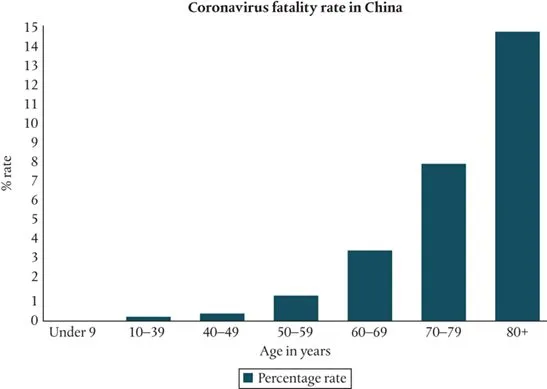
ORIGIN, LONG COVID, SPILLBACK, VARIANTS
- Origin. Early cases clustered at Wuhan's seafood and live animal market. A bat coronavirus shares 96% identity; pangolins carry similar viruses and may have been intermediates. The nearby Wuhan Institute of Virology studies bat viruses; a WHO team in early 2021 ruled out a lab role, but inquiries continued.
- Long COVID. Persistent cough, breathlessness, fatigue, pains, depression and insomnia in about 5% of sufferers, for months, with no specific treatment.
- Reverse spillover. The virus has infected cats, dogs, lions, tigers, primates and bats, and in Danish mink mutated and spilled back to people.
- Variants. Alpha (UK), Beta (South Africa), Gamma (Brazil), then Delta (India), all more transmissible; the worry is whether the first vaccines will cover them.
Research. The genome sequence enabled early diagnostic tests; 100+ vaccines entered development within months and 1,000+ drug trials began. By end-2020 only remdesivir was authorized; dexamethasone improved ICU survival, and arthritis drugs tocilizumab and sarilumab helped tame the cytokine storm.
- Toll. Over 7 million reported deaths; WHO estimated 14.9 million excess deaths in 2020-21 alone. WHO ended the PHEIC on 5 May 2023.
- Variants. Omicron (November 2021) brought huge immune escape, then a stream of descendants (BA.5, XBB, JN.1, KP.2, LP.8.1, XFG); vaccines are now updated yearly, like flu's.
- Asymptomatic share. Later meta-analyses put silent infections nearer 35-40% than 20%.
- Long COVID proved larger and more varied than "5%, mostly elderly": it affects all ages, tens of millions worldwide, with no proven treatment yet.
- Drugs. Oral nirmatrelvir-ritonavir (Paxlovid) arrived in December 2021.
- Origin unresolved. The 2021 WHO-China report called a lab leak "extremely unlikely", but WHO's chief said that was premature. 2022 studies located early cases and both early lineages (A and B) around the Huanan market, and 2024 analysis found raccoon-dog genetic material alongside virus there. WHO's SAGO advisers (June 2025) judged the weight of evidence favours zoonotic spillover but could not exclude a lab accident without data China has not shared; several US agencies lean, with low confidence, toward a lab origin. The question remains open.
WHY COVID-19 WENT GLOBAL AND SARS DID NOT
| Criterion | Spanish flu | SARS | COVID-19 |
|---|---|---|---|
| Origin | Spain (reported), 1918 | China, 2002 | China, 2019 |
| Primary / intermediate host | Birds / none | Bats / none listed | ?Bats / ?Pangolin |
| Family | Orthomyxovirus | Coronavirus | Coronavirus |
| Cell receptor | Sialic acid | ACE-2 | ACE-2 |
| Incubation | 2-3 days | 2-7 days | 4-12 days |
| Super-spreaders | Not known | Yes | Yes |
| At-risk groups | Children, adults 20-40 | Elderly, chronically sick | Elderly, chronically sick |
| Asymptomatic infection | Yes, level unknown | None | ~20% |
| Cytokine storm | Yes | Yes | Yes |
| R₀ | 2-3 | 2-3 | 1.8-3.6 |
(Crawford's table gives mortality of 10-20% for Spanish flu and 30-40% for SARS, figures that apply to severe or hospitalized cases and clash with her text's 1 in 20 and ~10%.)
All three are airborne zoonoses causing lethal cytokine storms, and their R₀ values barely differ (2.0-3.5). So severity and R₀ do not explain the outcome. What lets a virus spawn a pandemic is not the disease it causes but how it moves between hosts: where it is made in the body, and whether people shed it before or without symptoms.
- Site of production. A sneeze sends about 40,000 droplets at 200 mph; upper-airway droplets from sneezing, talking and singing are light and travel far. SARS causes severe lung disease in 40% of cases against about 1% for COVID-19, implying SARS is made deep in the lungs and shed in heavy cough droplets reaching only close contacts.
- Silent infection. Common in flu, up to 20% in COVID-19, absent in SARS.
- Pre-symptomatic shedding and super-spreading. COVID-19 sufferers shed for days before symptoms, so tracing always lags; SARS contacts could be isolated before becoming infectious.
The conclusion: only lockdown could match COVID-19 and 1918 flu, and only a vaccine could end the pandemic short of herd immunity (Chapter 8).
The three pandemics share a pattern: silent spread first, recognition later. HIV hid for 40 years, H1N1 and SARS-CoV-2 for weeks. Surveillance that only reacts to sick people will always be late; the edge comes from watching animal reservoirs and wastewater, sharing sequences at once, and planning for asymptomatic transmission from day one.
Past Emerging Viruses
Smallpox, measles and polio were once emerging viruses too, unleashed when farming put people in crowded villages beside domesticated animals. Their histories show how acute viruses settle into humans, ravage virgin populations, and finally yield to vaccines, and Crawford uses them, plus a speculative 1889 coronavirus pandemic, to forecast how COVID-19 may evolve: towards herd immunity and, eventually, a common cold.
Farming and the crowd diseases
Viruses have jumped to us ever since we split from the apes, but the reason has changed. Today it is contact with wild animals plus global travel. For our ancestors it was the switch from hunter-gatherer to farmer about 10,000 years ago. Small, roaming hunter-gatherer bands were fairly free of infectious disease; settled villages and domesticated animals brought spillover, and crowding let the new viruses thrive. This was the birth of the acute childhood "crowd diseases".
- Smallpox is closest to gerbilpox and camelpox, and probably jumped from gerbils to camels and humans 5,000-10,000 years ago, the first of the early epidemic viruses.
- Measles evolved later from rinderpest of cattle.
Like Ebola, SARS and MERS today, the first outbreaks died out once susceptible people ran out. As settlements grew and connected, epidemics grew too, until around 1000 BC the crowded valleys of the Nile and Ganges could sustain the viruses permanently. They then broke ties with their animal hosts and evolved in humans alone, like HIV-1 and COVID-19 now. With no genetic resistance, early disease was far more severe than the childhood versions we inherited.
Viruses that give lifelong immunity and no persistent infection have no backup reservoir. As immunity builds, the virus stalls even though not everyone has been infected: herd immunity. The threshold depends on R₀: 90-95% for measles (R₀ 12-18), about 80% for smallpox (R₀ 3.5-6.0), 33-44% for flu (R₀ 1.4-2.8). Such viruses therefore need large, dense populations to keep a fresh supply of children born since the last epidemic.
Smallpox
Smallpox began with fever, sore throat, headache and aches, then on day four the rash appeared. About 30% died, and many survivors were blinded or disfigured.
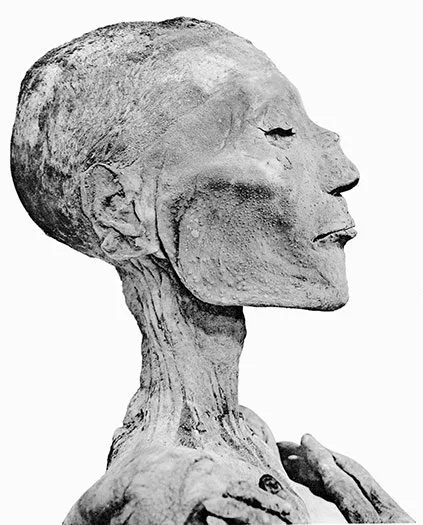
- Origins and spread. Egyptian mummies, notably Ramesses V (twelfth century BC), show typical pustules; the virus spread from Egypt and India to China (first records AD 340), along the Burma Road and Silk Route, and into Europe with Islamic invaders and returning Crusaders. By the twelfth century it was rife across Europe, Asia and North Africa, killing 400,000+ a year in Western Europe.
- Virgin soil. From the fifteenth to eighteenth centuries settlers carried it to the Americas, Africa, Australia and New Zealand, sometimes killing half the population.
- Royal victims. At its peak smallpox caused over 5% of all London deaths. Elizabeth I nearly died in 1562; the Stuarts ended when Queen Anne's only son, Prince William, died of it; within 80 years it killed Emperor Joseph I of Austria, Luis I of Spain, Louis XV of France, Queen Ulrika Eleanora of Sweden and Tsar Peter II.
Hernando Cortés invaded Mexico with under 600 troops and was being soundly beaten until a small relief force arrived, one of them incubating smallpox. The Spanish, mostly immune from childhood, were untouched; nearly every Aztec caught it and about a third died, handing Cortés an easy victory.
- Heat treatment (tenth century). Al-Razi, the Persian physician who first distinguished smallpox from measles, thought it was fermentation of the blood and had patients sweat out humours in sealed rooms before blazing fires.
- Red treatment (twelfth-seventeenth centuries). Red clothes, red blankets, red rooms, red-clad carers, possibly from a Japanese belief that red expels illness and demons.
- Cooling treatment (seventeenth century). Sir Thomas Sydenham noticed red-treated patients did worse than those too poor to afford it; he opened the windows and improved survival. Real progress came only with Jenner's vaccine in 1798.
Measles
Measles is among the most infectious of all viruses. In healthy populations it is rarely fatal, but WHO counted 140,000 deaths a year, mostly children under five in the poorest countries. In virgin populations it was catastrophic.
Scottish missionaries Thomas and Mary Bridges set up a mission at the tip of South America. A supply ship brought an illness the doctor called typhoid pneumonia; Mary Bridges recognized measles. More than half the infected Yahgan died, and many survivors died within two years; European children had mild illness and adults were immune. Their son E. Lucas Bridges recalled graves could not be dug fast enough, and correctly guessed Europeans had inherited resistance from generations of epidemics.
After 65 years without measles, a carpenter arrived from Denmark eight days after visiting a sick friend; within six months 6,000 of 7,782 islanders were infected. Peter Panum, a young Danish health officer, spent five months on the outbreak and showed:
- Immunity is lifelong: no elderly islander who had measles in 1781 caught it again.
- Incubation is 13-14 days, from careful contact tracing.
- Hence measles mainly strikes children and returns in regular waves.
Before vaccination 90% of urban children were immune by 15. A measles vaccine was licensed in 1968 and the MMR triple vaccine arrived in 1988 (UK dates).
WHO estimated about 10 million cases and 107,000 deaths in 2023, after pandemic disruption to vaccination. In 2025 the US recorded over 2,000 cases, its most since 1992, centred on a West Texas outbreak, with three deaths; Canada lost its elimination status in November 2025, and US status came under review. Measles is the first casualty when coverage falls below its 92-95% threshold.
Polio
A drop-footed young man on an eighteenth-dynasty Egyptian stele (1580-1350 BC) is perhaps the oldest record of a virus infection. Yet paralytic polio became a major problem only in the twentieth century, and mainly in rich Western countries, peaking in the 1940s-50s with summer epidemics among affluent children. Onset was abrupt (headache, fever, vomiting, stiff neck); the virus then attacked the spinal cord, and a healthy child could be paralysed within a week. Paralysis of breathing muscles meant life in an iron lung. Sir Walter Scott was left with a limp; Franklin Roosevelt was paralysed below the chest from age 40.
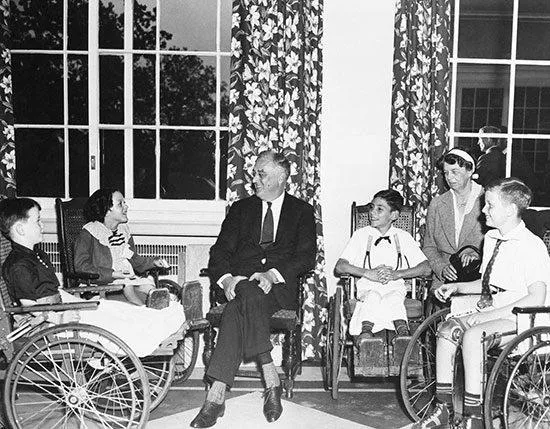
A RESEARCH FIELD LED ASTRAY
It took nearly 50 years from discovery (1908) to vaccine (1955).
- 1908 Karl Landsteiner and Edwin Popper (Vienna) transmit polio to two rhesus monkeys with filtered spinal cord: the virus is found.
- 1911 In a Swedish epidemic Carl Kling (Stockholm) finds virus in the mouth and intestines of patients, their healthy relatives and even healthy controls. Published in 1912, it is ignored for 26 years.
- 1910s-30s Simon Flexner's Rockefeller group, dominant because monkeys were expensive, insists infection enters through the nose and runs straight up nerves to the brain.
- Late 1930s John Paul at Yale repeats Kling's work and debunks Flexner.
- 1948 John Enders and colleagues in Boston grow polio virus in tissue culture (Nobel Prize 1954).
- 1955 Vaccine introduced; US paralytic polio, about 20,000 cases a year, falls tenfold at once.
THE ICEBERG PHENOMENON
Polio spreads faecal-orally, grows silently in the small intestine, and is shed in faeces that survive weeks in water and sewage. Infection is common; paralysis follows in only 0.1-1.0%.
Poor, crowded settings Infection comes in infancy, when it is almost always silent; virtually all children are immune by five. Paralysis is extremely rare.
Clean, affluent settings Children escape early infection, so a pool of older susceptibles builds, and periodic epidemics reveal the paralytic tip of the iceberg.
Polio is the paradox of public health: rising living standards turned a silent infection of infancy into an epidemic paralytic disease. As developing countries grew richer in the late twentieth century, they too moved from endemic to epidemic polio.
Global eradication
Jenner's vaccine had removed smallpox from the US and most of Europe by the 1940s, but imported cases still forced costly surveillance, so rich countries funded WHO's Worldwide Smallpox Eradication Campaign from 1966. It began with 31 endemic countries and 131,776 reported cases (20% fatal), probably a hundredfold underestimate.
- Define the target. Endemic = >5 cases per 100,000 and <80% vaccinated.
- Divide the map into four isolated zones: Brazil, Indonesia, sub-Saharan Africa and the Indian subcontinent.
- Break every chain. No animal reservoir and no persistent infection, so stopping transmission kills the virus.
- Methods. Raise vaccination, improve reporting, trace all contacts, isolate cases and contacts, and make a heat-stable vaccine.
- Prove absence. A surveillance "quarantine" period checking every rumour, since monkeypox and chickenpox mimic mild smallpox.
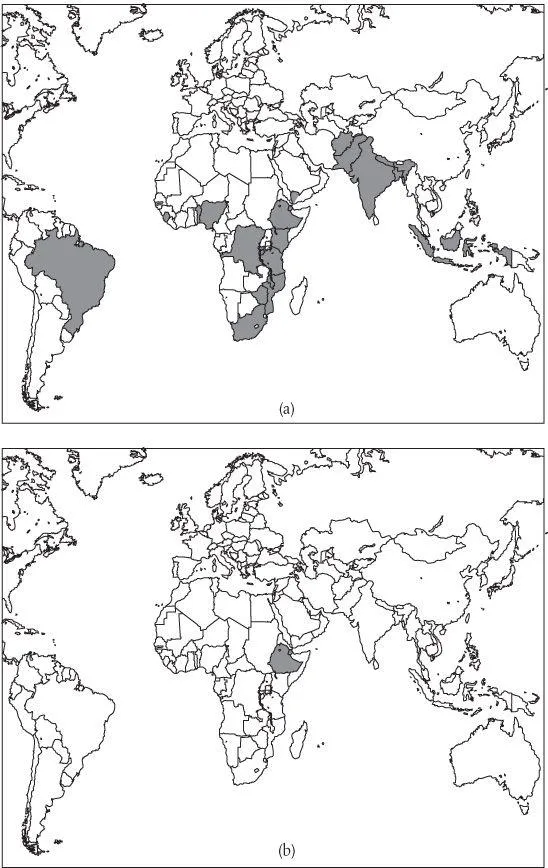
By 1973 only India, Bangladesh, Pakistan, Nepal, Botswana and Ethiopia remained; by 1975, Ethiopia alone; a year later, none.
- 668,332 villages and 3,051,753 households searched.
- 115,347 workers under 29,046 supervisors.
- 8,048 assessors checked 107,409 villages: 97% had been searched.
- Result: 41,485 chickenpox cases, zero smallpox.
The world's last smallpox cases were in Birmingham, UK. A medical photographer in the Anatomy Department died; one person caught it from her and recovered. Smallpox was grown on the floor below in Microbiology, where safety was "far from satisfactory"; virus probably rose through an air duct with an ill-fitting panel beside a telephone she used daily. The inquiry blamed the researchers, the department and the Dangerous Pathogens Advisory Group inspector. The department head killed himself, making two deaths.
Eradication was declared in 1980 at a cost of $312 million, about $200 million of which would have been spent on routine control anyway. WHO has since targeted polio, measles and rubella, but missed the 2020 eradication goal because of war, unrest and COVID-19. Crawford hopes all three will be gone within a decade.
Wild poliovirus types 2 and 3 have been certified eradicated (2015, 2019) and Africa was declared wild-polio-free in August 2020. Wild type 1 hangs on only in Pakistan and Afghanistan, where cases jumped to 99 in 2024. The bigger problem is circulating vaccine-derived poliovirus: the live oral vaccine can revert in under-immunized communities, causing paralysis in New York (2022) and Gaza (2024) and turning up in London sewage (2022). A genetically stabilized novel OPV2 has been used since 2021. Crawford's "within a decade" looks optimistic for all three targets.
What past epidemics teach about COVID-19
The scale has changed beyond recognition: the population rose from under 10 million to 7 billion in 10,000 years, and we can circle the 24,902-mile globe in 2-3 days, where a walking farmer (3 mph, 12 hours a day) would need 690 days. So COVID-19 could never have been stopped once out of the box. The principles are the same, though: ancestors waited for herd immunity (years and many deaths) and genetic resistance (perhaps 100-200 years).
- Natural immunity is too slow. A year in, natural immunity was ≤20% in most countries against a needed 67%.
- Science is fast. Genome sequenced in weeks, tests soon after, several vaccines licensed within a year.
- The catch. Vaccines deliver herd immunity only if they block infection and reinfection and stop transmission, as smallpox, measles and polio vaccines do. If they give short-lived immunity, prevent disease but not infection, or fail against mutants like flu vaccines, herd immunity may never come. For some viruses, like the common cold, no vaccine can be made at all.
Coronaviruses and the common cold
David Tyrrell found the first human coronavirus in the mid-1960s; two more cold coronaviruses followed that decade, and the last in 2005, after SARS revived interest. The four (229E, NL63, OC43, HKU1) can cause pneumonia in the elderly but still lack proper names. The family, named for its crown of spikes, dates back at least to 8000 BC, with reservoirs in bats and birds, mobile animals that spread them widely and cause regular livestock epidemics.
OC43's closest relative is bovine coronavirus, and its molecular clock dates the jump to humans to about 1890. The "Russian" or "Asiatic flu" began in Central Asia in 1889 and killed about 1 million of 1.5 billion people by end-1890, mostly the elderly, a hallmark of coronaviruses, not flu. No samples survive, so the link cannot be proved, but it offers a template: a cattle coronavirus that caused a deadly pandemic and became a common cold.
COVID-19'S LIKELY FUTURE
Left alone, COVID-19 would circle the world in waves for years; "no one is safe until all are safe" applies to every last outpost. As immunity rises, more transmissible variants will multiply, but competition for scarce susceptible hosts should favour milder variants, since killing the host becomes counterproductive.
Two of Crawford's assumptions have not held up. Herd immunity proved unreachable for SARS-CoV-2: immunity from infection and vaccines wanes within months against infection, and Omicron-lineage variants reinfect freely, so the virus became endemic with recurrent waves rather than stopping. And Chapter 2's own rabbit case shows virulence need not fall: Omicron was milder partly by chance, and Delta was more severe than its predecessors. Population immunity, not viral evolution, did most of the work in reducing deaths. The OC43-1889 link also remains a hypothesis.
The history here is a three-stage model: spillover, adaptation to crowds, then control or endemic settlement. Eradication worked only where the virus had no animal reservoir, no carrier state, lifelong immunity and a vaccine that blocks transmission. Check any proposed elimination target against those four conditions before believing the timeline.
Lifelong Residents
Persistent viruses play the opposite game to epidemic ones: instead of racing between hosts, they hide inside long-lived cells, dodge the immune system and shed quietly for decades. Crawford follows the herpesviruses, HPV and CMV, the recently arrived and still unbalanced HIV-1, the transfusion killers hepatitis B and C, and the circumstantial case that common viruses can trigger chronic "orphan" diseases such as multiple sclerosis.
Nomads versus settlers
Acute viruses (nomads) Measles, COVID-19: must keep moving, need crowds, and produce maximum offspring in the brief window before immunity clears them.
Persistent viruses (settlers) Herpes, papilloma: put their effort into immune evasion, lodge for life, and survive in sparse, isolated populations, even among uncontacted Amazonian peoples and Papua New Guinea highlanders.
Many persistent viruses are older than Homo sapiens, coevolved with our primate ancestors into a balance that rarely tips into disease. Killing a lifelong host would be self-defeating, so first infection is usually mild or silent.
The herpesviruses
Herpesviruses are large DNA viruses, common across the animal kingdom, and all persist. Of the eight human herpesviruses, varicella zoster virus (VZV) and herpes simplex viruses (HSV) 1 and 2 each infect over 90% of the world.
CHICKENPOX AND SHINGLES
VZV spreads by close contact and air and first causes chickenpox (varicella), a mild childhood rash illness that leaves lifelong immunity. Unlike true acute infections, the virus is not eliminated: it hides latent in nerve cells. Decades later it may reactivate, travel down the nerve, and erupt as shingles in the patch of skin that nerve supplies.
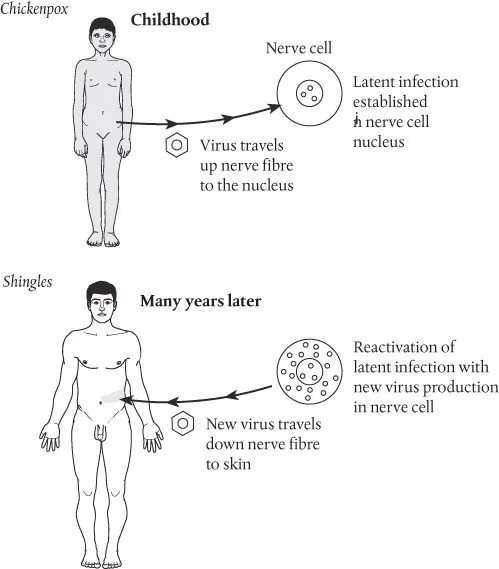
- Where it appears. Commonest on the face (trigeminal nerve); via the ophthalmic branch it can damage the eye. On the trunk, nerves wrap round each side "like a bear hug from behind", so the rash forms a band on one side stopping at the midline.
- The names. "Shingles" and "zoster" both mean belt; "herpes" is Greek for "to creep"; Norwegians call it "a belt of roses from hell".
- Infectiousness. Shingles blisters are packed with virus and can give chickenpox to the non-immune, but nobody catches shingles from chickenpox: shingles comes from inside.
HERPES SIMPLEX: A DOUBLE LIFE
HSV-1 causes cold sores, usually passed by a kiss through a tiny break near the lips; HSV-2 is sexually spread and causes genital herpes, going latent in pelvic nerve cells. Both infect skin and nerve cells.
- The long climb. In most cells viral DNA travels a few micrometres to the nucleus; in a sensory nerve the nucleus sits by the spinal cord, and the virus crawls up the fibre at about 10 mm an hour.
- Dormant seed. The nerve nucleus lacks the chemicals for replication, so the virus lies latent like a seed in soil. T cells heal the skin sore and antibodies block reinfection, but neither can reach the hidden virus.
- Why nerves. Nerve cells do not divide, age or die: we keep the ones we are born with, so the virus is never lost.
- Reactivation. Periodic bursts maximise chances of meeting new friends, partners or babies. Just under half of adults get cold sores, and most people get shingles at least once.
Triggers include fever, stress, colds, menstruation and ultraviolet light (skiers know it), and sores recur in the same place because the same nerve is involved. Exactly how reactivation happens is unknown, but immunity matters: people with T-cell defects or on cancer treatment suffer severe, repeated attacks, and in the profoundly immunosuppressed HSV-1 can cause fatal encephalitis.
HPV and CMV: viruses in stem cells
Some persistent viruses do not separate latency and production so cleanly; somewhere in the body cells are always making virus, so they must constantly dodge immunity. HPV and cytomegalovirus (CMV) hide in stem cells, which divide for life without ageing. The viral DNA is copied with the cell's; each division leaves one daughter a stem cell (keeping the virus) and the other to mature and die.
- HPV in skin. Wart and verruca strains infect stem cells of the innermost skin layer. As daughter cells mature and rise to the surface, their changing chemistry lets HPV reactivate, so cells about to be shed carry thousands of viruses.
- CMV prevalence. About 50% of Western adults (more in developing countries), usually caught unnoticed early in life; virus appears in blood, saliva, urine, genital secretions and breast milk.
- CMV's ride. It infects bone-marrow stem cells destined to become macrophages, travels the body inside them, and reactivates in tissues such as the lung; healthy T cells kill most virus-producing cells.
- Transplants. CMV pneumonitis threatens bone marrow and organ recipients, especially non-immune recipients of an infected donor's organ, who suffer primary infection while immunosuppression is at its peak. Matching CMV status avoids it.
- Pregnancy. CMV crossing the placenta early can damage the baby's brain, lungs and liver; Crawford calls this cytomegalic inclusion disease very rare.
The severe inclusion disease is uncommon, but congenital CMV infection is the commonest congenital infection in rich countries, affecting about 1 in 200 births; roughly 10-15% of those babies have lasting problems, making CMV the leading non-genetic cause of childhood deafness. Newborn CMV screening has begun in parts of the US and Canada, and the antiviral letermovir (2017) now protects many transplant patients. There is still no licensed CMV vaccine, though mRNA candidates have reached phase 3.
Immune evasion
Even hidden viruses must reactivate, so persistent viruses deploy a whole arsenal to prolong their productive phase, concentrated against T cells, the body's best antiviral weapon.
- The flag system. Cells chop proteins into peptides and display them on the surface. T cells check them: "self" peptides pass; viral peptides mark the cell for killing.
- The jamming. The pathway from protein to displayed peptide has many steps and molecules; persistent viruses interrupt it at many points.
- Convergence. Unrelated viruses have evolved very similar blocking tricks, a sign of how central evasion is to survival.
- The balance. Coevolution usually settles each virus at a level of activity that does not inconvenience the host.
HIV-1 is the exception to the persistent viruses' truce: too recent a human parasite to have struck a lifelong balance, it destroys the very immune cells it lives in. It is the clearest case of an unbalanced persistent infection.
Retroviruses and HIV-1
Retroviruses reverse-transcribe their RNA into DNA on entry and integrate it; thereafter the viral DNA is copied whenever the cell divides, and the virus need not make any protein, so it attracts no immune attack.
- Françoise Barré-Sinoussi: isolated HIV-1 from an AIDS patient's lymph gland at the Pasteur Institute in 1983; Nobel Prize 2008.
- Luc Montagnier: her group head and Nobel co-winner; sent samples to the NIH.
- Robert Gallo: NIH retrovirologist whose 1984 paper described "his" isolate and a lucrative blood test; sequencing showed it was the French virus. Ronald Reagan and Jacques Chirac split the credit and royalties.
- Peter Duesberg: led AIDS denialists; his 700-page Inventing the AIDS Virus (1996) claimed HIV was harmless, encouraging people to drop safe sex and treatment. Effective therapy in the mid-1990s cost him his audience.
HIV-1 spreads through blood, breast milk, semen and vaginal secretions, all containing virus and infected cells. Its receptor CD4, found on helper T cells, macrophages and brain microglia, shapes the disease.
THE NATURAL HISTORY OF UNTREATED HIV
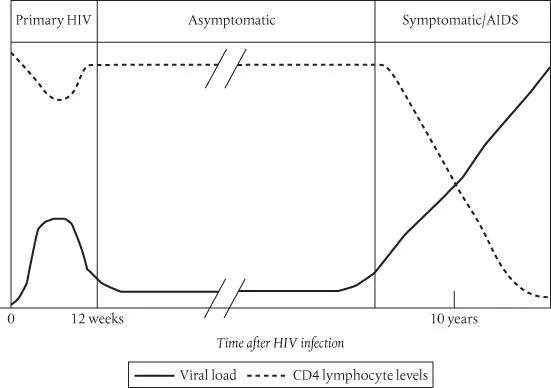
- Primary infection. A mild flu-like illness, occasionally like glandular fever; very high blood virus as infected CD4 cells seed the body and brain. Immunity takes control in 2-3 weeks.
- Asymptomatic decade. Blood virus is low under antibody and killer-T-cell pressure, but integrated DNA cannot be eliminated.
- Mutational escape. Each replication throws up mutants; those invisible to killer T cells take over until immunity catches up, then new mutants arise, again and again.
- The downward spiral. CD4 helper cells drive both antibody and killer responses, so as they die immunity weakens, and as immunity weakens more die. When CD4 cells run out, AIDS begins, with fatal opportunistic infections and opportunistic neoplasms (Chapter 7).
Antiretroviral drugs turned HIV into a manageable disease with a normal lifespan in rich countries, but in 2019 about 32% of infected adults and 47% of children worldwide still lacked treatment.
Hepatitis B and C
Several viruses (including hepatitis A and E) inflame the liver acutely; only HBV (found 1964) and HCV (1988) persist for life. Wartime blood banks made transfusion common, and post-transfusion hepatitis followed, with jaundice 1-4 months later. Carrier rates were 6.3% among paid US donors against <0.6% among volunteers, and 51% of open-heart surgery patients developed hepatitis.
Baruch Blumberg at the Fox Chase Cancer Center, Philadelphia, was studying inherited variation in disease susceptibility, collecting sera worldwide and testing them against multiply transfused patients' sera. In 1964 a haemophiliac's serum reacted with a sample from an Aboriginal Australian: the "Australia antigen" (Au), absent in healthy Americans but common in Taiwan, Vietnam, Korea, the Pacific and southern and eastern Europe. A New Jersey patient turned Au-positive just as he got hepatitis; the team's paper linking Au to hepatitis was rejected as a "false claim" from virology outsiders, then published in 1967. Au was the HBV surface antigen; donor screening began in 1971 and Blumberg won the 1976 Nobel Prize.
| Hepatitis B (HBV) | Hepatitis C (HCV) | |
|---|---|---|
| Discovered | 1964 (Blumberg), Nobel 1976 | 1988 (Houghton, Chiron), Nobel 2020 |
| Genome | DNA | Small RNA |
| Main routes | Sex, mother-to-child, blood, shared utensils, tattoos, piercing | Unsterile injecting equipment |
| Persistence | 1-5% of adult infections; >90% of untreated newborns | Most infections; usually silent |
| Burden (WHO, per book) | 257 million carriers, 887,000 deaths/yr | 71 million carriers, ~400,000 deaths/yr |
| Prevention | Vaccine since 1982; birth dose blocks mother-to-child | Donor screening; risk now 1 in 100,000 units |
- HBV is highly infectious; drug injectors and gay men are at particular risk. The liver's spare capacity lets damage build unnoticed into cirrhosis and liver failure; prevalence is highest in Southeast Asia and sub-Saharan Africa.
- Non-A, non-B. After HBV screening, up to 10% of recipients still got hepatitis. Michael Houghton's team at Chiron (Emeryville, California) fished out viral sequence from a chimpanzee infected with patient plasma in 1988; the whole genome followed within a year and donor screening started before anyone had seen the virus.
- Goal. WHO aims to eliminate viral hepatitis as a public health threat by 2030; both viruses also cause cancer (Chapter 7).
WHO's 2024 report counts about 254 million people with HBV and 50 million with HCV, with 1.3 million deaths a year from viral hepatitis, now rivalling TB. HCV has become curable: oral direct-acting antivirals clear it in over 95% of patients in 8-12 weeks, and Egypt, once the world's worst-hit country, mass-screened over 60 million people and became the first to reach WHO's "gold tier" on the path to elimination in 2023. Most countries remain off track for 2030.
Viruses and the "orphan" diseases
Viruses are blamed for chronic diseases of unknown cause, from MS to heart disease and diabetes, usually without result. But a common virus can change its ways, as polio showed. Crawford gives three examples:
- EBV and glandular fever. Epstein-Barr virus infects >95% of children in developing countries silently by age three, then lives in B cells. Children in hygienic societies may escape until adolescence, when infection by kissing often causes glandular fever (infectious mononucleosis): fever, sore throat, swollen glands and months of fatigue.
- Measles and SSPE. Rarely, especially after infection in a very young child, measles persists in the brain and, up to ten years later, causes fatal subacute sclerosing panencephalitis; vaccination is making it vanish.
- HSV and the cornea. Herpes stromal keratitis can blind. It is thought to be autoimmune, through molecular mimicry.
If a viral peptide that killer T cells or antibodies target happens to be identical to a normal cellular peptide, the immune response attacks the body's own cells too, and can carry on long after the virus has gone. For herpes keratitis, T cells against a viral coat protein are thought to destroy the cornea.
THE CASE AGAINST EBV IN MULTIPLE SCLEROSIS
MS strikes young adults, progresses in relapses and partial recoveries, and accumulates nerve damage. Relapses often follow viral infections, and measles, EBV, canine distemper and herpesviruses 6 and 7 have all been accused and dropped. Crawford finds the EBV case "more compelling, but not proven":
- Shared demography. Both MS and glandular fever target young adults in affluent Western societies and are rare in the non-industrial tropics.
- Migration studies. Children who move adopt the new area's risk; adults keep their original risk, so the factor is acquired in childhood.
- Autoimmune brain damage. MS brains are full of immune cells attacking myelin basic protein, suggesting mimicry with a viral protein.
- Universal infection. 100% of MS patients carry EBV, against 90-95% of healthy adults in high-risk areas.
- Risk ratios. EBV carriers are 15 times more likely to get MS; glandular fever raises lifetime risk two- to threefold.
In 2022, a study of 10 million US military personnel (Bjornevik and colleagues, Science) found MS risk rose 32-fold after EBV infection, with nerve-damage markers rising only afterwards, and no such link for other viruses: the strongest evidence yet that EBV is a necessary cause. A companion study showed antibodies to the EBV protein EBNA1 cross-react with the brain protein GlialCAM: molecular mimicry, as Crawford suspected. EBV vaccines and EBV-targeted T-cell therapies for MS are now in trials. Separately, the Shingrix zoster vaccine (2017) has been linked to lower dementia risk in natural experiments, another hint that latent herpesviruses shape chronic disease.
The cost of intimacy
Persistent viruses usually live in harmony, but problems arise when immunosuppression lets them reactivate, and more subtly when a cell carrying foreign viral genes passes them to all its daughters for decades. That lifelong intimacy can change a cell's destiny: sometimes it ends in cancer.
For a persistent virus the winning move is not speed but stealth: hide in a cell that never dies, show the immune system as little as possible, and leak out occasionally. This explains why such viruses resist eradication, why the immunosuppressed suffer most, and why their effects (cancer, autoimmunity) can surface decades after infection.
Viruses and Cancer
About 15% of cancers worldwide, and half in low- and middle-income countries, are caused by viruses. Crawford tells the discovery stories of the seven human tumour viruses, from Epstein's cloudy sample in 1964 to Chang and Moore's molecular hunts, then explains why tumours are only a rare, slow, multi-step accident of persistent infection, and how vaccines and T-cell therapy turn that knowledge into prevention and treatment.
What makes a cell cancerous
About half of us will get cancer and about half of those die of it within ten years. A cancer is one cell multiplying unchecked into a tumour; with about 10¹⁴ cells per body, the transformation is extremely rare per cell but common per person. Most cancers have no known cause, but some have clear triggers:
- Habits and work. Smoking (lung), sunlight (skin), hardwood dust for cabinet-makers (nasal sinuses), soot for boy chimney sweeps (scrotum), asbestos (mesothelioma).
- Radiation. Survivors of Hiroshima and Nagasaki (1945) showed it raises almost all cancers; after Chernobyl (1986) many children developed thyroid cancer.
- Genes. A few direct cancer genes exist, such as BRCA1 and BRCA2 (breast and ovarian).
- 1969 Henry Harris (Oxford) proposes tumour-suppressor genes that put "the brakes on" division; they are found in 1971.
- 1976 J. Michael Bishop and Harold Varmus (UCSF) find the first oncogene in the human genome: chicken-tumour retroviruses had hijacked a cellular gene (Nobel 1989).
Oncogenes drive division; tumour-suppressor genes (anti-oncogenes) stop it.
Animal tumour viruses: a slow acceptance
- 1908 Wilhelm Ellermann and Oluf Bang (Denmark) transmit chicken leukaemia with a bacteria-free filtrate; leukaemia is not yet seen as cancer, so it is ignored.
- 1911 Peyton Rous (Rockefeller Institute) transmits a solid tumour from a barred Plymouth Rock hen's breast (the farmer wanted it cured; Rous killed it). Doubters insist cancers are chemical and not infectious; Rous turns to chemicals himself. He wins the Nobel in 1966, 55 years later.
- 1936 John Bittner (Jackson Laboratory, Maine) swaps newborns between high- and low-cancer mouse strains; the risk follows the foster mother's milk, not the genes. The milk agent is a virus, and tumour virology begins.
Human tumour viruses then proved elusive for decades. Epidemiologists offered clues to look for: geographic clustering (like insect-borne viruses), clustering in families, associates, occupations or habits, and excess in the immunosuppressed.
The discovery of Epstein-Barr virus
In 1961 Anthony Epstein, working on Rous sarcoma virus at the Middlesex Hospital, London, heard missionary surgeon Denis Burkitt lecture on "the commonest children's cancer in tropical Africa": fast-growing jaw tumours that killed in months, common in some Ugandan villages and absent in others.
In a second-hand station wagon with two medical missionaries, Burkitt drove 10,000 miles round East Africa, visiting 50+ hospitals and talking to hundreds of doctors. At one stop a mortuary attendant who modelled clay busts from corpses lined up heads of children with jaw tumours on a path; a passer-by remarked on the novel treatment of burying patients up to the neck in concrete.
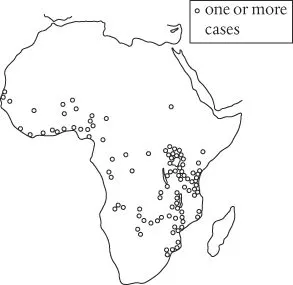
- Altitude below 5,000 feet.
- Rainfall above 55 cm a year.
- Temperature never below 16°C.
- Match: the map of holoendemic malaria (year-round, non-seasonal Plasmodium falciparum), since Anopheles larvae need water and females will not lay eggs below 16°C. The tumour was later found in Papua New Guinea under the same conditions.
- Burkitt's inference: an infectious agent spread by mosquitoes. He was right about the infectious agent and the malaria link, wrong about the mosquito.
THE CLOUDY SAMPLE
Epstein had live biopsies flown from Africa in culture medium, but for two years found nothing: no particles under the electron microscope, no growth in culture. He persevered because "it just had to be right". In 1964 a delayed sample arrived cloudy, normally a sign of bacterial contamination. Under the microscope the cloudiness was tumour cells shaken loose in transit; they grew in culture, and the electron microscope at last showed virus particles. Epstein switched off the microscope and walked round the block in the snow before daring to look again.
Every tumour cell carries viral DNA, but in a latent, invisible form. In the body, any cell that starts making virus is killed by T cells; only outside the body could the cells produce particles to be seen.
The virus was a new herpesvirus, named for Epstein and research assistant Yvonne Barr, who cultured the cells; the tumour became Burkitt's lymphoma. Proving causation took years: a virus found in a tumour might be a passenger, EBV infects almost everyone silently in childhood, and in 1968 it was also found to cause glandular fever.
EBV is now linked to about 20% of gastric cancers, about 35% of Hodgkin lymphoma, rare T-cell lymphomas, immunodeficiency B-cell lymphomas, and (from 1973) almost 100% of nasopharyngeal carcinoma, which reaches 40 per 100,000 a year in south-east China, Hong Kong and Taiwan, probably because of a local dietary cofactor.
Seven human tumour viruses
| Virus | Found | Family, genome | Tumours (other disease) |
|---|---|---|---|
| Epstein-Barr (EBV) | 1964 | Herpesvirus, DNA | Burkitt's, some Hodgkin, nasopharyngeal, some gastric, post-transplant lymphoma (glandular fever) |
| Hepatitis B (HBV) | 1965 | Hepadnavirus, DNA | Liver cancer (hepatitis, cirrhosis) |
| HTLV-1 | 1980 | Retrovirus, RNA | Adult T-cell leukaemia (tropical spastic paraparesis) |
| High-risk HPV | 1983 | Papillomavirus, DNA | Cervix, anus, vulva, some head and neck |
| Hepatitis C (HCV) | 1989 | Flavivirus, RNA | Liver cancer (hepatitis, cirrhosis) |
| HHV8 (KSHV) | 1994 | Herpesvirus, DNA | Kaposi's sarcoma |
| Merkel cell polyomavirus | 2008 | Polyomavirus, DNA | Merkel cell carcinoma |
HIV-1 is counted as carcinogenic by the International Agency for Research on Cancer because its immunosuppression amplifies all the others.
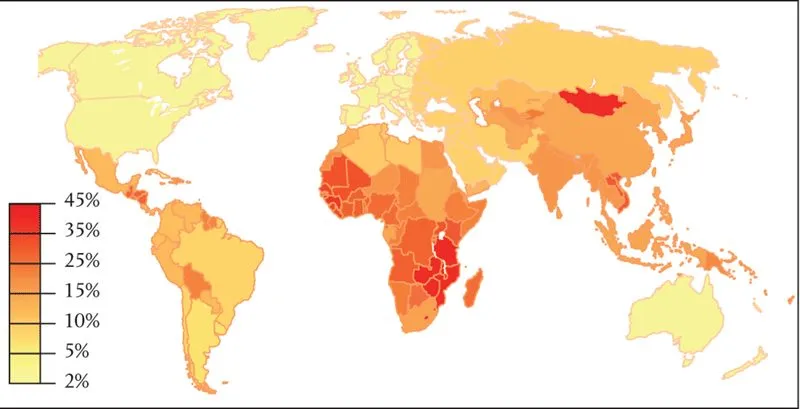
HTLV-1: THE ONLY HUMAN CANCER RETROVIRUS
Robert Gallo at the NIH could not keep leukaemia cells alive until he identified T-cell growth factor (interleukin-2); then a sensitive test for reverse transcriptase revealed HTLV-1, first from a young black man with aggressive T-cell leukaemia, published in 1980. Early cases all linked to the Caribbean or Japan, and Yorio Hinuma (Kyoto) simultaneously found it in clusters of adult T-cell leukaemia in south-west Japan.
- Spread. Rarely and mostly within families: blood, sex, and breast milk; it persists in CD4 T cells.
- Risk. About 1 in 80 carriers develop leukaemia, 10-40 years after infection; in the Caribbean it also causes tropical spastic paraparesis.
- Distribution. 3-10% of healthy people in south-west Japan and the Caribbean; pockets in Africa, South America, the Middle East and Melanesia. Monkey viruses are 95% identical, so the book is African primates.
- Gallo's theory. Carried to the Caribbean by the slave trade and to Japan by sixteenth-century Portuguese traders travelling via Africa; newer findings suggest a more complicated dispersal.
HPV AND CERVICAL CANCER
In 1842 Verona surgeon Domenico Rigoni-Stern noticed from death certificates that nuns had less cervical cancer than married women, who had far less than sex workers: a sexual cause. In the 1970s the suspect was HSV-2, because nearly all patients had antibodies to it.
Harald zur Hausen, who had found EBV in nasopharyngeal carcinoma, moved to Erlangen-Nürnberg in 1972 and turned to cervical cancer. He found no HSV-2 DNA in tumours. Influenced perhaps by Richard Shope's 1930s Iowa rabbits, whose papillomavirus warts turned cancerous in domestic rabbits, and by reports of genital warts turning malignant, he probed genital warts with DNA from a verruca: uniformly negative. That meant many HPV types (over 100 now). In 1983-4 his group found HPV16 in 60% and HPV18 in 20% of cervical cancers. Nobel Prize 2008.
Cervical cancer killed about 240,000 women a year by Crawford's figure, most in Central and South America, sub-Saharan Africa and Southeast Asia. HPV also causes other anogenital, throat and penile cancers.
HEPATITIS VIRUSES AND LIVER CANCER
HBV and HCV both persist in about 10% of those infected, cause chronic inflammation, cirrhosis and, 20-50 years later, liver cancer. The link came from epidemiology: HBV carriage and liver cancer were both highest in Southeast Asia and sub-Saharan Africa, though recognizing HBV as a tumour virus took a decade after its discovery. HCV prevalence is about 2% in Eastern Europe and the eastern Mediterranean (20-30% linked to drug injection) and over 8% in Egypt's Nile Delta, from unsterile needles in a schistosomiasis campaign.
HHV8 AND MERKEL CELL VIRUS
Husband-and-wife team Patrick Moore (epidemiologist) and Yuan Chang (molecular biologist) at Columbia University found the last two. Kaposi's sarcoma (KS), a tumour of cells lining lymph and blood vessels that shows as purple skin patches and later invades organs, struck up to 1 in 5 HIV-positive gay men in the 1980s, and was 20 times more common in gay and bisexual men than in other HIV-positive groups: a sexually transmitted cofactor unleashed by AIDS.
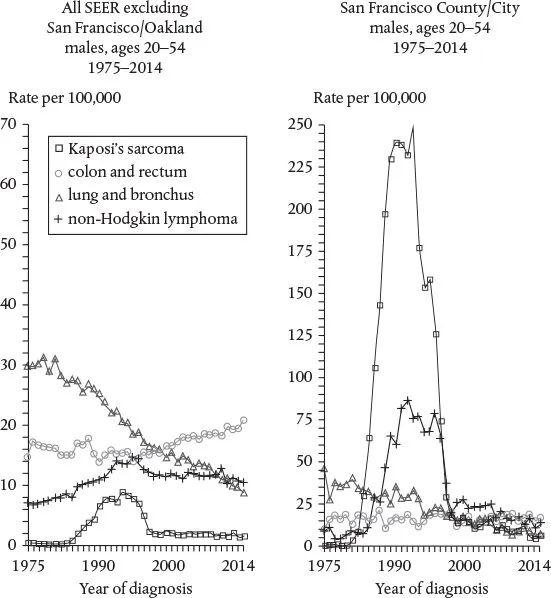
- Representational difference analysis. They compared DNA from a KS tumour with normal skin of the same person; two sequences unique to the tumour belonged to a new herpesvirus, KSHV or HHV8 (1994), present in >95% of KS and in every tumour cell.
- Merkel cell polyomavirus (2008). The same method, tried on many tumours, found one more: in 86% of Merkel cell carcinomas, the only tumour-causing member of five human polyomaviruses.
Why viruses cause cancer so rarely
- Persistence. All set up lifelong infections.
- Infection far exceeds tumours. Some are near-universal.
- Long delay. Tumours appear years to decades after infection.
- Clonality. Each tumour grows from a single infected cell.
A tumour kills the host and the virus with it, so it is not part of the viral life cycle. Virus-induced cancer is an accident, or rather a series of rare accidents, in one infected cell during a long cohabitation: never simply virus infection = cancer.
THE CONTROLS VIRUSES SUBVERT
Skin shows growth control beautifully: it grows with the body, neither bursting nor sagging like a bloodhound's, and a wound closes and then stops.
- Accelerator and brake. Signals switch on oncogenes until the breach is mended; then tumour suppressors stop division, yin-yang fashion. A stuck-on oncogene, a stuck-off suppressor, or a fault anywhere in the pathway from surface to nucleus produces endless division.
- Apoptosis. Programmed cell death kills cells that are virus-infected (before they release thousands of viruses), dividing out of control, or badly DNA-damaged. Enzymes chop the DNA; within 30 minutes the cell is doomed and a macrophage eats it.
- Step by step. Each step is rare, which explains the minority affected, the single-cell origin and the long delay. HBV liver cancer can take 50 years, so it is commonest in those infected at birth, which is why Southeast Asia, with much mother-to-child transmission, has high rates.
| Virus | How its genes take over |
|---|---|
| HTLV-1 | Integrates normally; viral Tax gene drives oncogenesis |
| HPV, HBV | Accidental integration in one cell switches viral oncogenes permanently on |
| EBV, HHV8 | Stay as a circular plasmid; genes block immunity, drive division and block apoptosis |
EBV turns normal B cells in the lab into lines that divide forever.
BURKITT'S LYMPHOMA: THREE HITS
In BL areas EBV infects nearly 100% of children over two (95% of adults worldwide), and children are constantly reinfected with malaria until immunity at about 12. Malaria both suppresses immunity and drives massive B-cell proliferation, raising EBV-infected B cells in the blood. The final hit, found at the Karolinska Institute in 1972, is a translocation moving part of chromosome 8 to chromosome 14, which switches on the cellular oncogene c-myc permanently.
Immunosuppression
The AIDS epidemic and the growth of immunosuppressive therapy (for transplants of kidney, liver, heart, lung, and now trachea, bowel and pancreas, and for cancer) multiplied virus-driven tumours. The commonest is EBV-driven B lymphoproliferative disease: B cells growing without immune control, expressing all EBV latent genes but no 8:14 translocation, and therefore responsive to immunotherapy.
Prevention and therapy
Hepatitis B vaccine (1982) Too costly at first for the regions that needed it most; an international task force forced prices down, and 110+ countries now vaccinate newborns, with dramatic drops in carriage. Problems: three doses over six months and about 10% non-responders.
HPV 16/18 vaccine (2006) Nearly 100% protection against persistent infection; 115 countries vaccinate, usually girls around 14, and the UK also vaccinates boys. UK data: 90% fewer HPV16/18 infections and a similar fall in high-grade precancer.
For tumours in the immunosuppressed, doctors can reduce immunosuppression so killer T cells recover, a catch-22 between tumour growth and graft rejection. St Jude's Hospital (Memphis) pioneered growing EBV-specific killer T cells in the lab, but they must be tissue-matched, which is slow and costly. Frozen T cells stay viable, so researchers are building banks to thaw on demand; Crawford imagines each transplant patient with stored, matched T cells against all dangerous viruses. Where no vaccine exists, antiviral drugs help (Chapter 8).
- HPV. In England (2021), cervical cancer rates were 87% lower in women offered the vaccine at 12-13; Scotland (2024) reported no cervical cancers at all among women fully vaccinated at 12-13. WHO endorsed a single dose in 2022, and its 2020 elimination strategy targets 90% of girls vaccinated, 70% screened and 90% treated. Crawford's 240,000 deaths figure is out of date: WHO now estimates about 350,000 deaths a year (2022), and cervical cancer ranks fourth, not second, among women's cancers.
- HBV. The infant vaccine is now in national schedules in about 190 countries, not 110; birth-dose coverage still lags in Africa.
- Banked T cells arrived. Tabelecleucel, an off-the-shelf bank of donor EBV-specific T cells partially matched to the patient, was approved in the EU in December 2022 for post-transplant EBV lymphoma: Crawford's prediction made real.
- Overall burden. A 2020 global analysis attributed about 13% of cancers to infections (HPV, H. pylori, HBV and HCV leading), consistent with her 15%.
A chain of rare events can be broken at any link. Viral cancers are the most preventable cancers on Earth because the first link, infection, can be removed with a vaccine given decades before the tumour would appear. That long lag also means the payoff of today's programmes shows up only in 2040s and 2050s statistics.
Turning the Tables
Humanity's counter-attack began with Lady Mary Wortley Montagu's variolation and Jenner's cowpox, and reached a peak with smallpox eradication and the COVID-19 vaccines built in under a year. Crawford walks through every generation of vaccine, the anti-vaccine backlash, the hard cases of flu and HIV, the shortcuts that sped COVID vaccines without cutting corners, and the antiviral drugs that turned HIV and hepatitis C from death sentences into a managed infection and a cure.
Variolation: Lady Mary's campaign
Lady Mary Wortley Montagu (1689-1762) survived smallpox in 1715, left pock-marked and without eyelashes. Her husband Sir Edward became ambassador to Constantinople in 1716, where she watched "engrafting": old women scratched a vein and inserted smallpox matter "as much as could lie on the head of a needle"; patients had a few days' fever and rarely scarred. The practice probably derived from Chinese inhalation of smallpox material, recorded in the 1500s.
- 1717 Lady Mary has her six-year-old son inoculated: fever, about 100 pocks, no scars.
- 1721 During a London epidemic her daughter is inoculated before influential doctors. Lady Mary suspects doctors will resist an invention that would cut "a considerable branch of their revenue".
- 1721 Caroline, Princess of Wales, tests it on six condemned Newgate prisoners, freed if they survive; all do (two show nothing, probably already immune).
- 1722-23 She then has 12 orphans of St James's, Piccadilly, inoculated before treating Princesses Amelia and Caroline in 1723.
- 1721-28 897 Britons inoculated, 17 die; 18,000+ die of natural smallpox.
Variolation was not safe: doctors called it wanton spreading of infection and clergy said it defied God's will. It worked because a small dose of virus delivered through the skin rather than the lungs gets off to a slow start, giving immunity time to win. But the scabs could cause full smallpox, as the 1763 blanket episode showed.
Jenner and vaccination
Edward Jenner, a country surgeon-apothecary in Berkeley, Gloucestershire, noticed that dairy workers failed to react to variolation as if already immune, and guessed cowpox (a mild infection of cows' udders and milkers' hands) protected them.
Jenner inoculated James Phipps, the eight-year-old son of his gardener, with cowpox from the hand of milkmaid Sarah Nelmes, then weeks later challenged him with live smallpox. The boy stayed well. Crawford calls it a human experiment that "cut across all ethical and theoretical barriers" to produce one of medicine's greatest achievements. Jenner published in 1798.
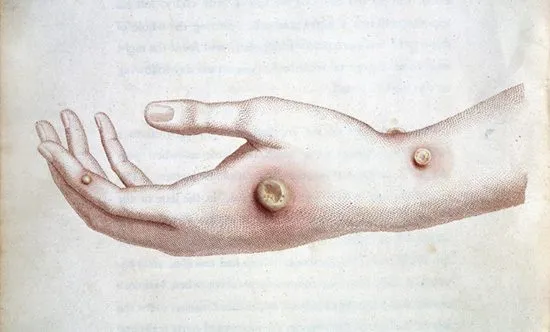
- Why it worked. Cowpox and smallpox share 95% of their genetic material, enough to fool the immune system, while cowpox causes only mild local disease: the first use of a related, milder virus to protect, a century ahead of later attenuated vaccines.
- Supply. First arm-to-arm passage, then vaccinia, grown on calves' skin. Vaccinia's natural host and origin are lost.
- Spread. Napoleon ordered his forces vaccinated in 1805; Thomas Jefferson wrote in 1806 that future nations would know of smallpox "by history only".
- The gap. In poor countries, organizing programmes and heat-unstable vaccine kept smallpox the top viral killer: 500 million+ deaths in the century before 1980.
Pasteur and rabies
Louis Pasteur, with no idea what the agent was, dried rabid rabbit spinal cords in a desiccator; after 14 days they lost all infectivity. Dogs injected on 14 consecutive days with cords dried for progressively shorter times resisted later challenge with virulent virus. In 1885, about two years short of a human-safe vaccine, he treated Joseph Meister, a nine-year-old from Alsace bitten two days before, ending with fully virulent rabies. The boy lived and bite victims flocked from all over Europe.
Vaccines for all
From the mid-1950s, vaccines for polio, measles, rubella, mumps and bacterial diphtheria, pertussis and tetanus reached all Western children; anyone born after the mid-1970s has probably escaped those diseases (chickenpox aside), and fear of polio is a distant memory.
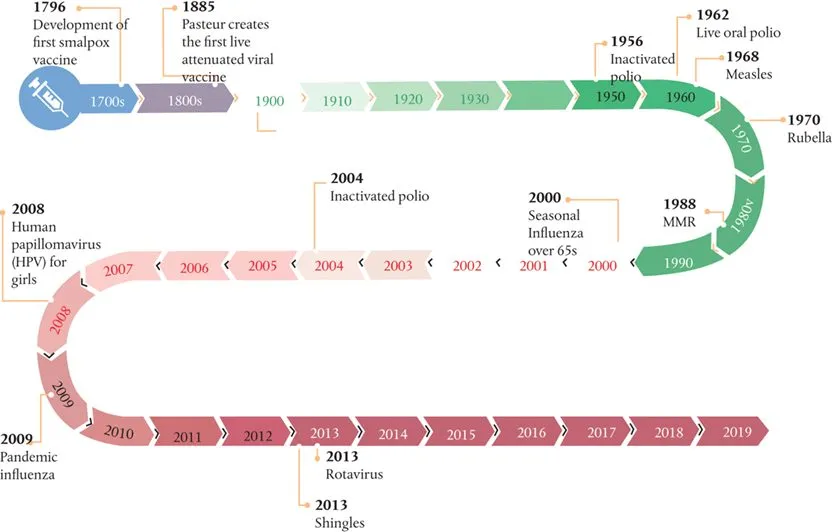
| Type | How it is made | Example | Trade-off |
|---|---|---|---|
| Live attenuated | Virus weakened by growth in poor conditions | Oral polio, MMR | Lasting immunity; not in pregnancy or immune deficiency; can revert |
| Killed | Chemically inactivated virus | Injected polio, flu | Cannot infect; weaker, shorter immunity |
| Subunit | Viral protein from engineered yeast or cells | Hepatitis B (1982), HPV | Pure and safe; needs a known protective protein |
| Viral vector | Target gene in a harmless carrier virus | Oxford-AstraZeneca | Strong T cells; carrier immunity |
| Nucleic acid | Naked DNA or mRNA for the protein | Pfizer-BioNTech, Moderna | Made in days; new, cold chain |
MANUFACTURING HAZARDS
- Animal proteins. Early vaccines made in animals, like rabies vaccine, caused severe allergic reactions; egg-grown vaccines were better but still impure; cell culture fixed most of it.
- SV40. From 1955 to 1963 polio vaccine was grown in rhesus monkey kidney cells. A monkey virus, SV40, survived the inactivating chemicals in up to 30% of batches, infecting perhaps 98 million Americans; it causes tumours in animals, but years of monitoring found no excess cancer. Human cells replaced animal cells where possible.
- Reversion. The live oral polio vaccine of the 1970s was easy to give and spread to family members, boosting herd immunity, but reverts and paralyses about 1 in 2 million vaccinees. As wild polio vanished that risk loomed larger, and live vaccine circulating in communities made elimination impossible, so the endgame switched back to killed vaccine.
Victims of their own success
As a disease becomes rare, a vaccine's small risks start to look larger than the disease's, so for one individual skipping vaccination can seem logical (it truly was for smallpox before eradication). But if many skip, a non-immune pool grows and epidemics return. Every individual depends on everyone else to maintain herd immunity, so personal and population interests pull in opposite directions.
In 1998 a Lancet paper suggested MMR, especially its live measles component, was linked to bowel disease and autism. Media coverage was massive; 2,000 fewer UK children were vaccinated in the next three months even as experts refuted and later disproved the claim. The senior author was found guilty of dishonesty and ethics breaches and struck off, then moved to the US, where his campaign grew into an international anti-vax movement on social media. Measles needs about 95% coverage; it resurged in the UK, US and Europe from 2017, and the UK lost its measles-free status in 2019.
Protection against flu
Flu was grown in the lab in the early 1940s and inactivated vaccine has been the mainstay since, but drift and shift make it a moving target.
- Global surveillance. WHO's network, set up in 1947, has 143 institutes in 113 states reporting to six Collaborating Centres (Australia, China, Japan, the UK and two in the US).
- Strain choice. Up to three strains per vaccine without weakening the response, chosen largely from strains seen in the Eastern hemisphere the previous season, since new viruses mostly come from Southeast Asian ducks on farms and markets.
- Payoff. In the UK the free trivalent vaccine for over-65s halves flu deaths.
- Early warning. Since 2000 China and the Far East run 400+ labs fed by 554 sentinel hospitals, plus monitoring of farmers, abattoir workers and their animals.
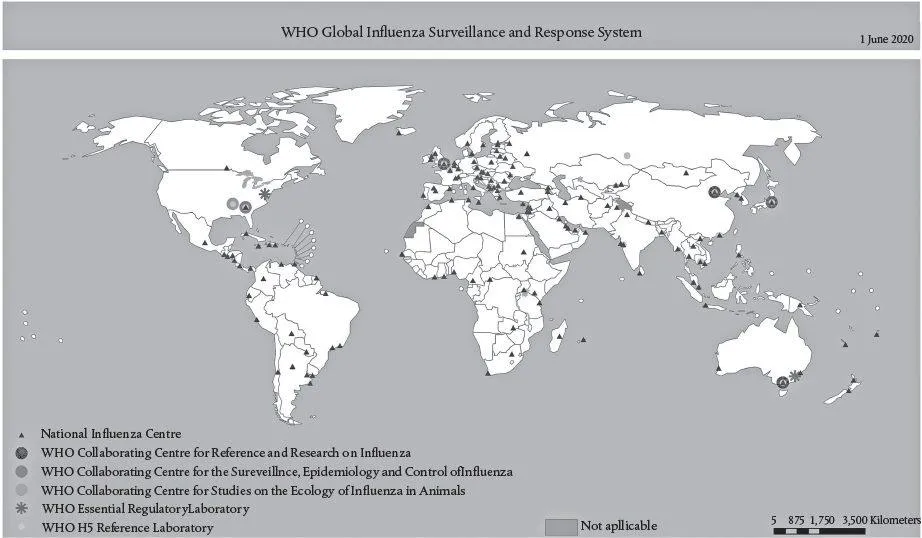
Subunit and new-generation vaccines
From the 1980s, identified viral genes allowed subunit vaccines built from the proteins that neutralizing antibodies target, usually the virus's receptor-binding surface protein. The first was hepatitis B (1982): yeast engineered with the HBV surface protein gene makes pure protein, far safer than the original vaccine purified from carriers' blood. Later approaches put target genes into harmless carrier viruses (pox, adeno, herpes) or use naked DNA or RNA. Still no vaccine exists for the common cold, SARS, MERS and, above all, HIV-1.
WHY NO HIV VACCINE?
Optimism faded fast despite massive funding and many trials:
- Variability. Reverse transcription is error-prone, so each patient's virus keeps changing and viruses differ hugely between people; one vaccine cannot cover all.
- The gp120 failure. Most candidates target gp120, the protein that binds CD4; many raised antibodies against it but did not protect.
- No room for "silent" infection. Most vaccines prevent disease, not infection; a vaccinated person may be infected briefly and clear it. With HIV, integration happens early and the virus is then hidden for good, so only sterile immunity would work.
The strategy therefore turned from prevention to treatment.
Clinical trials, and the COVID-19 shortcut
Before COVID-19 the fastest-ever licensing was mumps vaccine in four years (1970); ten years was typical.
Phase 3 runs where the virus is spreading, across sexes, ages and ethnicities; the wait for enough cases depends on how common the disease is, which is why rare or emerging infections take years.
- Prepared technology. mRNA platforms had been developed for 10-15 years for Ebola, Zika, SARS and MERS; they can be made in days and scaled easily.
- Money. Unprecedented funding removed the usual cash bottleneck.
- Volunteers and cases. Soaring infections and many trial sites gave significant results quickly.
- Telescoped phases. Phases 1, 2 and 3 ran in parallel in one huge trial.
- At-risk manufacturing. Mass production began before results, so doses were ready on approval.
Within months over 100 vaccines were in development, about 40 reached trials within a year, and by early 2021 several were in use. The first four to report protected against severe disease at 65-95%, and regulators decided in weeks. The early UK vaccines both targeted the spike: one mRNA in a lipid envelope, the other using a chimpanzee adenovirus carrier.
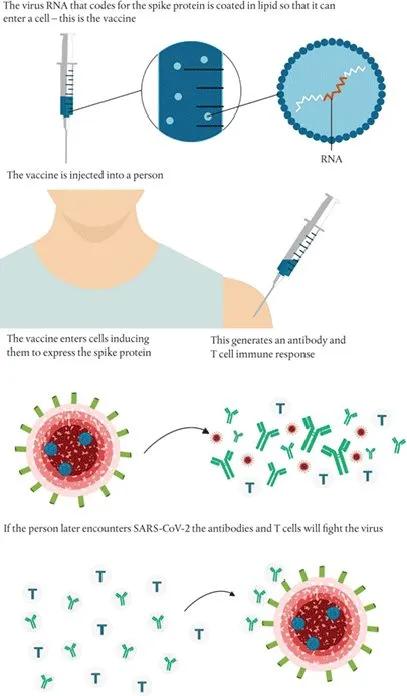
Crawford writes that the Oxford-AstraZeneca vaccine uses a chimpanzee adenovirus to carry spike protein RNA. It carries DNA coding for spike, which the cell transcribes into mRNA. The distinction matters: it is why vector and mRNA vaccines differ in manufacture, storage and immune profile.
AN EVOLVING TARGET
The vaccines did not fully stop infection and transmission, and their durability was unknown. Early in an outbreak no mutant has an edge; as immunity rises, advantaged mutants win. COG-UK (the COVID Genomics UK Consortium) flagged Alpha (B.1.1.7) in December 2020: multiple spike mutations, 50% more infectious, R₀ 4-5, spreading to 50+ countries; then came Beta, Gamma and Delta. Hints that some vaccines worked less well against Beta prompted border quarantines, which cannot last.
Crawford's forecast: like 1918 flu, COVID-19 will become endemic; seasonal flu still kills about 250,000 a year. If infection gives lasting immunity, the virus will shift to infecting young children and become less lethal; if not, we face a flu-style system of surveillance and annual updated vaccines, using the fast new platforms. Normality, but not a world without COVID-19.
- Payoff. Modelling estimated COVID vaccines averted about 14-20 million deaths in their first year alone. Katalin Karikó and Drew Weissman won the 2023 Nobel Prize for the modified-nucleoside chemistry behind mRNA vaccines.
- The flu-style path won. Protection against infection waned in months and Omicron escaped it, so countries moved to annual updated boosters for the old and vulnerable, as Crawford's second scenario predicted. Rare myocarditis in young men and rare clots with adenovirus vaccines led to age-based restrictions.
- New wins. RSV vaccines for older adults and pregnant women and the long-acting antibody nirsevimab for infants arrived in 2023; dengue, chikungunya and mpox (MVA-BN) vaccines followed or expanded.
- Backlash. Vaccine hesitancy rose after the pandemic, and in 2025 US federal policy turned sharply sceptical, cancelling major mRNA research contracts and replacing the national vaccine advisory committee.
- Still no HIV vaccine. Large efficacy trials (HVTN 702, Mosaico) failed; hopes now rest on germline-targeting vaccines that coax broadly neutralizing antibodies.
Antiviral drugs
Alexander Fleming noticed in 1928, at St Mary's Hospital, that mould on a neglected Staphylococcus plate cleared the bacteria around it: penicillin, purified a decade later by Howard Florey's Oxford team (Nobel 1945). Antibiotics saved billions but do nothing to viruses, and many thought selective antivirals impossible because viruses are so intertwined with the cell. That pessimism proved wrong, though antivirals are specific to one virus rather than broad-spectrum.
- Targets. Proteins unique to the virus and essential for it; early drugs were found by chance (often in cancer screens), modern ones by rational design.
- Resistance. Fast replication, especially in RNA viruses, breeds drug-resistant mutants.
- Acyclovir. The first effective antiviral, for herpes simplex and shingles; safe for long-term suppression. Resistant mutants arise but are weaker and have not spread.
- Flu drugs (e.g. Tamiflu). Safe and effective, used mainly in hospital or high-risk patients; early use shortens illness by about one day. Stockpiles from 2009 went largely unused. Vaccination remains first choice.
HIV: FROM DEATH SENTENCE TO NORMAL LIFESPAN
For a decade after 1983 nothing worked well. Zidovudine (AZT), a failed cancer drug targeting reverse transcriptase, arrived in 1987, but resistant mutants quickly undid it. In 1996 doctors borrowed from cancer medicine: combinations of drugs with different targets.
- HAART, now ART. Three drugs including at least one protease inhibitor and one RT inhibitor best prevent escape; death rates in the West fell and some predicted the end of AIDS.
- Monitoring. Rising viral load and falling CD4 count signal it is time to switch regimens.
- Outcome. A normal lifespan; eradication is impossible, but an undetectable viral load prevents onward transmission.
- Failures. Mostly people unaware of their status or not adhering: regimens once meant 10 to 30 tablets a day, now moving to one combined pill daily and monthly injections.
- Prevention. Pre-exposure (PrEP) and post-exposure prophylaxis work impressively; with more testing, experts see the end of transmission in sight in rich countries.
Cost and complexity block wider use; WHO now recommends simple, well-tolerated fixed-dose regimens deliverable in primary care. The 90-90-90 target for 2020 (diagnosed, treated, suppressed) was missed as COVID diverted staff; the new goal is 95-95-95 by 2025.
Long-acting injectable cabotegravir plus rilpivirine (every one to two months) was approved in 2021, and twice-yearly lenacapavir became the first six-monthly PrEP in 2025 (FDA June, WHO July). Global progress reached about 87-89-94 in 2024, short of 95-95-95. A further handful of people have been cured after stem-cell transplants for cancer, but that route will never scale.
HEPATITIS B AND C
| Hepatitis B | Hepatitis C | |
|---|---|---|
| Vaccine | Yes, since 1982; ~10% non-responders, rare escape mutants, multiple doses, cost | None: fast-mutating RNA virus |
| Old treatment | Interferon alpha: works in 20-30%, costly, long, toxic | Interferon, often intolerable |
| Modern drugs | Antivirals (past ~10 years) suppress replication, cut liver failure and cancer | Direct-acting antiviral tablets, time-limited |
| Outcome | Usually control, not cure; often lifelong | Cure in over 95% |
The eradication agenda
Two hundred years of vaccination and a few decades of antivirals have transformed infectious disease. Smallpox proved humans can beat a lethal virus, and in 2010 rinderpest, a measles relative that killed nearly 100% of infected cattle and destroyed livelihoods across Africa and Asia, became the second virus eradicated. Each remaining virus has its own defence: animal reservoirs, persistent infection, or no foolproof vaccine, but the COVID-era platforms should break the deadlock. WHO's list: polio and measles "well on the way", rabies and hepatitis B at an earlier stage, and, Crawford adds, COVID-19.
Rinderpest's eradication was formally declared in 2011. Measles is resurging, not near extinction, and polio's endgame keeps slipping (Chapter 5). Adding COVID-19 is unrealistic: SARS-CoV-2 has animal reservoirs (it now circulates in white-tailed deer in North America, among others), current vaccines do not block transmission, and immunity wanes, failing three of the four conditions that made smallpox eradicable.
Every intervention in this chapter is a trade between individual risk and collective benefit, and its success depends as much on trust, price and logistics as on biology. The mRNA platform solved speed; it did not solve hesitancy, equity or durability, which now decide outcomes.
What the Future Holds
Crawford ended her 2016 Ebola book with "expect the unexpected"; COVID-19 showed the world had not listened. The epilogue names the two engines of emergence, population growth and air travel, weighs proactive virus-hunting against stronger health systems, and closes on equitable vaccine access: no one is safe until everyone is safe.
A tsunami, then a fightback
The answer to whether we learned from earlier surprises was a "resounding no". SARS-CoV-2 arrived in January 2020 like a tsunami, wave after wave. For over a year the world relied on "medieval remedies", distancing and lockdown, which brought disrupted education, economic collapse, unemployment, poverty, poor mental health and cancelled treatments, all deepening inequality. Then science moved at the virus's speed: tests and vaccines were in production within weeks of the genome's publication, and vaccines rolled out within a year.
Pandemic planning had been built around flu: the 1918-19 pandemic came in three waves, and WHO's flu surveillance machine (Chapter 8) is huge. That system predicts only flu; Crawford's challenge is to build the same early-warning capacity for every other emerging virus.
Engine 1: population growth
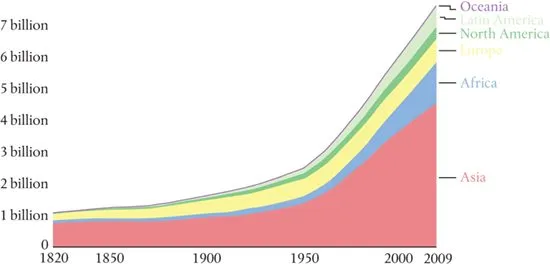
The population reached 1 billion in 1800, 1.6 billion in 1900 and 7.8 billion in 2021: humanity as victims of our own success. Overpopulation plus human greed drive climate change, poverty, water shortages, rainforest destruction, extinctions and pollution, and pandemics. Invading wild land for farming, water, mining and hunting disrupts ecosystems, and viruses exploit the imbalance. Spillover is commonest in the tropics, where species diversity supports more microbes, and increasingly occurs in cities, implying intermediate hosts bridging wild reservoirs and urban people.
Pigs in Nipah and nearby villages developed respiratory disease; the virus passed to farmers and abattoir workers, causing deadly encephalitis, and pig movements carried it to Singapore. Culling over a million pigs ended it in 1999, after 265 human cases and 105 deaths.
Nipah is carried by at least 23 fruit bat species across Madagascar, Cambodia, Indonesia, Thailand, the Philippines and Ghana, and has re-emerged repeatedly in India and Bangladesh, where human-to-human transmission has occurred. Crawford asks whether it is a disaster waiting to happen.
Engine 2: international travel
Epidemic viruses need fresh non-immune hosts and can only move as fast as people do.
- Eighteenth-century sailing ship: about a year.
- Early nineteenth-century clipper: 100 days.
- Early twentieth-century steamship: 50 days.
- Today: under 24 hours.
- 1.4 billion international trips a year.
Viruses travelled even on the slow routes: measles reached Australia around 1850, yellow fever crossed to the Americas on slave ships in the seventeenth century, and smallpox with the Spanish in the sixteenth. Now HIV, SARS, Ebola, flu and COVID-19 hop continents inside travellers before anyone knows. The exotic pet trade adds another route.
The first monkeypox outside Africa: a shipment of 800 Ghanaian mammals (squirrels, rats, porcupines, mice) reached Texas; giant pouched Gambian rats ended up in a Milwaukee pet shop next to prairie dogs, which caught the virus and passed it to the families who bought them. 49 human cases in five states, centred on Wisconsin.
Crawford calls monkeypox a mild, non-fatal illness carried by rats. Both need correcting: clade I in Central Africa has killed several per cent of those infected, and the true reservoir is probably rodents such as rope squirrels, not rats specifically. Renamed mpox in 2022, a clade IIb strain spread through sexual networks to over 100 countries (WHO emergency July 2022-May 2023). A new, more transmissible clade Ib from eastern DRC triggered a second PHEIC in August 2024, lifted in September 2025, with travel-linked cases in Europe, Asia and the US. The MVA-BN smallpox vaccine became the main tool.
Proactive or reactive?
WHO's list of priority diseases for urgent R&D: COVID-19, Ebola and Marburg, Lassa, MERS, SARS, Nipah and henipaviruses, Rift Valley fever, Crimean-Congo haemorrhagic fever, Zika and "Disease X", the unknown one. In 2019, COVID-19 became Disease X caused by Virus X.
Proactive: hunt the viruses The Global Virome Project (private) and PREDICT-2 (USAID, cancelled by President Trump weeks before COVID-19) aim at "the beginning of the end of the pandemic era" by cataloguing animal viruses. Estimates: 1.6 million unknown viruses, 500,000 able to infect human cells, 10,000 potential epidemic viruses (others say under 100 real threats). PREDICT found 900+ new viruses in ten years, one with possible human links, but also changed risky behaviour in markets.
Reactive: strengthen health systems Spend the money on surveillance and clinical capacity worldwide so outbreaks are spotted and stopped at source. WHO was condemned as "too little, too late" over West African Ebola, and has since committed to building national surveillance in low-income countries: effective but very expensive, and dependent on government priority.
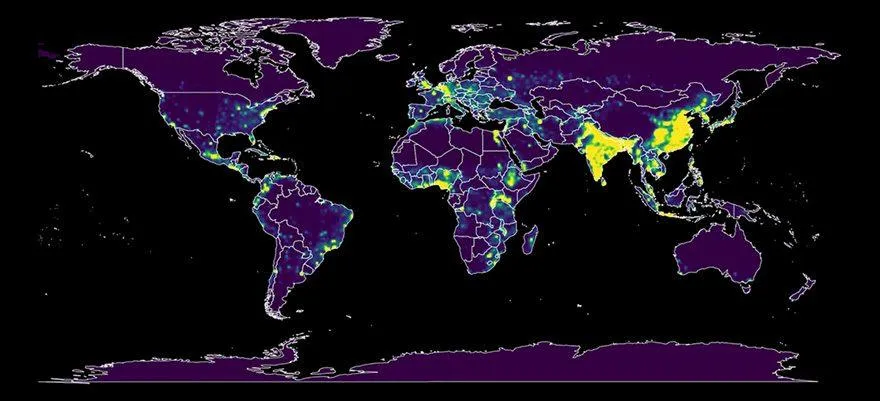
NARROWING THE SEARCH
- Bats first. Highly mobile bats are reservoirs for Nipah, Ebola, SARS, MERS and probably COVID-19. In 2013 the Wuhan Institute of Virology isolated a bat coronavirus that grows in human airway cells and is, Crawford writes, 95% identical to the pandemic virus.
- An identikit for Virus X. University of Edinburgh scientists used published data to profile it: a zoonotic RNA virus from a family, like coronaviruses, that has produced epidemic viruses before. Machine learning on virus-receptor protein interactions now predicts which viruses can infect and spread in people, and their pre-pandemic hotspot list included Wuhan.
Crawford merges two different viruses. The bat virus WIV isolated and grew in 2013 (WIV1) is a close relative of SARS-CoV-1, not SARS-CoV-2. The closest relative of SARS-CoV-2 then known, RaTG13 (about 96% identical), was collected in 2013 but only sequenced, never cultured. Since 2021, bats in Laos (BANAL viruses) have yielded even closer relatives, with receptor-binding domains that bind human ACE2 efficiently. The precise origin remains disputed (Chapter 4).
Vaccines for everyone
- 2000 GAVI (the Global Alliance for Vaccines and Immunisation) launched to give children in the poorest countries equal access to vaccines.
- 2017 CEPI (Coalition for Epidemic Preparedness Innovations) founded after Ebola vaccine work stalled for lack of funds, to develop vaccines against emerging infections and share them fairly.
- 2020 GAVI, CEPI and WHO launch COVAX for rapid, equitable COVID-19 vaccine access regardless of income.
Until transmission is halted everywhere, more transmissible and vaccine-resistant mutants can arise anywhere. Crawford's last words: "No one is safe until everyone is safe."
- COVAX delivered close to 2 billion doses, but rich countries vaccinated first and poor countries waited months, the inequity Crawford feared.
- The WHO Pandemic Agreement was adopted at the World Health Assembly on 20 May 2025, committing states to prevention, technology transfer and a share of products for WHO; its pathogen access and benefit-sharing (PABS) annex was left for later negotiation, and the treaty opens for signature only once that annex is agreed. Amended International Health Regulations, adding a "pandemic emergency" alert level, entered into force in September 2025.
- Fragmentation. The United States gave notice of withdrawal from WHO in January 2025 and rejected both the agreement and the IHR amendments; USAID was dismantled, ending programmes like PREDICT's successors.
- New tools. The World Bank's Pandemic Fund (2022) and CEPI's "100 Days Mission" (vaccines within 100 days of a new threat) target the gaps Crawford describes; WHO's 2024 priority-pathogen list now works by virus family to prepare for Disease X.
- Population passed 8 billion in November 2022.
Crawford's closing argument is a systems argument: pandemics are produced by how we farm, trade, travel and share, so prevention is as much land use, market regulation and global finance as virology. Surveillance and vaccines are the backstop, and they work only at the speed and fairness of the weakest link in the network.
Main Points
- Emergence is mostly about contact, not mutation. New human viruses are old animal viruses meeting people more often, through deforestation, farming, wildlife markets, war and climate change; a decisive mutation is the exception.
- Transmission biology decides pandemic potential. SARS, 1918 flu and COVID-19 had similar R₀ (2-3.5); COVID-19 went global because of upper-airway shedding, silent infection and pre-symptomatic spread, which defeat tracing.
- Virulence is a trade-off, not a slide to mildness. It is set by the route of spread: myxoma got milder, RHDV got deadlier, and SARS-CoV-2 did not simply "evolve to be a cold".
- Persistent viruses win by stealth. Herpesviruses, HPV, CMV and hepatitis viruses hide in long-lived or stem cells and jam T-cell recognition; disease follows when immunity fails.
- About 15% of cancers are viral and mostly preventable. Tumours are rare multi-step accidents of persistent infection, so HBV and HPV vaccines remove the first link; vaccinated cohorts now show almost no cervical cancer.
- Eradication needs four conditions. No animal reservoir, no carrier state, lifelong immunity and a transmission-blocking vaccine: smallpox and rinderpest had them; COVID-19, flu and HIV do not.
- R₀ is a property of virus plus setting. MERS (R₀ < 1) still exploded in hospitals; Ebola (R₀ ~1.5) went urban once roads, poverty and mistrust aligned.
- Herd immunity thresholds follow 1 − 1/R₀. Measles needs 92-95% coverage, which is why it is the first disease to return when trust in vaccines slips.
- Every pandemic spread silently first. HIV hid for decades, H1N1 and SARS-CoV-2 for weeks; surveillance that waits for sick people will always be late.
- Pigs and birds make flu pandemics. Eight gene segments let strains swap H and N genes (shift) in birds and pigs, every 10-40 years; drift makes yearly epidemics.
- HIV-1 is a bushmeat virus that took a river, a city and a plane. From a Cameroon chimpanzee via the Sanga and Congo rivers to Kinshasa, Haiti (1966) and the US (~1969).
- Polio shows hygiene can create epidemics. Delaying infection past infancy turned a silent gut virus into summer paralysis in rich countries: the iceberg phenomenon.
- Old tools still win early. Isolation, tracing, PPE and quarantine ended SARS and the early Ebola outbreaks; they failed for COVID-19 only because of its transmission profile.
- Speed came from preparation. COVID vaccines arrived in a year thanks to 10-15 years of mRNA groundwork, money, abundant cases, parallel trial phases and at-risk manufacturing.
- Vaccines are victims of their own success. As diseases fade, vaccine risks loom larger to individuals, and the MMR scare shows how quickly coverage and herd immunity can erode.
- Combination therapy beats viral evolution. HIV's turnaround came from three drugs with different targets, borrowed from cancer medicine; HCV is now curable in over 95%.
- Lab safety is part of pandemic safety. Birmingham smallpox (1978), three SARS lab escapes and the likely lab-origin 1977 flu show containment failures are real.
- Population and travel are the long-run drivers. 8 billion people and 1.4 billion trips a year collapse the distance between a bat roost and a capital city.
- Equity is biosecurity. Variants can arise wherever transmission continues, so no one is safe until everyone is safe.
- Expect the unexpected. Disease X arrived in 2019; H5N1 in cattle and clade Ib mpox since show the surprises keep coming.
Frameworks & mental models
| Name | What it says | Use it when |
|---|---|---|
| Lock and key | A virus infects only cells whose receptor its surface protein fits | Explaining tissue tropism and symptoms |
| Layered defence | Skin, secretions, cilia, macrophages, lymph nodes, B and T cells | Thinking about where an infection can be stopped |
| R and R₀ | Cases per case; >1 grows, <1 shrinks; HIT = 1 − 1/R₀ | Judging epidemic growth and vaccine targets |
| Three emergence groups | Dead-end, sporadic, continuous circulation | Classifying a new zoonosis |
| Drift and shift | Point mutations vs gene-segment swaps in flu | Predicting epidemics vs pandemics |
| Nomads vs settlers | Acute viruses race; persistent viruses hide | Choosing vaccine, drug or surveillance strategy |
| Iceberg phenomenon | Visible disease is the tip of mostly silent infection | Interpreting case counts |
| Multi-step oncogenesis | Virus + cofactor + rare genetic accident in one cell | Understanding viral cancer and its prevention |
| Four conditions for eradication | No reservoir, no carrier, lasting immunity, blocking vaccine | Testing any elimination target |
| Proactive vs reactive | Hunt animal viruses vs strengthen health systems | Allocating preparedness budgets |
Key terms
| Term | Meaning |
|---|---|
| Obligate parasite | Can reproduce only inside a living cell |
| Capsid | Protein shell protecting the viral genome |
| Zoonosis | Infection jumping from animals to humans |
| Reverse transcriptase | Retroviral enzyme copying RNA into DNA |
| Integrase | Enzyme inserting viral DNA into the host chromosome |
| Latency | Silent persistence of a viral genome in a cell |
| Neutralizing antibody | Antibody blocking the virus's receptor key |
| Cytokine storm | Uncontrolled release of immune signals that wrecks tissue |
| Molecular mimicry | Antiviral immunity cross-reacting with self |
| Oncogene / tumour suppressor | Gene driving / braking cell division |
| Apoptosis | Programmed cell suicide |
| Attenuated vaccine | Live virus weakened to cause mild infection |
| Subunit vaccine | Purified viral protein made by engineered cells |
| PHEIC | WHO's Public Health Emergency of International Concern |
| Arbovirus | Arthropod-borne virus |
Who's who
| Name | Role | Why they matter |
|---|---|---|
| Martinus Beijerinck | Dutch soil scientist | Showed a filterable agent reproduces: the virus concept |
| David Tyrrell & June Almeida | Common Cold Unit; electron microscopist | Grew rhinovirus; found and named the first human coronavirus (1965) |
| Lady Mary Wortley Montagu | Aristocrat, smallpox survivor | Brought variolation to Britain (1717-21) |
| Edward Jenner | Gloucestershire surgeon | Cowpox vaccination, 1796 |
| Louis Pasteur | French microbiologist | Rabies vaccine; treated Joseph Meister (1885) |
| Peter Panum | Danish health officer | Faroes 1846: lifelong measles immunity, 13-14-day incubation |
| Walter Reed | US Army bacteriologist | Proved mosquitoes spread yellow fever (1900) |
| D. A. Henderson | WHO campaign head | Led smallpox eradication |
| Werner Schäfer | Tübingen virologist | Linked bird and human flu; proposed reassortment (1955) |
| Denis Burkitt | Surgeon in Uganda | Mapped Burkitt's lymphoma; malaria link |
| Anthony Epstein & Yvonne Barr | Middlesex Hospital virologists | Found EBV, first human tumour virus (1964) |
| Baruch Blumberg | Fox Chase Cancer Center | Australia antigen: hepatitis B (1964) |
| Michael Houghton | Chiron | Discovered hepatitis C (1988) |
| Harald zur Hausen | German virologist | HPV16/18 cause cervical cancer |
| Françoise Barré-Sinoussi & Luc Montagnier | Pasteur Institute | Isolated HIV (1983) |
| Robert Gallo | NIH | HTLV-1 (1980); HIV credit dispute |
| Yuan Chang & Patrick Moore | Columbia University | Found HHV8 (1994) and Merkel cell virus (2008) |
Crawford is a lucid, authoritative guide to virology's history and mechanisms, and her central warning (prepare for zoonotic surprises) has been vindicated. Its weaknesses are mostly those of timing and compression. Written in January 2021, it is too hopeful that COVID-19 vaccines would deliver herd immunity and that the virus would evolve towards mildness, and too confident that polio and measles were nearly gone. Several specifics are wrong or dated: Andes hantavirus does spread person to person; the 2016 yellow fever epidemic began in Angola; congenital CMV is common, not rare; mpox can kill; the Oxford vaccine carries DNA; HIV's spillover dates to about 1908-20; flu has 18 H and 11 N subtypes; the 2009 flu age chart duplicates 1918's. On the origin of SARS-CoV-2 she is balanced but conflates two bat viruses. Some figures (rotavirus deaths, cervical cancer deaths, HBV vaccine coverage) need the updates given in the chapter boxes.
- Emergence is mostly about contact, not mutation. New human viruses are old animal viruses meeting people more often, through deforestation, farming, wildlife markets, war and climate change; a decisive mutation is the exception.
- Transmission biology decides pandemic potential. SARS, 1918 flu and COVID-19 had similar R₀ (2-3.5); COVID-19 went global because of upper-airway shedding, silent infection and pre-symptomatic spread, which defeat tracing.
- Virulence is a trade-off, not a slide to mildness. It is set by the route of spread: myxoma got milder, RHDV got deadlier, and SARS-CoV-2 did not simply "evolve to be a cold".
- Persistent viruses win by stealth. Herpesviruses, HPV, CMV and hepatitis viruses hide in long-lived or stem cells and jam T-cell recognition; disease follows when immunity fails.
- About 15% of cancers are viral and mostly preventable. Tumours are rare multi-step accidents of persistent infection, so HBV and HPV vaccines remove the first link; vaccinated cohorts now show almost no cervical cancer.
- Eradication needs four conditions. No animal reservoir, no carrier state, lifelong immunity and a transmission-blocking vaccine: smallpox and rinderpest had them; COVID-19, flu and HIV do not.
About this book
Viruses: A Very Short Introduction by Dorothy H. Crawford, 2021. This is a chapter-by-chapter study of the book, with summaries, maps, tables and diagrams; short quotations keep their page references. It is shared free for personal study, is not for sale, and is not endorsed by the author or publisher. Please read and buy the original.
Insight Editions · rajeshrmahapatra.com/insight-editions